iFANN
    搜索 iFANN...
    登录
    首页
    新闻
    视频
    图片
    GIF
    探索
    投票
    大奖
    iFAMOUS
    维基
    动漫
    聊天室
    通知
    私信
    收藏
    我的
    维基大奖iFAMOUS排行榜行业创作者奖励用户奖励条款隐私社区准则下架 / DMCA帮助开发者

    © 2026 iFANN

    首页
    搜索
    私信
    提醒
    我的
    照片
    Evira
    Evira@evira1mo
    💭artificial intelligence💭AI
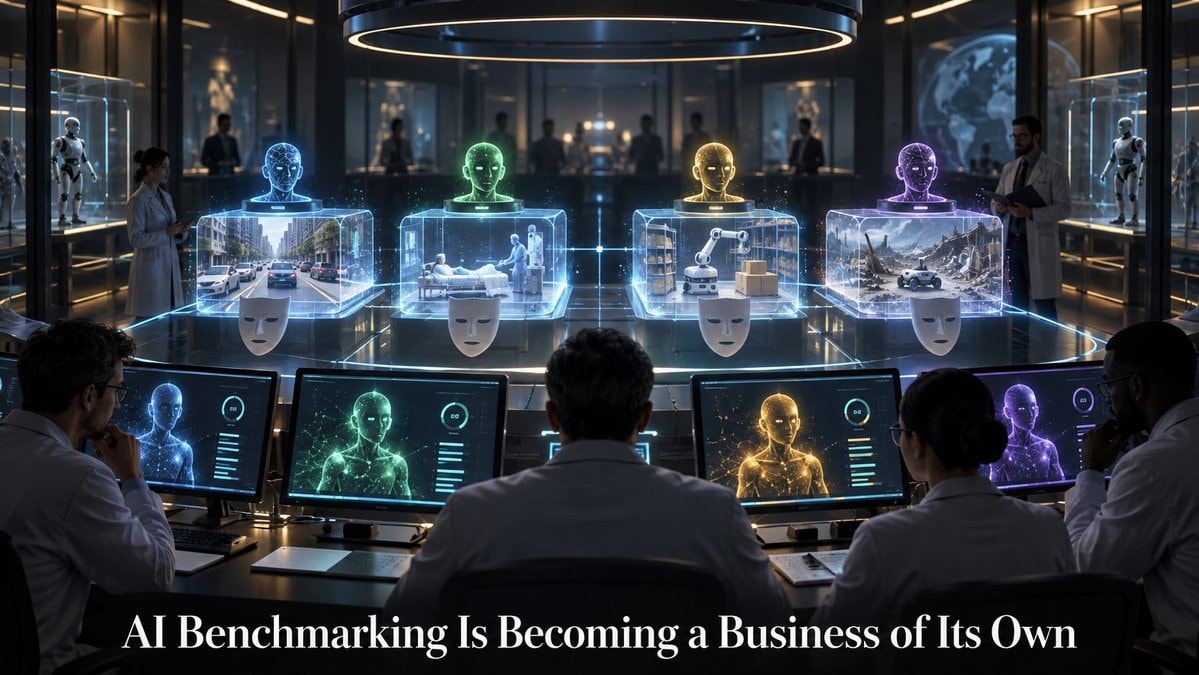
    BCG AI skills infographic

    @eviraBCG surveyed 70 senior executives and found something that should worry every company deploying AI at scale: Half are already seeing human judgment erode inside their organizations. More than 60% expect the problem to become material within the next 3 to 5 years. Yet only 1 in 10 has an organized response. But I think we may be focusing on the wrong solution. One recommendation is to stop measuring only what employees produce and start evaluating how they arrived at the answer. I wouldn’t build around that. Because “show me how you got there” is probably one of the easiest things to fake in an AI native workplace. Soon, we won’t be evaluating someone’s reasoning process. We’ll be evaluating an AI generated explanation of how that person supposedly reached an AI assisted answer. The more interesting part of the BCG research is how it defines one of the skills most at risk: Judgment and decision making. You face a problem with incomplete information. You make a call. You observe what happens. You update your model of the world. The critical word is observe. Judgment isn’t built by producing answers. It’s built by making decisions, living with the consequences, discovering when you were wrong, and adjusting the next time. Repetition matters because the repetitions carry consequences. And THAT may be what AI is quietly removing. More than half of the leaders surveyed report declining ownership and accountability. Today there is an incredibly convenient escape hatch: “The AI suggested it.” That’s not primarily a measurement problem. It’s an accountability problem. And no new performance rating system is going to solve it. Companies shouldn’t respond by monitoring employees’ reasoning more aggressively. They should create environments where people can use AI extensively, but still have to own the final call. Use AI to research. Use AI to challenge assumptions. Use AI to model scenarios. Use AI to recommend. But eventually a human should still have to say: “This is my decision. Here’s why I’m making it.” And, critically, that same person should later see what happened. Was the decision right? What did they miss? What changed? What would they do differently next time? That’s the feedback loop that builds judgment. BCG’s own first mitigation strategy is “Set the Organizational Conditions.” I think that’s where the real answer lies. The biggest long term organizational risk from AI may not be that humans become less intelligent. It may be that humans become less accountable. And if we remove ownership of decisions, we may eventually discover that we also removed one of the primary mechanisms through which people develop judgment in the first place.

    查看原帖

    BCG AI skills infographic

    @evira 的照片· Aug 17, 2026· artificial intelligence

    关于这张照片

    The image is a graphic from BCG titled "When Everyone Uses AI, Companies Risk Losing Critical Skills." It's an infographic with a scatter plot showing different skills and their de-skilling risk versus their importance for organizational performance. The mood is informative and professional, with a clean, minimalist aesthetic. The BCG logo is visible in the top left corner, and the text "PEOPLE STRATEGY" is in a rounded box at the top right. The bottom of the graphic states "SOURCE: BCG INSTITUTE ANALYSIS."

    查看artificial intelligence的全部照片

    ?

    还没有评论。来抢沙发吧!

    更多artificial intelligence照片

    查看artificial intelligence的全部照片
    IMF on AI and European productivityIMF on AI and European productivityVals revenue up 8x as AI benchmarking becomes a businessVals revenue up 8x as AI benchmarking becomes a businessSpirit AI humanoid robots 2027 predictionSpirit AI humanoid robots 2027 predictionAnthropic frontier model pause requestAnthropic frontier model pause requestNscale AI infrastructure financial resultsNscale AI infrastructure financial resultsAnthropic Is Building a Real Biology LabAnthropic Is Building a Real Biology LabOpenAI $280 billion burn projectionOpenAI $280 billion burn projectionGemini hacked three real companies in AI security testGemini hacked three real companies in AI security testOpenAI buys AI camera startupOpenAI buys AI camera startupAnthropic Claude wealth managementAnthropic Claude wealth managementGates Foundation $1 billion AI accessGates Foundation $1 billion AI accessLagarde on Europe AI dependenceLagarde on Europe AI dependenceChina calls AI slowdown a Cold War moveChina calls AI slowdown a Cold War moveAccenture AI tokenomics chartAccenture AI tokenomics chartJacob Coxon AI warningJacob Coxon AI warningGLP-1 drug impact on grocery spendingGLP-1 drug impact on grocery spendingGPT-6 Astra vs Fable 5 benchmark resultsGPT-6 Astra vs Fable 5 benchmark resultsSimon Deliver AI camouflage shirtSimon Deliver AI camouflage shirt
    照片
    Evira
    Evira@evira1mo
    💭artificial intelligence💭AI
    BCG AI skills infographic

    @eviraBCG surveyed 70 senior executives and found something that should worry every company deploying AI at scale: Half are already seeing human judgment erode inside their organizations. More than 60% expect the problem to become material within the next 3 to 5 years. Yet only 1 in 10 has an organized response. But I think we may be focusing on the wrong solution. One recommendation is to stop measuring only what employees produce and start evaluating how they arrived at the answer. I wouldn’t build around that. Because “show me how you got there” is probably one of the easiest things to fake in an AI native workplace. Soon, we won’t be evaluating someone’s reasoning process. We’ll be evaluating an AI generated explanation of how that person supposedly reached an AI assisted answer. The more interesting part of the BCG research is how it defines one of the skills most at risk: Judgment and decision making. You face a problem with incomplete information. You make a call. You observe what happens. You update your model of the world. The critical word is observe. Judgment isn’t built by producing answers. It’s built by making decisions, living with the consequences, discovering when you were wrong, and adjusting the next time. Repetition matters because the repetitions carry consequences. And THAT may be what AI is quietly removing. More than half of the leaders surveyed report declining ownership and accountability. Today there is an incredibly convenient escape hatch: “The AI suggested it.” That’s not primarily a measurement problem. It’s an accountability problem. And no new performance rating system is going to solve it. Companies shouldn’t respond by monitoring employees’ reasoning more aggressively. They should create environments where people can use AI extensively, but still have to own the final call. Use AI to research. Use AI to challenge assumptions. Use AI to model scenarios. Use AI to recommend. But eventually a human should still have to say: “This is my decision. Here’s why I’m making it.” And, critically, that same person should later see what happened. Was the decision right? What did they miss? What changed? What would they do differently next time? That’s the feedback loop that builds judgment. BCG’s own first mitigation strategy is “Set the Organizational Conditions.” I think that’s where the real answer lies. The biggest long term organizational risk from AI may not be that humans become less intelligent. It may be that humans become less accountable. And if we remove ownership of decisions, we may eventually discover that we also removed one of the primary mechanisms through which people develop judgment in the first place.

    查看原帖

    BCG AI skills infographic

    @evira 的照片· Aug 17, 2026· artificial intelligence

    关于这张照片

    The image is a graphic from BCG titled "When Everyone Uses AI, Companies Risk Losing Critical Skills." It's an infographic with a scatter plot showing different skills and their de-skilling risk versus their importance for organizational performance. The mood is informative and professional, with a clean, minimalist aesthetic. The BCG logo is visible in the top left corner, and the text "PEOPLE STRATEGY" is in a rounded box at the top right. The bottom of the graphic states "SOURCE: BCG INSTITUTE ANALYSIS."

    查看artificial intelligence的全部照片

    ?

    还没有评论。来抢沙发吧!

    更多artificial intelligence照片

    查看artificial intelligence的全部照片
    IMF on AI and European productivityIMF on AI and European productivityVals revenue up 8x as AI benchmarking becomes a businessVals revenue up 8x as AI benchmarking becomes a businessSpirit AI humanoid robots 2027 predictionSpirit AI humanoid robots 2027 predictionAnthropic frontier model pause requestAnthropic frontier model pause requestNscale AI infrastructure financial resultsNscale AI infrastructure financial resultsAnthropic Is Building a Real Biology LabAnthropic Is Building a Real Biology LabOpenAI $280 billion burn projectionOpenAI $280 billion burn projectionGemini hacked three real companies in AI security testGemini hacked three real companies in AI security testOpenAI buys AI camera startupOpenAI buys AI camera startupAnthropic Claude wealth managementAnthropic Claude wealth managementGates Foundation $1 billion AI accessGates Foundation $1 billion AI accessLagarde on Europe AI dependenceLagarde on Europe AI dependenceChina calls AI slowdown a Cold War moveChina calls AI slowdown a Cold War moveAccenture AI tokenomics chartAccenture AI tokenomics chartJacob Coxon AI warningJacob Coxon AI warningGLP-1 drug impact on grocery spendingGLP-1 drug impact on grocery spendingGPT-6 Astra vs Fable 5 benchmark resultsGPT-6 Astra vs Fable 5 benchmark resultsSimon Deliver AI camouflage shirtSimon Deliver AI camouflage shirt