Wall Street AI debt pension funds
Wall Street has found a way to force retirement funds into buying AI debt that the rest of the market is actively dumping. The open market keeps saying no to this paper whenever it is allowed to decide for itself. You can see the pattern clearly if you look at the recent issuance from the biggest names in tech. Nvidia raised $25 billion in debt, and the bonds sank below the issue price the moment trading opened. SpaceX raised $25 billion, and the same thing happened immediately. Amazon raised $25 billion, and it happened again. Three of the most valuable companies on the planet sold AI infrastructure debt, and all three watched it drop the instant real buyers could trade it. So the banks stopped letting the market work for bond sales. They changed the mechanics entirely to keep the machine running. When BlackRock went to raise $12.55 billion for a Meta data center in El Paso, the underwriters picked the buyers in advance. This is not how an open bond sale is supposed to function. JPMorgan and Morgan Stanley ran the deal and steered the bonds toward pension funds and insurance companies. These are the most patient investors in the entire system. They buy bonds to hold them for decades. They do not flip positions. They cannot dump a bond the second it drops, unlike a hedge fund or other active traders who react to price moves. By filling deals with investors who are structurally unable to sell, the banks ensure the bond physically cannot crash on day one. There is simply nobody left in the room with the ability to press the sell button. That is the trick they are using right now. The demand for AI debt never got stronger. The banks just packed the room with buyers who have no way to show how weak the demand really is. And even with this manipulation, it barely worked. BlackRock had to price investment grade bonds at a yield of 7.534%. A yield of 7.534% is a number normally seen on junk debt, not on safe corporate paper. They stapled a junk price to a deal rated as investment grade. Even then, demand for the BlackRock deal reached only about $20 billion. That is soft for an offering of this size. Now look at what the banks are doing everywhere else to keep the illusion alive. They are leaving jumbo tech deals off public forecasts on purpose. Every week, bank desks publish forecasts of how much debt is about to hit the market so investors can brace for the supply. But a portfolio manager at DoubleLine explained that banks are now hiding their biggest deals from these lists. Flagging a $20 billion deal in advance would reveal who is behind it and spook everyone before pricing. So the supply is real, but the forecasts are edited. Investors are walking into these sales blind by design. Oracle saw where this was heading months ago. When Oracle raised $25 billion in February, it told investors it did not expect to come back to the bond market for the rest of 2026. A company in the middle of an AI buildout swearing off borrowing already felt the door closing. Goldman Sachs counted $489 billion of AI related debt issued this year alone. Roughly 40% of it came straight from the hyperscalers. All of that paper has to land somewhere. Wall Street decided that the landing spot would be the pension and insurance funds holding the retirement savings of people who might have never even typed a single prompt. Those funds were picked for one reason. They are the one group that legally cannot walk away when the debt turns sour. None of this is illegal, and that is exactly why it works. Choosing your buyers, pricing to move it, staying off the forecast sheets, all of it is ordinary bond market machinery pointed at a single goal. The goal is to make a market that keeps rejecting this debt look like a market that is swallowing it just fine. On a chart, all of this reads like the AI debt market finally calming down. But what actually happened is that Wall Street removed the investors who were doing the selling. Wall Street has run out of buyers who genuinely want this debt. So it started choosing the buyers itself and hiding the deals it cannot sell in the open. A market only needs this much stage management when the genuine demand is already gone. The calm on the screen is the last thing that breaks.
文字记录 (en)
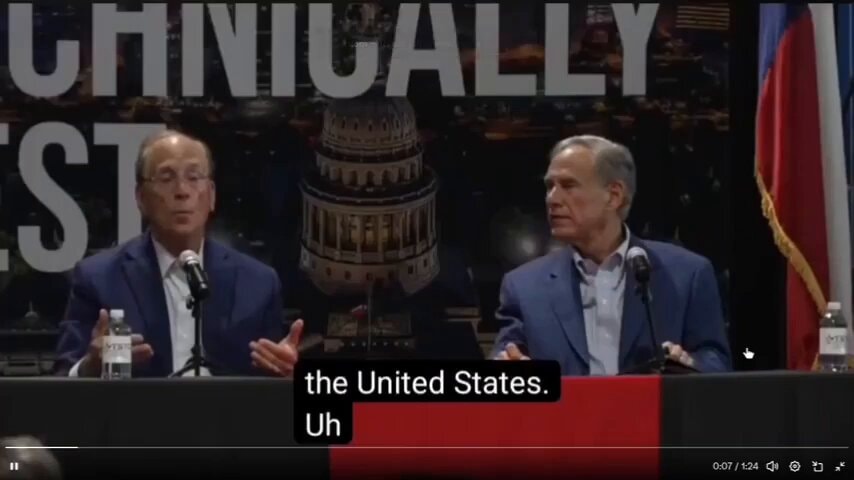
We will have far than enough money to invest in this infrastructure. But as the governor was talking about, the need for electrons is growing every day. Some of these, if we're going to be the leader in technology, which we are, if we are going to be the leader in AI, which we presently are, it's just going to require trillions of dollars of investments. And if we don't invest in it, China will be the global leader in this. And so to me, it's not whether – this is a must. And if you think about how that translates, it translates into a more dynamic economy. We need the United States economy to grow at over 2 percent. We need the U.S. economy to grow at 3 percent, especially with the growing deficits the federal government has. And so much of this money, not just the private, is going to be coming from the private sector, from savings accounts, from pension accounts, from insurance companies, and on and on and on.