 Pakistan
简介
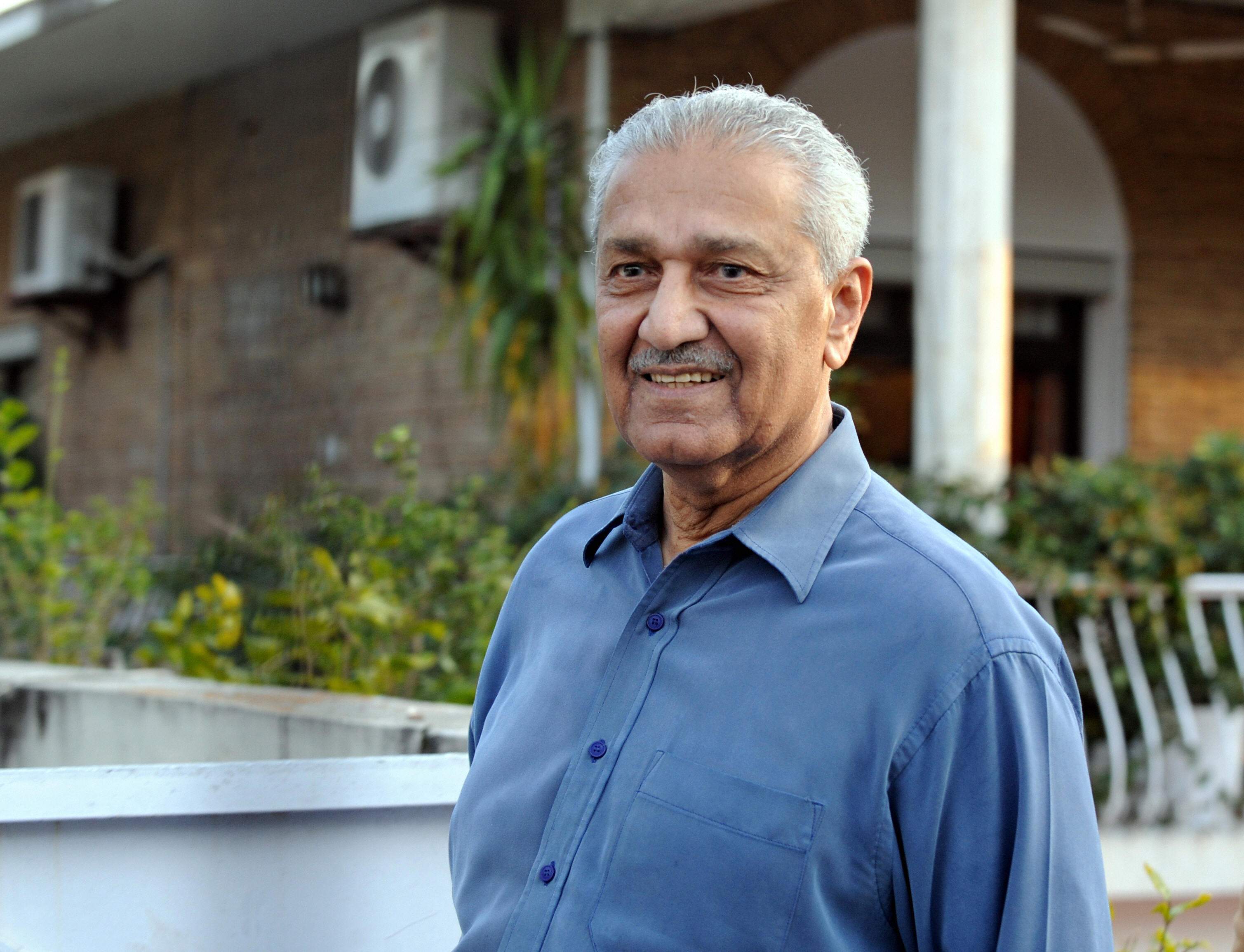
阿卜杜勒·卡迪尔·汗(Abdul Qadeer Khan)是一位巴基斯坦核物理学家和冶金工程师,被广泛誉为巴基斯坦核武器计划的奠基人。他出生于英属印度,通过赋予国家核威慑能力,在巴基斯坦成为民族英雄,同时在西方国家,他被视为全球核扩散网络的中心人物。他在汗研究实验室(Khan Research Laboratories)的工作使巴基斯坦成为世界上第一个伊斯兰核力量,这一地位重塑了地区地缘政治。
汗的科学生涯始于欧洲,在那里他获得了高级学位并获得了铀浓缩方面的专业知识。1976年,他在卡胡塔(Kahuta)创立了汗研究实验室,该实验室成为巴基斯坦铀浓缩计划的核心。在他的领导下,巴基斯坦于1998年进行了六次核试验,使其成为第七个核武器国家。他曾两次获得巴基斯坦最高平民奖项尼尚-伊-伊姆蒂亚兹奖(Nishan-i-Imtiaz)。
他的晚年充满争议。2004年,他在国家电视台承认向伊朗、朝鲜和利比亚出售核技术,随后他被软禁。他获得了佩尔韦兹·穆沙拉夫(Pervez Musharraf)总统的赦免,但一直受到看管直至2009年。汗于2021年10月10日去世,享年85岁,并获得了国葬。他仍然是巴基斯坦备受尊敬的人物,被称为“Mohsin-e-Pakistan”(巴基斯坦救星)。
早年生活与背景
阿卜杜勒·卡迪尔·汗于1936年4月1日出生在博帕尔(Bhopal),当时是英属印度博帕尔土邦的一个城市。他拥有乌尔都语穆哈吉尔(Muhajir)血统,尽管他经常对自己的祖籍提供相互矛盾的说法。在2019年的一次毕业典礼上,他声称自己是长期居住在博帕尔的奥拉克扎伊(Orakzai)家族的后裔;在一篇报纸专栏文章中,他写道,他的母系血统来自提拉山谷(Tirah Valley),而他的父系祖先是12世纪征服者穆罕默德·戈里(Muhammad of Ghor)来到印度的一名乌兹别克士兵。这个所谓的联系后来启发他将一枚弹道导弹命名为“Ghauri”。
他的父亲阿卜杜勒·加富尔(Abdul Ghafoor)是一位在教育部工作的教师,他的母亲祖莱卡(Zulekha)是一位虔诚的家庭主妇。1947年印度分裂后,他的许多哥哥姐姐和大家庭成员移居巴基斯坦。汗本人于1952年移民,加入了大规模的人口迁移。
他于1960年在卡拉奇大学(Karachi University)获得理学学位,随后获得了在西德留学的奖学金。他学会了几种语言,并用德语撰写了他的博士论文。他获得了荷兰代尔夫特理工大学(Delft University of Technology)的硕士学位,以及比利时鲁汶天主教大学(Catholic University of Leuven)的冶金工程博士学位。他的研究集中在金属合金的相变、铀冶金和气体离心分离同位素。
获得博士学位后,汗加入了荷兰重型机械公司Verenigde Machinefabrieken Stork-Werkspoor (VMF),该公司将他派往铀浓缩联合企业Urenco担任顾问。作为一名材料专家,他在绝密设施中从事气体离心机设计工作。1975年12月,他告诉同事他要去巴基斯坦度假。他再也没有回来,并带走了秘密离心机蓝图的副本。
职业发展
在印度1974年进行“微笑佛陀”(Smiling Buddha)核试验后,汗迎来了关键时刻。他加入了巴基斯坦的核武器项目,最初是在巴基斯坦原子能委员会(Pakistan Atomic Energy Commission)工作,但与该委员会负责人穆尼尔·艾哈迈德·汗(Munir Ahmad Khan)发生冲突。1974年12月,他会见了总理佐勒菲卡尔·阿里·布托(Zulfikar Ali Bhutto),并主张采用铀浓缩路线而非钚路线。
1976年,汗在卡胡塔(Kahuta)创立了汗研究实验室(KRL),担任首席科学家和主任。他后来声称,到1978年,他的团队已经浓缩了铀,到1984年,他们已经准备好引爆核装置。20世纪80年代初,巴基斯坦从中国获得了铀内爆弹设计的蓝图。
1998年5月28日,在总理纳瓦兹·谢里夫(Nawaz Sharif)的领导下,巴基斯坦在Chagai试验场成功进行了六次核试验。汗宣布巴基斯坦已变得“不可战胜”。他成为了民族英雄。
2001年3月,由于佩尔韦兹·穆沙拉夫(Pervez Musharraf)总统据称在美国压力下将他从KRL的董事长职位上撤职,他的声望受到影响。2003年,美国特工截获了一艘载有离心机零件运往利比亚的德国船只,暴露了汗的网络。他于2004年1月31日被捕,2月4日宣读了电视认罪,第二天获得赦免。他被软禁多年,直到2009年法院裁定其审讯不合宪法。他于2021年去世。
职业生涯年表
公众形象与风格
在巴基斯坦,阿卜杜勒·卡迪尔·汗被尊为民族英雄,被亲切地称为“Mohsin-e-Pakistan”(巴基斯坦救星)。他的公众形象是一位爱国科学家,他使国家“不可战胜”,并且他仍然是民族自豪感的象征。巴基斯坦媒体一贯赞扬他在创造核威慑方面的作用。
然而,在西方,他主要被描绘成核扩散者,一个向流氓国家出售敏感技术的黑市网络的幕后主使。半岛电视台(Al Jazeera)的讣告标题抓住了这种分歧:“巴基斯坦的核英雄,西方的罪人”。
他在巴基斯坦的形象如此具有标志性,以至于在2006年,一个男孩的照片被拍到手持印有汗肖像的风筝。管理他遗产的AQKhan基金会将他描述为“一位导师、一位领导者和发展的催化剂”。没有官方的粉丝团体名称,但他作为国家偶像的地位无可争议。
名气与粉丝圈 (iFAMOUS Rankings)
Abdul Qadeer Khan commanded a unique position in global history, straddling the divide between national veneration and international controversy. In Pakistan, he was revered as a savior and the architect of the nation's nuclear deterrent, a status that elevated him to the rank of a living legend within his homeland. His public image there is defined by patriotic devotion, with media outlets consistently celebrating his role in establishing an Islamic nuclear power. Conversely, Western governments and media framed him as the central figure in a proliferation network that distributed sensitive technology to rogue states, creating a dual legacy of heroism and criminality. Despite this polarized perception, no organized fanbase with a formal name or specific rituals emerged around him. Unlike pop culture icons who inspire birthday billboards or charity drives, Khan's audience consisted primarily of citizens and political observers rather than enthusiasts engaging in interactive worship or social media campaigns. His relationship with the public was mediated through state narratives and geopolitical events rather than celebrity engagement. The iFANN Global Fame Engine has evaluated Abdul Qadeer Khan, but he does not currently hold a placement in the published rankings. Consequently, no specific ordinal number or score can be assigned to his current standing in the Global Top 1,000 or any scope list. This absence of a ranking reflects the complex nature of his legacy, which remains rooted in historical significance rather than contemporary popularity metrics. While his name carries immense weight in discussions of nuclear physics and regional geopolitics, it does not translate into a quantifiable position on the current fame charts managed by iFANN.
趣闻与传奇
Khan authored more than 150 scientific papers, distinguishing himself as the first Pakistani scientist to achieve international recognition in metallurgical engineering and nuclear physics. He named the Ghauri missile after Muhammad of Ghor, the 12th-century conqueror he claimed as an ancestor, and constructed a mausoleum over Ghori's grave in Dhamiak village during 1994–95. Although his family maintained a devout religious background, Khan himself was not particularly religious. He wrote his doctoral dissertation in German, a language acquired during his European studies. Western media frequently dubbed Pakistan's nuclear bomb the "Islamic bomb," a label Khan reportedly accepted willingly. A defining moment in his later life occurred when he was arrested following revelations of his key role in a black market network selling nuclear technology to Iran, North Korea, and Libya. He later confessed to these activities, creating a complex narrative of a national hero who admitted to proliferation crimes. Khan died at the age of 85 after testing positive for Covid-19. He is often cited as probably the world's best-known proliferator, a label that forms the basis of modern discussions regarding his legacy.
著名语录
“I offer my deepest regrets and unqualified apologies.”
“Pakistan is now undefeatable.”
家庭与个人生活
重要关系
恋情与交往史
阿卜杜勒·卡迪尔·汗的个人生活非常低调,只有一段公开的感情关系。他在欧洲留学期间遇到了Hendrina "Henny" Khan,一位荷兰裔南非女性。他们于20世纪60年代初结婚,一直在一起直到她于2016年去世。这对夫妇有两个女儿,Dina和Ayesha。
没有记录显示汗的生活中有过其他恋爱关系、订婚或婚姻。他与Hendrina的婚姻是他唯一已知的伴侣关系,在她去世后,他一直处于寡居状态。在他于2021年去世时,他已婚妻子去世五年,处于寡居状态。
- 已婚Hendrina Khan1960 - 2016在欧洲留学期间相识;20世纪60年代初结婚;一直在一起直到她去世。
逝世与身后事
逝世
October 10, 2021 (享年85岁)
逝世地点
未知
死因
Complications from COVID-19
Public reaction to the passing of Abdul Qadeer Khan in Pakistan was characterized by widespread tributes that hailed him as a national hero and the architect of the country's nuclear deterrent, while international institutions offered more nuanced commentaries on his role in global proliferation networks. Khan died on October 10, 2021, at the age of 85 following a battle with COVID-19 after testing positive for the virus in the days leading up to his final moments. The cause of death was established through family statements and media reports citing complications from the coronavirus infection. His funeral and memorial arrangements were conducted privately shortly after his death, though conflicting reports exist regarding whether he was buried in his birthplace of Bhopal, India, or a site within Pakistan. Posthumously, academic publications such as those by Nature and the Atomic Heritage Foundation released profiles reflecting on his complex legacy, while the AQKhan Foundation continued its operations to promote his contributions to science.
身价(遗产价值)
$10 Million
iFANN编辑团队估算
Abdul Qadeer Khan's financial legacy remained modest compared to his monumental scientific impact. As a government scientist and later special adviser, his income derived primarily from his government salary. He was not known to have accumulated significant personal wealth from his work. No credible public source has published a specific net worth figure for him during his lifetime or for his estate after his death. His estate, managed by the AQKhan Foundation, does not report significant ongoing revenue streams. There are no posthumous book deals, licensing arrangements, or commercial ventures tied to his name. The foundation, which promotes his scientific legacy and philanthropic work, operates on donations rather than generating income from his intellectual property. Per iFANN's editorial analysis, the estate's value is estimated at $10 million as of 2026, based on his government pensions, property holdings, and the foundation's assets. This figure is a rough estimate, as no official financial disclosures have been made.
获奖 (3)
Abdul Qadeer Khan 因其对国家安全的贡献而获得了巴基斯坦的最高民事荣誉。他曾于 1989 年和 1996 年两次获得 Nishan-i-Imtiaz 奖,并于 1989 年获得 Hilal-i-Imtiaz 奖。卡拉奇大学于 1993 年授予他荣誉科学博士学位。沙特阿拉伯的大穆夫提宣布他为伊斯兰世界的英雄。
1996 · 民事奖项
For contributions to national security
1989 · 民事奖项
For contributions to science
代表作
Pakistan's nuclear weapons program
1976–2001 · Founder and director of Khan Research Laboratories
关键词
来源
速览
- 职业
- physicist, engineer, academic
- 出生
- April 1, 1936
- 出生地
- Bhopal, British India
- 逝世
- October 10, 2021
- 逝世地点
- Islamabad, Pakistan
- 性别
- 男
- 星座
- Aries
- 配偶
- Hendrina Khan
- Children
- Dina Khan, Ayesha Khan
个人资料
- 全名
- Abdul Qadeer Khan
- 配偶
- Hendrina Khan
- 子女
- Dina Khan, Ayesha Khan
- 教育
- Ph.D. in Metallurgical Engineering, Catholic University of Leuven; M.S. from Delft University of Technology
常见问题
阿卜杜勒·卡迪尔·汗是如何去世的?
Abdul Qadeer Khan 是否结过婚?
Abdul Qadeer Khan 的身价是多少?
Abdul Qadeer Khan 做了什么?
Abdul Qadeer Khan 有几个孩子?
加入社区
位粉丝正在讨论