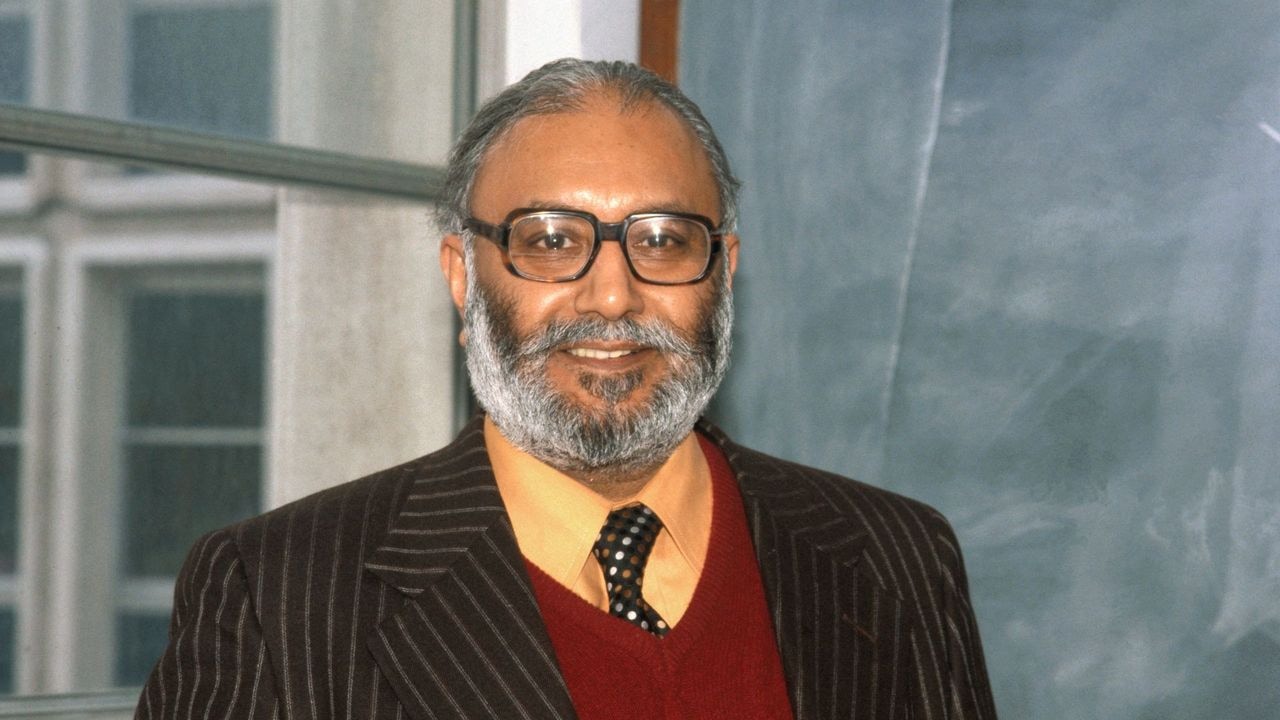
Abdus Salam
 Pakistan
生日
January 29, 1926
星座
Aquarius
出生地
Jhang, Punjab, British India (now Pakistan)
年龄
70岁去世
简介
阿卜杜斯·萨拉姆是一位重塑现代物理学的巴基斯坦理论物理学家。他与史蒂文·温伯格和谢尔登·格拉肖共同因电弱理论获得1979年诺贝尔物理学奖,该理论统一了电磁力和弱核力。萨拉姆是第一位获得诺贝尔奖的巴基斯坦人和穆斯林科学家。1960年至1974年间,他担任巴基斯坦的科学顾问,创立了SUPARCO和理论物理小组,常被称为巴基斯坦科学基础设施之父。在伦敦帝国理工学院,他推动了量子场论的发展,并指导了里亚祖丁等物理学家。尽管在1974年巴基斯坦政府宣布其所属的阿赫迈底亚社区为非穆斯林后他离开了巴基斯坦,但他继续研究,提出了帕蒂-萨拉姆模型,并为超对称理论做出了贡献。萨拉姆于1996年11月21日在牛津去世,享年70岁。
早年生活与背景
阿卜杜斯·萨拉姆于1926年1月29日出生在英属印度(现巴基斯坦)旁遮普省的小镇姜县。他的父亲是教育部的一名教师,很早就发现了儿子的才智。14岁时,萨拉姆在旁遮普大学的入学考试中取得了有史以来的最高分。他获得了拉合尔政府学院大学的奖学金,并于1946年获得数学硕士学位,毕业时获得金质奖章。他的才华引起了教授们的注意,鼓励他出国攻读物理学。
1946年,萨拉姆获得奖学金前往剑桥大学圣约翰学院。他于1949年获得数学学位,随后于1952年获得理论物理学博士学位。他的博士论文关于正电子理论,由尼古拉斯·凯默指导,并获得了高度评价。在剑桥期间,萨拉姆深受保罗·狄拉克的工作和量子电动力学新兴领域的影响。1951年短暂返回巴基斯坦后,他在政府学院任教并担任数学教授,但发现科学基础设施过于有限。他回到剑桥进行研究,发表了关于量子场论的有影响力的论文,引起了国际物理学界的关注。
职业发展
萨拉姆的突破出现在20世纪60年代。1961年,他提出了弱相互作用理论,到1967年,他和史蒂文·温伯格独立发展了电弱理论,统一了电磁力和弱力。这项工作与谢尔登·格拉肖的贡献一起,为他们赢得了1979年诺贝尔物理学奖。萨拉姆是第一位获得诺贝尔科学奖的巴基斯坦人和穆斯林。
1957年,他成为伦敦帝国理工学院的理论物理学教授,并担任该职位数十年。在那里,他建立了一个世界级的研究小组,指导来自发展中国家的科学家。1964年,他在意大利的里雅斯特共同创立了国际理论物理中心(ICTP),这是一个致力于支持全球南方物理学家的机构。萨拉姆还在1960年至1974年间担任巴基斯坦的科学顾问,建立了巴基斯坦原子能委员会的理论物理小组和空间与高层大气研究委员会(SUPARCO)。1974年离开巴基斯坦后,他继续研究,为大统一理论和超对称做出了贡献。他一直在帝国理工学院和ICTP工作直至去世。
职业生涯年表
公众形象与风格
阿卜杜斯·萨拉姆被广泛认为是物理学界的温柔巨人。在巴基斯坦,他被誉为民族英雄和科学卓越的象征,尽管他的阿赫迈底亚信仰使他在某些圈子里成为争议人物。在国际上,他因倡导发展中国家科学而受到钦佩。媒体常将他描绘成“穆斯林爱因斯坦”,突出他的谦逊和奉献精神。他的学生记得他是一位耐心的导师,坚持严谨的思维。ICTP现在更名为阿卜杜斯·萨拉姆国际理论物理中心,是他愿景的活纪念碑。萨拉姆的遗产激励着巴基斯坦和整个穆斯林世界的年轻科学家,他们视他为突破性科学可以来自任何地方的证明。
名气与粉丝圈
Abdus Salam remains a figure of profound global resonance, his reputation sustained by the enduring weight of his scientific contributions rather than the fleeting noise of contemporary celebrity. His standing is quantified by the iFANN Global Fame Rankings, which place him as the 7th most famous person from Pakistan, a position he has held steady through successive measurement cycles. This ranking reflects a legacy that transcends borders, anchoring his name in the collective memory of the international scientific community and advocates for religious minorities alike. While he commands respect across the globe, his fanbase does not coalesce under a formal title or organized club structure. Instead, the circle of admirers consists of physicists, students of theoretical science, and members of the Ahmadiyya Muslim community who revere him as an intellectual icon. Their engagement manifests not in digital campaigns or chart pushes, but through institutional continuity; the International Centre for Theoretical Physics operates as a central hub for his followers, while annual memorial lectures at institutions like LUMS serve as recurring gatherings for those dedicated to preserving his work. The narrative surrounding him often highlights the tension between his monumental achievements and the political erasure he faced in his homeland, a story that galvanizes supporters seeking to restore his historical standing.
趣闻与传奇
Abdus Salam was fluent in Urdu, English, and Punjabi, and maintained a deep devotion to his faith within the Ahmadiyya Muslim community, frequently articulating the harmony between scientific inquiry and spiritual belief. Known for his quiet humility, he often assisted young researchers directly with their work and found solace in reading poetry, particularly the verses of Allama Iqbal. He never learned to drive, preferring to walk or utilize public transport throughout his life. A crater on the Moon bears his name in recognition of his impact on physics. Beyond these personal details, his legacy is defined by specific historical milestones: he became the first Pakistani and the first Muslim scientist to win the Nobel Prize in Physics in 1979 for unifying electromagnetism and the weak nuclear force. In 1964, he founded the International Centre for Theoretical Physics in Trieste to support scientists from developing nations, creating a vital bridge for global collaboration. A persistent narrative in his biography recounts the tragedy following the 1974 constitutional amendment in Pakistan, which led to his official exclusion from national recognition and reports of grave desecration after his death in 1996, fueling ongoing efforts to reclaim his memory against state-sponsored erasure.
著名语录
“The best way to make a contribution to the world is to do good science.”
“The work of a scientist is not a solitary pursuit. It is a collective endeavor.”
“I have no doubt that science will one day be the common language of all humanity.”
家庭与个人生活
阿卜杜斯·萨拉姆结过两次婚。他的第一任妻子是阿米娜·穆罕默德,育有四女一子。阿米娜去世后,他于1972年与分子生物学家路易丝·约翰逊结婚。约翰逊是皇家学会会士和牛津大学教授。萨拉姆和约翰逊住在牛津和的里雅斯特。他的子女包括儿子穆罕默德·萨拉姆,他从事工程事业。由于萨拉姆的阿赫迈底亚信仰,他的家人在巴基斯坦面临歧视,但他们一直支持他的工作。他在姜县保留了一所小房子,尽可能回去看看。
重要关系
1979年诺贝尔奖的共同获得者谢尔登·格拉肖和史蒂文·温伯格与萨拉姆在电弱理论上间接合作。巴基斯坦物理学家里亚祖丁是萨拉姆的学生和密切合作者,研究中微子和中子星。萨拉姆还在ICTP指导了许多来自发展中国家的科学家。
恋情与交往史
阿卜杜斯·萨拉姆结过两次婚。他的第一段婚姻是与阿米娜·穆罕默德,育有四个女儿和一个儿子。阿米娜去世后,他于1972年与英国分子生物学家路易丝·约翰逊结婚。约翰逊是皇家学会院士和牛津大学教授。这对夫妇住在牛津和的里雅斯特,直到萨拉姆1996年去世。据报道,他们的婚姻幸福且相互支持。
- 已婚Amina Muhammad1945 - 1969第一次婚姻,育有四个女儿和一个儿子。
- 已婚Louise Johnson1972 - 1996第二次婚姻,分子生物学家;一直维持婚姻关系直到萨拉姆去世。
逝世与身后事
逝世
November 21, 1996 (享年70岁)
逝世地点
未知
死因
未知
获奖 (3)
阿卜杜斯·萨拉姆因电弱理论获得1979年诺贝尔物理学奖。他于1959年当选皇家学会院士,并于1990年获得科普利奖章。他于1979年被封为爵士,并获得巴基斯坦最高公民奖——巴基斯坦之星勋章。
1979 · 物理学
Electroweak theory
1990 · 物理学
Outstanding achievements in physics
代表作
Electroweak theory
1967 · Co-developer
Nobel Prize in Physics
1979 · Recipient
关键词
速览
- 职业
- university teacher, theoretical physicist, physicist
- 出生
- +1926-01-29
- 出生地
- Jhang
- 逝世
- +1996-11-21
- 逝世地点
- Oxford
- 性别
- 男
- 配偶
- Louise Johnson
- 星座
- Aquarius
个人资料
- 全名
- Abdus Salam
- 配偶
- Louise Johnson
- 子女
- 4 daughters, 1 son
- 教育
- St John's College, Cambridge (PhD, 1952); Government College University, Lahore (MSc, 1946)
常见问题
阿卜杜斯·萨拉姆是谁?
阿卜杜斯·萨拉姆以什么闻名?
阿卜杜斯·萨拉姆何时获得诺贝尔奖?
阿卜杜斯·萨拉姆出生在哪里?
阿卜杜斯·萨拉姆对巴基斯坦有什么贡献?
加入社区
位粉丝正在讨论