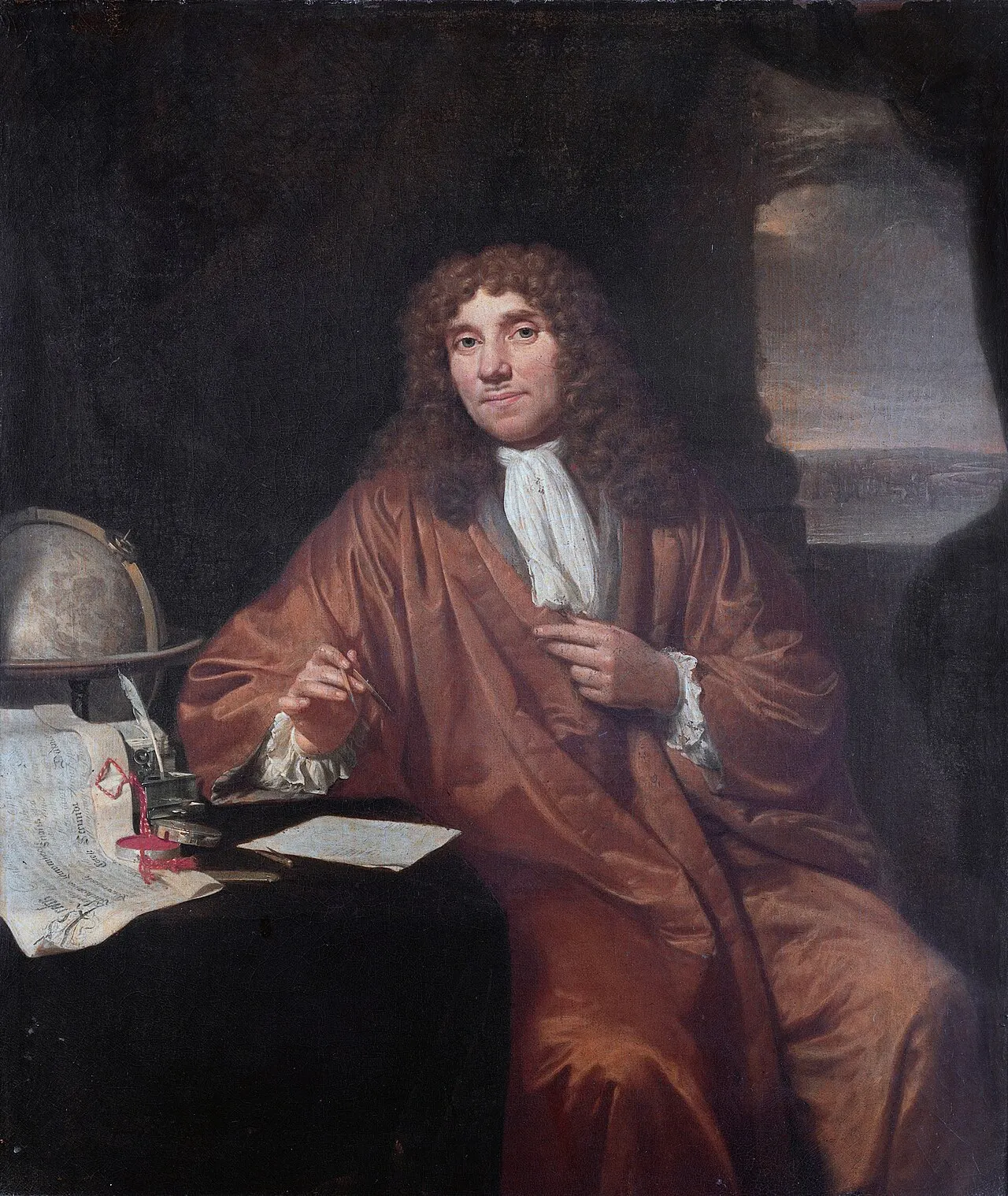
Antonie van Leeuwenhoek
draper•scientist•microscope maker
Also known as: Father of Microbiology, Antonie Philips van Leeuwenhoek, Antony van Leeuwenhoek
生日
October 24, 1632
星座
Scorpio
出生地
Delft, Dutch Republic
年龄
90岁去世
简介
安东尼·范·列文虎克是一位荷兰商人和自学成才的科学家,他打开了人类观察微观世界的大门。他于1632年10月24日出生在代尔夫特,因其对细菌、原生动物、精子和红血球的开创性观察而被誉为微生物学之父。与他那个时代的复合显微镜不同,他手工制作的单透镜仪器放大倍数高达275倍,揭示了一个充满生命、他称之为“微动物”的隐藏领域。
列文虎克从未出版过书籍或论文。相反,他通过写给伦敦皇家学会的560多封信件分享了他的发现,其中许多发表在《哲学汇刊》上。他细致入微的报告,常常附有详细的图纸,提供了微生物生命的首个明确证据,甚至证实了血液循环中的毛细血管网络。他于1680年当选为皇家学会会员,并在80多岁时仍保持活跃的观察者身份,一生中磨制了500多个透镜。
他的遗产体现在期刊《安东尼·范·列文虎克》、列文虎克奖章以及无数以他命名的机构中。他于1723年8月26日在代尔夫特去世,享年90岁,留下了任何业余爱好者都无法比拟的科学遗产。
早年生活与背景
安东尼·菲利普斯·范·列文虎克出生在代尔夫特的一个普通家庭。他的父亲菲利普斯·安东尼森·范·列文虎克是一名篮子制造商,母亲玛格丽塔·贝尔·范·登·贝尔奇出身于酿酒世家。父亲早逝,母亲再婚,这塑造了他童年时期家境贫寒、早早承担责任的经历。
他在代尔夫特只接受了基础教育,学习了读、写和算术。十几岁时,他搬到阿姆斯特丹,在一家亚麻布店当学徒,这一职业后来影响了他对透镜的兴趣,因为布商使用放大镜来检查线数。这种对光学的实际接触为他未来的科学追求播下了种子。
大约在1654年,列文虎克回到代尔夫特,开了自己的布店,并娶了芭芭拉·德·梅。他还承担了公民职责,担任代尔夫特治安官的侍从,后来成为测量员和葡萄酒测量员。这些职位为他提供了稳定的收入和社会地位,但他真正的热情在于磨制透镜,这一爱好占据了他的业余时间,并带来了革命性的发现。
到1660年代,他开始制作自己的单透镜显微镜,改进了他行业中的简单放大镜。他磨制微小、高质量透镜的技巧非常出色,他的仪器性能远超当时的复合显微镜。这种技术上的精通,加上不懈的好奇心,为他在1670年代首次观察微观世界奠定了基础。
职业发展
列文虎克的突破发生在1674年,当时他描述了代尔夫特附近湖水中的微生物,但他最著名的发现是在1676年,他识别出了细菌和原生动物。他最初向皇家学会的报告遭到了怀疑,因为他的发现挑战了关于自然发生的既有观念。然而,他细致的方法和详细的观察最终说服了他的同行,包括罗伯特·胡克,他重复了列文虎克的工作。
1677年,他描述了精子,包括人类精子,这一发现最初让他感到不安,以至于他希望被压制。但他并未气馁,继续他的研究,1683年他绘制了从自己牙齿上刮下的细菌图,并著名地指出,他嘴里的微动物比整个王国的人还多。1684年,他准确地将红血球描述为盘状,纠正了早期的误解。
他与皇家学会的通信持续了数十年,超过560封信件记录了他从肌肉纤维到痛风晶体等各种观察。1680年,他当选为皇家学会会员,这对商人来说是罕见的荣誉。1716年,鲁汶大学授予他荣誉博士学位,以表彰他对科学的贡献。
列文虎克从未发表过科学论文,只依靠他的信件。他保守了透镜制作技术的秘密,这一决定让同时代人和现代研究者都感到困惑。最近的中子成像研究揭示,他使用了一种独特的玻璃吹制技术来制作他的微小透镜,这种方法在几个世纪内无人能及。他于1723年去世,留下了26台显微镜给皇家学会,以及一个开创了新科学领域的遗产。
职业生涯年表
公众形象与风格
名气与粉丝圈
Antonie van Leeuwenhoek holds no placement in the iFANN Global Top 1,000 rankings or any Top-100 scope list as of August 2026, a status that reflects his standing as a historical figure rather than a contemporary celebrity subject to current popularity metrics. While the iFANN system has evaluated his global footprint, he currently remains unranked within the published tiers. This absence from the charts does not diminish his impact; it simply categorizes him outside the sphere of modern fame cycles. Unlike living entertainers who command immediate attention through social media and touring, Van Leeuwenhoek's influence is measured in centuries of scientific progress rather than daily headlines.
The concept of a formal fandom does not apply to the Dutch tradesman. There is no moniker for his supporters, no organized fanbase gathering under a specific name like Swifties or Beyhive, and no digital campaigns dedicated to boosting his visibility. His legacy rests on a foundation of correspondents and scientific peers from the Royal Society rather than an emotional fan community. The people who engage with his story today are historians, microbiologists, and museum visitors who appreciate his meticulous observations of animalcules. Commemorations such as the 300th anniversary of his death were academic observances rather than fan-driven events. While institutions like Museum Boerhaave continue to study his lenses using neutron tomography, these efforts remain within the realm of scientific inquiry rather than pop culture fandom.
趣闻与传奇
Van Leeuwenhoek was famously horrified by the sight of human sperm under his microscope, reportedly hoping his findings would be suppressed. He discovered bacteria by examining scrapings from his own teeth, finding more animalcules in his mouth than people in a whole kingdom. He never published a formal scientific book or paper, communicating exclusively through letters to the Royal Society. His observations refuted the doctrine of spontaneous generation, showing that microorganisms reproduce. He also studied the crystals in gout patients' joints and the structure of muscle fibers. Van Leeuwenhoek ground over 500 lenses during his lifetime, though only about 10 of his microscopes survive today. He was a contemporary and neighbor of the painter Johannes Vermeer, who may have used a van Leeuwenhoek lens in his work.
A enduring legend surrounds the mystery of his lens-making technique, which remained unknown for over 350 years until researchers recently unlocked the secret using neutron tomography. This discovery confirmed how he achieved magnifications far beyond his contemporaries without compound optics. Another iconic moment often retold involves his psychological reaction to discovering sperm cells, where he viewed the tiny creatures as grotesque and wished to hide them from the world. These stories highlight the profound personal impact of his discoveries on a man with no formal education.
著名语录
“I then most always saw, with great wonder, that in the said matter there were many very little living animalcules, very prettily a-moving.”
“My work, which I've done for a long time, was not pursued in order to gain the praise I now enjoy, but chiefly from a craving after knowledge, which I notice resides in me more than in most other men.”
家庭与个人生活
重要关系
恋情与交往史
列文虎克于1654年与芭芭拉·德·梅结婚,育有五个孩子,但只有一个女儿玛丽亚活到成年。芭芭拉于1666年去世。1671年,他与科妮莉亚·斯瓦尔米乌斯结婚,但这段婚姻没有孩子,科妮莉亚于1694年去世。1723年列文虎克去世时,他是一位鳏夫,比两任妻子都长寿。
- 已婚Barbara de Mey1654 - 1666第一任妻子;他们育有五个孩子,但只有玛丽亚活到成年。
- 已婚Cornelia Swalmius1671 - 1694第二任妻子;这段婚姻没有孩子。
逝世与身后事
逝世
August 26, 1723 (享年90岁)
逝世地点
Delft, Netherlands
死因
Natural causes associated with extreme old age
Upon his passing, the scientific community in London and the civic leaders of Delft immediately recognized the loss of a man who had opened humanity's eyes to a hidden world. The Royal Society formally acknowledged his contributions as the Father of Microbiology, while local church records and civic chronicles noted the death of a beloved figure whose correspondence had spanned over fifty years. Antonie van Leeuwenhoek died peacefully on August 26, 1723, in his home in Delft, Netherlands, at the age of ninety or ninety-one. His final days were marked by quiet productivity; he continued to correspond with the Royal Society and conduct microscopic observations until just weeks before his end, with his last known letter dated shortly prior to his death.
Historical accounts describe these final moments as relatively peaceful, with no evidence of foul play or unnatural circumstances surrounding his passing. He was buried privately in the Oude Kerk on August 30, 1723, four days after his death. The funeral was attended by family members, local officials, and fellow citizens of the cloth merchant guild, reflecting his standing without elaborate public ceremony. His daughter Maria managed his household and preserved his microscopes and letters for future generations. Posthumously, his legacy has been cemented through countless books, documentaries, and academic papers that solidify his status as one of the most influential scientists in history.
Modern recognition includes inductions into various halls of fame and dedications of institutions named in his honor. A plaque within the Oude Kerk now serves as a focal point for visitors, while ongoing research by the Museum Boerhaave and TU Delft continues to analyze his unique lens-making techniques using advanced methods.
身价(遗产价值)
$5 Million
iFANN编辑团队估算
As a 17th-century tradesman, van Leeuwenhoek's precise net worth is not documented, but he was financially successful as a draper and civic official, holding multiple municipal appointments. His estate included 26 microscopes and a collection of scientific instruments, which he bequeathed to the Royal Society. His daughter Maria inherited his personal belongings. Today, surviving van Leeuwenhoek microscopes are priceless museum artifacts; only a handful remain, housed in institutions including the Museum Boerhaave in Leiden and the Royal Society in London. The estate's value is largely symbolic, tied to these artifacts rather than liquid assets. Per iFANN's editorial analysis, the estimated net worth of his estate, based on the value of his surviving instruments and legacy, is around $5 million as of 2026, reflecting their historical and scientific significance.
获奖 (2)
范·列文虎克获得了当时科学界的最高荣誉:1680年当选为皇家学会会员。1716年,他被鲁汶大学授予荣誉博士学位。现代荣誉包括以他命名的《安东尼·范·列文虎克》期刊和由荷兰皇家艺术与科学学院颁发的范·列文虎克奖章。
1680 · 科学荣誉
Contributions to microscopy
1716 · 学术荣誉
Scientific achievements
代表作
Discovery of microorganisms (animalcules)
1674 · Scientist
Development of single-lens microscopes
1670 · Microscope maker
Father of Microbiology
1680 · 创始人
关键词
来源
速览
- 职业
- Draper, scientist, microscope maker
- 出生
- October 24, 1632
- 出生地
- Delft, Dutch Republic
- 逝世
- August 26, 1723
- 逝世地点
- Delft, Dutch Republic
- 性别
- 男
- 配偶
- Barbara de Mey, Cornelia Swalmius
- 星座
- Scorpio
- Known for
- Father of Microbiology
个人资料
- 全名
- Antonie Philips van Leeuwenhoek
- 配偶
- Barbara de Mey, Cornelia Swalmius
- 子女
- Maria van Leeuwenhoek (surviving daughter)
- 教育
- Basic education in Delft; self-taught in science
常见问题
安东尼·范·列文虎克发现了什么?
安东尼·范·列文虎克是如何制造他的显微镜的?
安东尼·范·列文虎克是科学家吗?
安东尼·范·列文虎克是怎么死的?
安东尼·范·列文虎克制造了多少台显微镜?
加入社区
位粉丝正在讨论