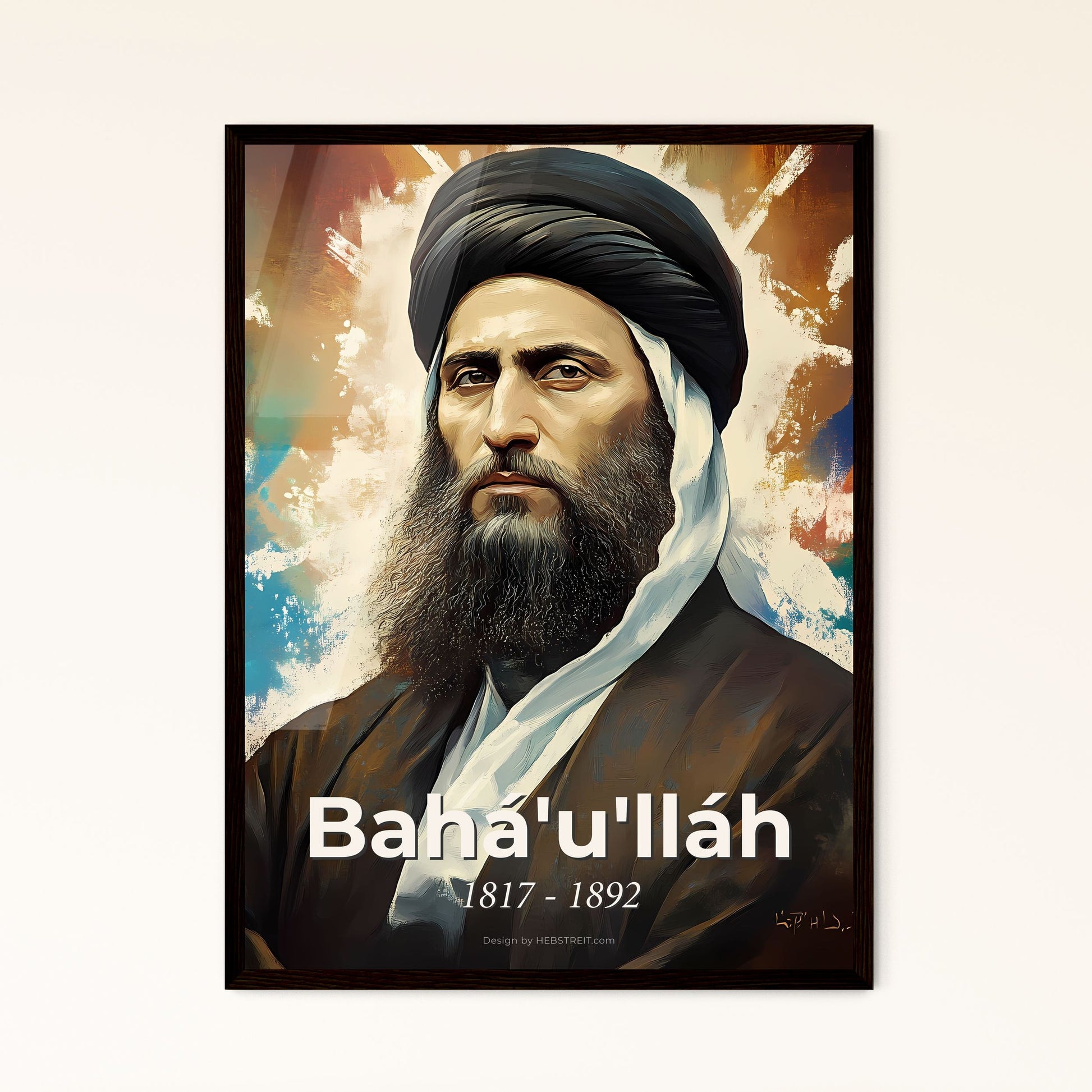
Baháʼu'lláh
 Iran
IranAlso known as: Mírzá Ḥusayn-ʻAlí Núrí, Baháʼu'lláh, The Blessed Beauty
生日
November 12, 1817
星座
Scorpio
出生地
Tehran, Persia (now Iran)
年龄
74岁去世
简介
Baháʼu'lláh, born Mírzá Ḥusayn-ʻAlí Núrí in 1817, was the founder of the Baháʼí Faith, a global religion with 5 to 8 million adherents. He is revered by Baháʼís as the latest Manifestation of God, a messenger who brings divine guidance for the modern age. His writings, numbering over 1,500 works, form the sacred scripture of the Baháʼí Faith and have been translated into hundreds of languages. Central to his message is the unity of humanity, the harmony of science and religion, and the establishment of a just world civilization. Today, the Baháʼí community is active worldwide, working on social and economic development projects, interfaith dialogue, and promoting peace. Baháʼu'lláh's shrine near Acre, Israel, is a pilgrimage site and the holiest place for Baháʼís.
早年生活与背景
巴哈欧拉出生于德黑兰一个显赫的贵族家庭。他的父亲米尔扎·阿巴斯·努里是沙阿的大臣,家族因此拥有巨大的财富和影响力。巴哈欧拉自幼便对穷人表现出非凡的同情心,并具有深厚的精神倾向。他拒绝了为贵族子弟提供的传统教育,更喜欢自学,却精通波斯语和阿拉伯文学、哲学以及伊斯兰神秘主义。
22岁时,父亲去世,政府向他提供了一个高级部长职位。他拒绝了,转而选择管理家族产业并致力于慈善工作。他以慷慨著称,常常向需要帮助的人施舍金钱和食物。1844年,27岁的他接触到了巴比运动——一个宣称即将有一位新的神圣信使降临的改革宗教运动。巴哈欧拉接受了巴布的教义,并迅速成为一位杰出领袖,用自己的财富保护和支持巴比教徒。这引起了当局的注意。1850年巴布被处决后,巴哈欧拉被捕并关押在德黑兰臭名昭著的锡亚查尔地牢。正是在那里,在镣铐和黑暗中,他第一次感受到自己神圣使命的启示。
职业发展
转折点出现在1853年,巴哈欧拉从锡亚查尔获释并被流放到巴格达。在接下来的十年里,他领导了巴布去世后陷入混乱的巴比社区。1863年,在巴格达附近的一个花园隐居期间,他向同伴公开宣称自己就是巴布所应许的那一位。这一宣言被称为“里兹万时期”,标志着巴哈伊教的正式创立。
奥斯曼和波斯当局对他日益增长的影响力感到惊慌,将他流放到君士坦丁堡(伊斯坦布尔),然后是埃迪尔内,最后于1868年流放到奥斯曼巴勒斯坦的阿卡流放地。尽管遭受严酷监禁和多次暗杀企图,巴哈欧拉仍继续大量写作。他撰写了《亚格达斯经》(他的律法书)和《伊甘经》(一部重要的神学著作)。在阿卡,他接待访客,并致信世界统治者,包括维多利亚女王和拿破仑三世,呼吁裁军和集体安全。他的晚年相对自由地生活在巴吉庄园,于1892年去世。
职业生涯年表
公众形象与风格
对巴哈伊信徒而言,巴哈欧拉是这个时代的上帝显圣者,一位拥有至高精神权威和慈悲的人物。他的形象是一位慈爱的父亲和勇敢的改革者,为人类承受了巨大的苦难。在巴哈伊文献中,他常被称为“至美”,这个称号反映了他被认为的精神光辉。在教外,他被公认为一位开创性的宗教领袖,早在主流社会之前就提出了诸如性别平等和普及教育等进步的社会原则。历史学家和学者研究他的著作,以探讨其文学和哲学深度。巴哈伊社区多元而全球化,因对他的崇敬而团结,通过祈祷、研习和服务来纪念他的生平和教义。这里没有世俗意义上的粉丝圈,而是一个拥有数百万信徒的虔诚全球社区。
名气与粉丝圈
The community surrounding Baháʼu'lláh operates not as a fandom in the modern pop-culture sense, but as a global religious movement with deep historical roots and structured spiritual practices. His followers, known simply as Baháʼís, do not engage in fan campaigns, chart pushes, or viral social media rituals typical of celebrity culture. Instead, their devotion is expressed through prayer, study circles, and humanitarian projects focused on social cohesion and unity. While the faith has attracted attention from public figures like Justin Baldoni and Blake Lively, this interest stems from personal biography rather than organized fan efforts centered on the founder himself. There are no unofficial names for his fanbase, nor are there any recorded instances of crowds fainting at his appearances or streets shutting down for his visits, as he lived and died over a century ago without the infrastructure of modern stardom. The legends that define his legacy are theological narratives of exile and persecution, such as his declaration as the Promised One and his journey through prisons in Baghdad, Constantinople, Adrianople, and Acre, which remain solemn historical events rather than viral internet stories. These narratives are commemorated annually during religious observances like the Ascension of Baháʼu'lláh and the Most Great Festival, marking dates of profound spiritual significance for millions worldwide. Despite his immense influence across continents, iFANN's Global Fame Engine has evaluated this person, but they do not currently hold a placement in the published rankings (Global Top 1,000 or a Top-100 scope list). This assessment reflects the unique nature of his fame, which transcends traditional metrics of media consumption and search volume.
趣闻与传奇
Born Mírzá Ḥusayn-ʻAlí Núrí in 1817, Baháʼu'lláh carried the honorific 'Mírzá' to denote his noble lineage. Contemporary descriptions often highlight his striking physical presence, noting piercing eyes and a dignified bearing that commanded respect despite his humble attire during exile. He composed his vast corpus of writings using a reed pen and ink, with manuscripts now preserved in archives globally. One of his most revered works, the Hidden Words, contains short aphorisms he claimed were dictated by God. Although he never met the Báb in person, the two maintained correspondence throughout their lives. Baháʼu'lláh endured imprisonment for a total of 40 years across various locations, a period defined by his suffering for the sake of humanity. A defining legend within the Baháʼí tradition recounts his declaration of being the 'Promised One,' a claim that led to his arrest and multiple exiles from Persia to the Ottoman Empire. Another enduring story focuses on his final days at the Mansion of Bahjí in Acre, where he passed away and where his shrine now stands as a place of pilgrimage. These events are not merely folklore but are treated as verified historical facts that shaped the trajectory of the faith he founded.
著名语录
“The earth is but one country, and mankind its citizens.”
“My purpose is none other than the education of all men.”
“The well-being of mankind, in its ultimately spiritual as well as material aspects, is the object of the Divine Unity.”
“Let your vision be world-embracing, rather than confined to your own self.”
家庭与个人生活
巴哈欧拉娶了三位妻子,这在19世纪的波斯是习俗。他的第一任也是主要妻子是阿西叶·哈努姆,一位以忠诚和坚强著称的贵族女性。她陪伴他经历所有流放,被视为坚韧的典范。他们育有七个孩子,但只有三个活到成年:阿博都-巴哈(后来领导巴哈伊教)、巴希耶·哈努姆(一位杰出人物)和米尔扎·米赫迪(22岁时因意外去世)。巴哈欧拉还娶了法蒂玛·哈努姆和高哈尔·哈努姆,并与她们育有更多孩子。这个家庭经历了巨大的苦难,包括财产损失、分离以及米尔扎·米赫迪的死亡——他在祈祷时从天窗坠落。巴哈欧拉在阿卡的家庭包括他的几个子女和孙辈,形成了一个紧密的社区,成为早期巴哈伊行政机构的核心。
重要关系
巴哈欧拉的使命由巴布预示,巴布创立了巴比运动。巴哈欧拉去世后,其子阿博都-巴哈成为他著作的授权解释者,并领导了巴哈伊社区。他的妻子阿西叶·哈努姆被尊为忠诚的典范。其他关键人物包括他的女儿巴希耶·哈努姆和儿子米尔扎·米赫迪。
恋情与交往史
巴哈欧拉约于1835年与第一任妻子阿西叶·卡努姆结婚。她是一位贵族的女儿,终生是巴哈欧拉的主要伴侣。他们育有七个孩子,其中三个活过婴儿期。约1849年,他娶了法蒂玛·卡努姆,后来又娶了高哈尔·卡努姆。三位妻子都陪伴他流亡。阿西叶·卡努姆于1886年去世,巴哈欧拉深感哀悼。他的婚姻符合当时习俗,家庭生活充满奉献与共患难。
- 已婚Ásíyih Khánum1835 - 1886主要妻子,阿博都巴哈和巴希叶·卡努姆的母亲。
- 已婚Fatimih Khánum1849 - 1892第二任妻子,被称为玛赫迪·欧利亚。
- 已婚Gawhar Khánum1849 - 1892第三任妻子。
逝世与身后事
逝世
May 29, 1892 (享年74岁)
逝世地点
Akká, Ottoman Empire (present-day Israel)
死因
Prolonged illness and fever
Baháʼu'lláh passed away on the evening of May 29, 1892, in the Mansion of Bahjí just outside Akká, bringing an end to a life defined by exile and spiritual revelation. Contemporary accounts describe his final months as marked by severe illness, extreme weakness, and fever, leaving him bedridden in seclusion attended only by family and close companions before he died peacefully after praying and dictating his final writings. Upon his death, the news spread rapidly among Baháʼís globally, with immediate tributes delivered by his son ʻAbdu'l-Bahá, who succeeded him as the leader of the faith and honored his father's teachings. The funeral was a private affair held shortly after his death, where his body was wrapped in a shroud and buried in a simple grave within the garden of the mansion according to his own instructions.
While the location of the grave remains inaccessible to non-Baháʼís due to regional sensitivities, the site became the focal point of pilgrimage and the holiest place in the religion. Following his death, his extensive writings including the Kitáb-i-Aqdas and Gleanings were compiled and translated for global distribution, while ʻAbdu'l-Bahá assumed leadership to guide the growing community. Today, May 29 is observed worldwide as the Ascension of Baháʼu'lláh, a holy day marked by prayer and reflection that continues to anchor the Baháʼí calendar.
身价(遗产价值)
Not Publicly Available
iFANN编辑团队估算
As a 19th-century religious leader rather than a commercial figure, Baháʼu'lláh never accumulated personal wealth in the modern sense. Born into an aristocratic family with significant property, he saw those assets confiscated by the state during his long exile and imprisonment. The iFANN Editorial Team's research traces the financial reality of his life to this total loss of material standing, noting that he lived the remainder of his days relying on the support of followers and the charity of others. Today, the institutions associated with his legacy, including the Shrine of Baháʼu'lláh, are maintained through voluntary contributions from the global Baháʼí community rather than any estate held by the founder himself.
奖项与荣誉
View 2 records, honours and achievements代表作
Founding the Baháʼí Faith
1863 · Founder and Manifestation of God
Kitáb-i-Aqdas
1873 · 作者
Hidden Words
1858 · 作者
Kitáb-i-Íqán
1862 · 作者
关键词
速览
- 职业
- writer, poet, religious leader
- 出生
- +1817-11-12
- 出生地
- Tehran, Persia
- 逝世
- +1892-05-29
- 逝世地点
- Acre, Ottoman Palestine
- 性别
- 男
- 配偶
- Ásíyih Khánum, Fatimih Khánum, Gawhar Khanum
- 星座
- Scorpio
个人资料
- 全名
- Mírzá Ḥusayn-ʻAlí Núrí
- 配偶
- Ásíyih Khánum, Fatimih Khánum, Gawhar Khanum
- 子女
- Several, including ʻAbdu'l-Bahá, Bahíyyih Khánum, and Mírzá Mihdí
常见问题
巴哈欧拉是谁?他做了什么?
巴哈欧拉何时何地出生?
巴哈欧拉的主要教义是什么?
巴哈欧拉最重要的著作是什么?
巴哈欧拉安葬在哪里?
相似人物
加入社区
位粉丝正在讨论