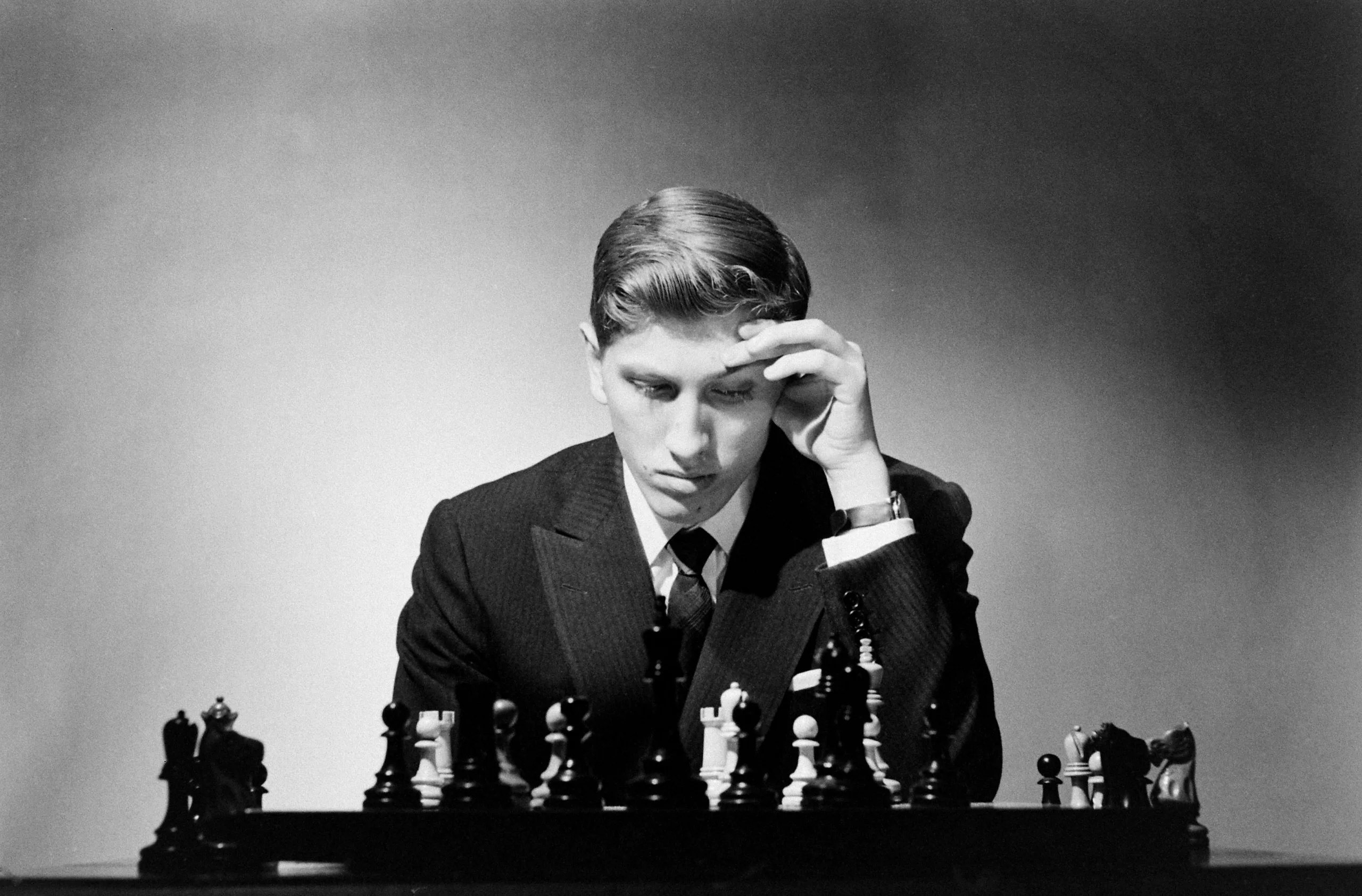
Bobby Fischer
Also known as: Robert James Fischer, Bobby Fischer
生日
March 9, 1943
星座
Pisces
出生地
Chicago, Illinois
年龄
64岁去世
身高
6 ft 2 in (188 cm)
简介
鲍比·费舍尔是美国国际象棋特级大师,也是第十一位世界国际象棋冠军。他是一位神童,14岁时赢得了他的第一个美国冠军,这一纪录至今仍由他保持,并总共赢得了八次美国冠军。1964年,他取得了锦标赛历史上唯一一次完美的11-0战绩。费舍尔在1972年的世界冠军之路上势不可挡:他以6-0的比分横扫了马克·泰曼诺夫和本特·拉森,然后击败了前冠军季格兰·彼得罗相。在决赛中,他在冰岛雷克雅未克对阵苏联的鲍里斯·斯帕斯基。这场比赛作为冷战对峙吸引了前所未有的全球关注。费舍尔获胜,成为国家英雄和美国智力实力的象征。
但费舍尔的才华与其不稳定性相伴。1975年,他因未能与国际棋联就比赛条件达成一致而拒绝卫冕,阿纳托利·卡尔波夫被默认宣布为冠军。费舍尔从公众视野中消失,1992年重新出现,在南斯拉夫与斯帕斯基进行了一场非正式复赛,当时南斯拉夫正受到联合国禁运。美国发出了逮捕令,费舍尔成为逃犯。2004年,日本当局因他使用已吊销的美国护照而拘留了他。他通过议会特别法案获得冰岛公民身份,并居住在冰岛,直到2008年1月17日去世,享年64岁。
费舍尔在国际象棋领域的遗产是巨大的。他的书《我的难忘60局》是经典之作。他获得专利的数字棋钟现已成为顶级比赛的标配。他还发明了费舍尔随机国际象棋(Chess960),通过随机化起始位置来减少对记忆开局套路的依赖。然而,他的晚年因恶毒的反犹太主义和大屠杀否认言论而蒙上阴影,尽管他自己有犹太血统。费舍尔仍然是游戏史上最迷人、最悲剧的人物之一。
早年生活与背景
费舍尔在纽约布鲁克林的一系列小公寓中长大。他的母亲雷吉娜打多份工来养活他和姐姐琼。六岁时,琼买了一副国际象棋,并从说明书上教他规则。七岁时,他已经在布鲁克林国际象棋俱乐部和曼哈顿国际象棋俱乐部下棋。他如饥似渴地阅读国际象棋书籍,记住了数千盘大师对局。12岁时,他加入曼哈顿国际象棋俱乐部,并开始参加成人比赛。
转折点出现在1956年,13岁的费舍尔在纽约罗森沃尔德纪念赛上对阵唐纳德·伯恩,下出了后来被称为“世纪之局”的对局。他弃后并在令人惊叹的战术 brilliance 中将死伯恩。这盘棋被刊登在世界各地的国际象棋杂志上,确立了他神童的地位。他16岁时从伊拉斯谟斯霍尔高中辍学,全身心投入国际象棋。
职业发展
1957年,14岁的费舍尔赢得了美国公开赛冠军和他的第一个美国冠军头衔,至今仍是最年轻的冠军。次年,他成为历史上最年轻的国际特级大师,年仅15岁,这一纪录保持了33年。他统治了美国冠军赛,共赢得八次。1964年,他取得了锦标赛历史上唯一一次完美的11-0战绩。
费舍尔的巅峰期在1971-1972年。他以6-0的比分横扫了候选人赛中对阵马克·泰曼诺夫和本特·拉森的比赛,然后以6.5-2.5击败前世界冠军季格兰·彼得罗相。1972年,他在雷克雅未克以12.5-8.5击败鲍里斯·斯帕斯基,成为世界冠军。这场比赛成为全球头版新闻。1975年拒绝卫冕后,费舍尔消失了二十年。1992年,他在南斯拉夫与斯帕斯基进行了一场非正式复赛,以17.5-12.5获胜,并赚了335万美元,尽管美国因违反联合国制裁对他发出了逮捕令。
职业生涯年表
公众形象与风格
费舍尔以比赛时的极度专注而闻名,经常目不转睛地盯着对手。在冠军时期,他穿着定制西装;后来在隐居期间,他穿着随意、不修边幅。媒体将他描绘成一个悲剧天才:才华横溢但缺陷重重,一个冷战英雄却陷入精神衰退和反犹太阴谋论。国际象棋爱好者将他尊为有史以来最伟大的棋手之一。他的对局在世界范围内被研究,1972年的冠军赛在象棋节上被重演。粉丝账号关注他的象棋成就,很少讨论他有争议的观点。
名气与粉丝圈
Bobby Fischer, the enigmatic chess genius who toppled the Soviet chess empire in 1972, holds a unique place in global fame. According to iFANN's Global Fame Engine, as of August 2026, Fischer is evaluated but does not currently hold a placement in the published rankings, neither in the Global Top 1,000 nor in any Top-100 scope list. This absence from the rankings reflects his reclusive later years and the niche, albeit passionate, nature of his enduring appeal. Yet his cultural footprint remains immense: the 1972 World Championship match against Boris Spassky was a Cold War spectacle that captivated audiences worldwide, turning chess into a mainstream phenomenon overnight. Fischer's face on the cover of Time and front-page headlines made him a household name, a status that persists in chess lore and beyond.
Fischer's fanbase, however, is not a formally organized fandom. There is no official fan club, no designated name, and no coordinated fan campaigns, no billboards, no charity drives, no streaming pushes. Instead, his admirers are chess enthusiasts, historians, and devotees of his genius who revere him through the study of his games. His 1958 book 'Bobby Fischer's Games of Chess' and the later 'My 60 Memorable Games' remain canonical texts, studied obsessively by players worldwide. The Fischer Random chess variant he invented continues to be played and promoted. Commemorative pilgrimages to Icelandic sites, the Reykjavik Open, held annually, and his grave in Selfoss, serve as quiet tributes. Fischer's relationship with his fans was famously difficult, often adversarial, yet his legacy as the man who broke the Soviet chess hegemony ensures his lasting reverence in the chess world.
趣闻与传奇
Bobby Fischer's life was filled with remarkable facts and enduring legends. His biological father was Hungarian physicist Paul Nemenyi, not Hans-Gerhardt Fischer, and his mother was investigated by the FBI for communist sympathies. Fischer possessed a photographic memory for chess positions and could play up to 50 games simultaneously blindfolded. His IQ was reportedly tested at 187, though never confirmed. He refused to play in the 1967 U.S. Championship because it fell on a Sunday, conflicting with his religious beliefs as a follower of the Worldwide Church of God. His last words were reportedly 'Nothing is as healing as the human touch' to his wife Miyoko Watai, and he was buried in a secret location in Iceland to prevent grave vandalism.
Among the legends that surround Fischer, the 'Game of the Century' stands out: at just 13, he sacrificed his queen against Donald Byrne in 1956, a game still celebrated as a masterpiece. His demands for tournament conditions, known as 'Fischer rules,' became legendary, including his complaint about a camera shutter noise. The 1972 World Championship match was nearly derailed when Fischer demanded a higher purse and initially failed to show up, only to lose the first game and forfeit the second before staging a historic comeback. His 1975 forfeiture of the title over FIDE's refusal to meet his demands remains a controversial tale. A charming story involves Swiss amateur Dieter Keller, who defeated the teenage Fischer in 1959, a David-versus-Goliath upset fans still retell.
著名语录
“I like the moment when I break a man's ego.”
“Chess is life.”
“All I want to do, ever, is just play chess.”
“I don't believe in psychology. I believe in good moves.”
“The only thing that matters is the truth. The truth is what I say.”
“I'm not a genius. I'm just a fighter.”
家庭与个人生活
费舍尔的母亲雷吉娜·温德·费舍尔是瑞士出生的美国波兰犹太裔。他的生父保罗·内梅尼是匈牙利数学家和物理学家,曾参与曼哈顿计划。出生证明上写的是德国生物物理学家汉斯-格哈特·费舍尔。费舍尔两岁时父母分居,由母亲抚养长大。他有一个姐姐琼,是她教会了他下棋。费舍尔没有孩子。2004年在日本被拘留期间,他与渡井美代子结婚;她在他去世时陪伴在他身边。他没有房产,一直租住公寓。
重要关系
菲舍尔与鲍里斯·斯帕斯基(1972年的对手,后来成为朋友)、马克·泰马诺夫和本特·拉尔森(1971年候选人赛被他横扫)、前冠军季格兰·彼得罗相(被他击败成为挑战者)以及阿纳托利·卡尔波夫(1975年自动成为冠军)有关联。他还与生父保罗·内梅尼和妻子宫川绵代有联系。
恋情与交往史
菲舍尔的恋爱史有限且神秘。1970年代,他与匈牙利女棋手齐塔·拉伊查尼有过短暂恋情,两人在1972年世界冠军赛期间相识。1980年代,他与德国女性佩特拉·斯塔德勒在洛杉矶同居数年,关系于1990年代结束。1990年代,据称他与一位名叫沙织的日本女性有过恋情。2000年左右,菲舍尔与日本国际象棋协会会长宫川绵代关系密切。2004年菲舍尔在日本被扣留期间两人结婚,但该婚姻在某些司法管辖区未获法律承认。宫川绵代在菲舍尔2008年去世时陪伴左右,并成为其唯一继承人。他没有已知的子女。
- 曾交往Zita Rajcsanyi1972 - 19721972年雷克雅未克世界冠军赛期间的短暂恋情。
- 曾交往Petra Stadler1980 - 1990德国女性;在洛杉矶同居数年。
- 曾交往Saori1990 - 1990日本女性;关于这段恋情所知甚少。
- 已婚Miyoko Watai2004 - 2008日本国际象棋协会会长;在菲舍尔被日本扣留期间结婚;去世时陪伴其身边。
逝世与身后事
逝世
January 17, 2008 (享年64岁)
逝世地点
Reykjavík, Capital Region, Iceland
死因
Heart failure
The International Chess Federation and the United States Chess Federation released immediate statements honoring Bobby Fischer as a genius who revolutionized the game, while peers like Garry Kasparov and Anatoly Karpov paid tribute to his unparalleled skill. In the days following his passing, chess databases saw increased traffic and sales of his books rose as clubs worldwide held moments of silence. The documentary Bobby Fischer Against the World arrived in 2011 to provide a comprehensive look at his life and decline, and various foundations including the Bobby Fischer Foundation were created to promote chess education. Fischer passed away on January 17, 2008, in his sleep at the Hotel Reykjavik in Reykjavík, Iceland, where he had been living under house arrest since fleeing Japan in 2005.
He spent his final days in relative isolation without appearing publicly since arriving in Iceland the previous July. Icelandic police and medical examiners ruled the cause as natural causes, specifically heart failure. A private funeral took place in Los Angeles, California, on January 24, 2008, attended by close friends and his sister Joan Kirch Fischer. Details regarding the burial remain private, though reports indicate he was cremated and his ashes scattered with the exact location unknown. His estate was handled privately by family members without public probate proceedings, and the U.S. government lifted the travel ban shortly after his death.
身价(遗产价值)
$2 Million
iFANN编辑团队估算
At the time of his death in 2008, Bobby Fischer's estate was valued at around $2 million, according to iFANN's editorial analysis. The bulk of this wealth came from the $3.35 million prize from the 1992 rematch against Spassky, though most of that was reportedly hidden in foreign accounts. He also earned royalties from his book My 60 Memorable Games, which has been continuously in print since 1969, and from his patented chess clock. Fischer owned no real estate and lived in rented apartments. After his death, his wife Miyoko Watai inherited the estate. Posthumous revenue sources include book royalties, documentary licensing (such as the 2011 film Bobby Fischer Against the World), and licensing of Fischer Random Chess. Legal disputes over the estate have consumed some assets. As of 2026, the estate is estimated at roughly $500,000 to $800,000, as royalties have declined.
获奖 (27)
费舍尔于1972年赢得世界国际象棋锦标赛,击败了鲍里斯·斯帕斯基。他曾八次赢得美国国际象棋锦标赛冠军,创下纪录,其中包括1964年完美的11-0战绩。他五次赢得美国公开赛冠军(1957-1960年、1963年)。他于1971年赢得候选人赛,1970年赢得区际赛。费舍尔在1970年、1971年和1972年获得国际象棋奥斯卡奖。他于1986年入选美国国际象棋名人堂,2001年入选世界国际象棋名人堂。
1972 · 年度最佳球员
World Championship victory
1971 · 年度最佳球员
Candidates matches
1970 · 年度最佳球员
Interzonal and Candidates
1957
Dan Jacobo Beninson
代表作
World Chess Championship 1972
1972 · Challenger/Champion
My 60 Memorable Games
1969 · 作者
Fischer Random Chess (Chess960)
1996 · Inventor
Fischer Chess Clock
1990 · Inventor
关键词
速览
- 职业
- chess player, writer, inventor
- 出生
- +1943-03-09
- 出生地
- Chicago
- 逝世
- +2008-01-17
- 逝世地点
- Reykjavík
- 性别
- 男
- 配偶
- Miyoko Watai
- 星座
- Pisces
个人资料
- 全名
- Robert James Fischer
- 身高
- 6 ft 2 in (188 cm)
- 配偶
- Miyoko Watai
- 教育
- Erasmus Hall High School (dropped out at age 16)
常见问题
鲍比·菲舍尔去世时多大?
2026年鲍比·菲舍尔的身价是多少?
鲍比·菲舍尔还在世吗?
鲍比·菲舍尔为何出名?
鲍比·费舍尔最出名的是什么?
加入社区
位粉丝正在讨论