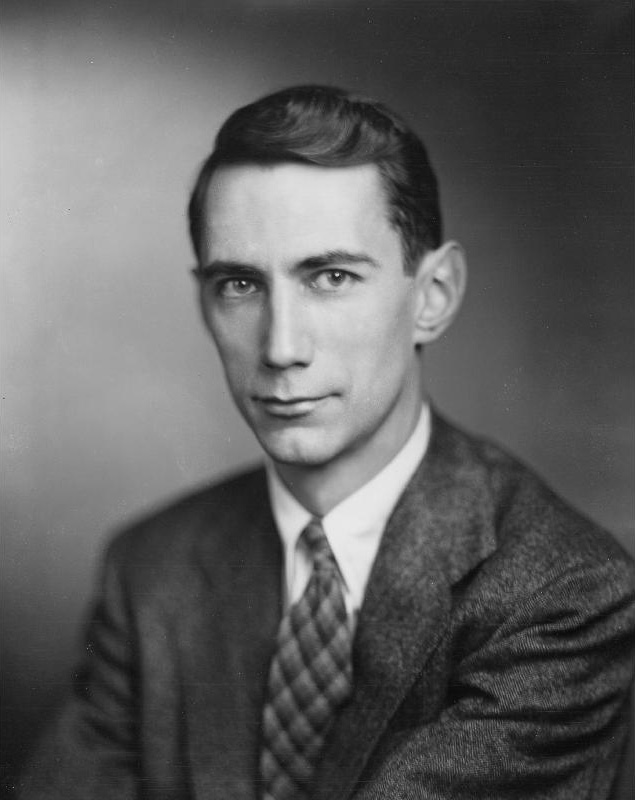
Claude Shannon
mathematician•electrical engineer•cryptographer
Also known as: Father of Information Theory, Claude Elwood Shannon
生日
April 30, 1916
星座
Taurus
出生地
Petoskey, Michigan
年龄
84岁去世
身高
5 ft 10 in (178 cm)
简介
Claude Elwood Shannon 是一位美国数学家、电气工程师和密码学家,被誉为信息论之父和数字时代的主要奠基人之一。他在1948年一篇里程碑式的论文中提出的核心见解是:任何类型的信息都可以被测量,用他称之为“比特”的单位量化,并且即使在有噪声的信道上也能可靠传输。这一框架基本上构成了现代通信的一切基础,从数据压缩、纠错编码到互联网本身的设计。早在研究生时期,Shannon 就已经创造了历史,他证明了布尔代数逻辑可以用电气开关电路来表达,这成为所有数字计算机的概念基础。
同事们对他的印象不仅在于他的严谨,还在于他 playful 的好奇心;他玩杂耍,骑着独轮车穿过贝尔实验室的大厅,并纯粹为了乐趣而建造奇特的机器。这种深刻理论与 restless 修修补补的结合赋予了他的作品独特的风格。尽管在公众中的知名度远不如他所促成的技术,但工程师和数学家将他列为二十世纪最重要的思想家之一。他的思想至今仍是计算和通信的基石。
早年生活与背景
Shannon 在密歇根州盖洛德小镇长大,父亲是商人和遗嘱认证法官,母亲教授语言并担任高中校长。他早年就表现出机械天赋,制作了模型飞机、一套连接他家与半英里外朋友家的电报系统,以及一艘无线电控制的船。暑假期间,他为西联电报公司担任信使。1932年从盖洛德高中毕业后,他进入密歇根大学,于1936年获得电气工程和数学双学士学位。
关键时刻出现在麻省理工学院,Shannon 在那里担任 Vannevar Bush 微分分析仪的研究助理。在他1937年的硕士论文《继电器与开关电路的符号分析》中,他证明了布尔代数可用于设计电气开关电路。这一见解成为所有数字计算机的概念基础。该论文于1938年发表,常被称为二十世纪最重要的硕士论文。
职业发展
Shannon 于1941年加入贝尔电话实验室,在那里进行了他最有影响力的研究。二战期间,他与 Alan Turing 合作研究密码学,致力于安全语音加密系统。1948年,他在《贝尔系统技术杂志》上发表了《通信的数学理论》,引入了信息论、比特概念、熵和信道容量。该论文彻底改变了电信和数据科学。
次年,他发表了《保密系统的通信理论》,奠定了密码学的数学基础,从理论上证明了不可破解的一次性密码本系统。1950年,他发表了《为下棋编程计算机》,这是关于人工智能的最早论文之一。1956年,他共同发起了达特茅斯人工智能会议,并于同年加入麻省理工学院任教,直至1966年退休。在他的众多荣誉中,他于1966年获得国家科学奖章,1985年获得京都奖。
职业生涯年表
公众形象与风格
Shannon 以随意的、常常凌乱的外表闻名,穿着皱巴巴的西装,戴着厚框眼镜,叼着烟斗。他经常被拍到骑独轮车或玩杂耍,巩固了他作为才华横溢但 eccentric 天才的形象。信息论界尊崇他为奠基人物;年度 Shannon 讲座在重要会议上举行,IEEE 信息论学会的最高奖项以他的名字命名。纪录片和传记强调他兼具数学严谨性和孩子般的好奇心。他被描绘成一个既 playful 又深刻的“疯狂科学家”形象。
名气与粉丝圈
Claude Shannon stands as the 21st most famous person in AI, a standing confirmed by the iFANN Global Fame Rankings for August 2026. This position holds steady from the previous cycle, cementing his status not merely as a historical figure but as a living presence in modern computation. The iFANN Global Fame Rankings track global attention across media coverage, search trends, and consumption signals worldwide to determine these placements.
While he lacks a formal fandom name, the community that reveres him is distinctively professional yet deeply devoted. Engineers, computer scientists, and historians of technology form his audience, engaging through scholarly admiration rather than chart pushes or birthday billboards. Their devotion manifests in projects like the biographical work A Mind at Play, which brought his life story to a broader public, and digital recreations of his inventions such as Greg Sadetsky's restoration of the Minivac 601 relay computer. A unique layer of modern folklore has emerged through the AI chatbot Claude, developed by Anthropic, which explicitly honors the mathematician who built the theoretical foundation for artificial intelligence. This connection introduces his name to new generations, bridging the gap between mid-century Bell Labs and contemporary machine learning without a single organized fan campaign.
趣闻与传奇
Shannon was an accomplished juggler who frequently rode a unicycle through the halls of Bell Labs while juggling. He constructed a device known as the "ultimate machine," a box with a switch that, when activated, triggered a mechanical hand to flip the switch off. His playful engineering also produced Theseus, a maze-solving mouse capable of learning navigation paths, and the Throbac computer, which performed calculations using Roman numerals.
Legends about his financial acumen persist alongside his eccentricities. It is widely retold that he outperformed 1,025 out of 1,026 mutual funds by applying information theory strategies, specifically the Kelly Criterion, though he never chased wealth for its own sake. Another enduring story highlights his role as the Father of Information Theory; his 1948 paper introduced the bit and established the mathematical laws of communication, effectively inventing the digital age. Today, the concept of the Shannon Limit remains a cornerstone of telecommunications, defining the maximum data transmission rate over any channel.
著名语录
“Information is the resolution of uncertainty.”
“I visualize a time when we will be to robots what dogs are to humans, and I'm rooting for the machines.”
“The best way to have a good idea is to have lots of ideas.”
“I have always been interested in the relationship between information and entropy. The concept of information is a fundamental one, like energy.”
“I'm more interested in the problem than the solution.”
家庭与个人生活
Shannon 的父亲老 Claude 是商人和遗嘱认证法官;母亲 Mabel Wolf Shannon 是语言教师和高中校长。他有一个妹妹 Catherine。他的祖父是发明家和农民,设计了一台洗衣机和各种农具,影响了 Shannon 早期动手能力。Shannon 于1940年与 Norma Barzman 结婚,1941年离婚。他于1949年与 Mary Elizabeth "Betty" Moore 结婚。Betty 是贝尔实验室的技术分析师,是一位支持性的伴侣和合作者。他们有三个孩子:Robert James(生于1952年)、Andrew Moore(生于1954年)和 Margarita Catherine(生于1957年)。一家人住在马萨诸塞州温彻斯特。
重要关系
在二战期间,香农与艾伦·图灵在贝尔实验室合作研究密码学。他在麻省理工学院的导师是万尼瓦尔·布什,香农曾在他的微分分析仪上工作。他与沃伦·韦弗合著了其信息论论文的书籍版本。他与约翰·麦卡锡共同发起了达特茅斯人工智能会议,并在麻省理工学院与马文·明斯基和诺伯特·维纳是同事。
恋情与交往史
香农于1940年与诺玛·巴兹曼结婚;她是一位数学家,后来成为编剧。这段婚姻短暂且因香农对工作的专注和诺玛的政治活动而紧张。他们于1941年离婚,没有子女。1949年,他与贝尔实验室的技术分析师玛丽·伊丽莎白·“贝蒂”·摩尔结婚。他们育有三个子女,并一直在一起直到香农2001年去世。贝蒂是一位支持他的伴侣,协助他的研究。截至2026年,香农已故;去世时他与贝蒂处于婚姻状态。
- 已婚Norma Barzman1940 - 1941短暂的婚姻;诺玛是数学家和编剧。因个人差异离婚。
- 已婚Betty Shannon1949 - 2001现任在贝尔实验室相识;结婚52年直到香农去世。育有三个子女。
逝世与身后事
逝世
February 24, 2001 (享年84岁)
逝世地点
Bedford, Massachusetts
死因
Alzheimer's disease
Claude Elwood Shannon died on February 24, 2001, at his home in Bedford, Massachusetts. He was eighty-four years old when Alzheimer's disease claimed him, a condition diagnosed several years prior that marked the end of his long decline. His final days were spent in the quietude of the residence he had occupied since retiring from MIT in 1978, far removed from the laboratories where he once reshaped the world. The scientific community mourned with profound reverence, as MIT issued an immediate press release honoring him as a pioneer who laid the foundations for modern computing and the digital revolution.
John Horgan observed in Cross-Check that no scientist possessed a greater impact-to-fame ratio, highlighting the unique position of a genius who remained relatively obscure to the general public despite his monumental contributions., his legacy has continued to grow in the decades following his passing. The IEEE Information Theory Society established the Claude E. Shannon Award to honor recipients decades after his death, and his name became the eponym for the Claude family of large language models developed by Anthropic. Posthumous works like How Claude Shannon Invented the Future appeared in Quanta Magazine.
身价(遗产价值)
$25 Million
iFANN编辑团队估算
Per iFANN's editorial analysis, Claude Shannon's estate is estimated at $25 million as of 2026. The bulk of this wealth originated from his salary at Bell Labs and his professorship at MIT, supplemented by patent royalties from inventions including a secure communications system. Known as a savvy investor, Shannon managed his finances with precision, and his estate continues to generate income through licensing of his information theory work and book sales. The estate is currently managed by his three children, Robert, Andrew, and Margarita. Revenue streams include posthumous reprints, licensing of the Shannon name and image, and distributions from the family trust.
获奖 (12)
香农于1939年因其硕士论文获得阿尔弗雷德·诺贝尔奖。他获得了斯图尔特·巴兰坦奖章(1955年)、IEEE荣誉奖章(1966年)、国家科学奖章(1966年)、哈维奖(1972年)和京都基础科学奖(1985年)。IEEE信息论学会将其最高奖项命名为克劳德·E·香农奖,他于1972年成为首位获奖者。他于2004年追授入选国家发明家名人堂。
1985 · 基础科学
Information theory
1982 · IEEE
Information theory and computing
代表作
Information Theory
1948 · Founder
Digital Circuit Design
1937 · 先驱
Mathematical Cryptography
1949 · Founder
Artificial Intelligence
1956 · 联合创始人
关键词
速览
个人资料
- 全名
- Claude Elwood Shannon
- 身高
- 5 ft 10 in (178 cm)
- 配偶
- Betty Shannon, Norma Barzman
- 子女
- 3
- 教育
- University of Michigan (B.S. in Electrical Engineering and Mathematics, 1936); MIT (M.S. in Electrical Engineering, 1937; Ph.D. in Mathematics, 1940)
常见问题
克劳德·香农发明了什么?
克劳德·香农获得过诺贝尔奖吗?
克劳德·香农是如何去世的?
克劳德·香农最著名的论文是什么?
谁是信息论之父?
加入社区
位粉丝正在讨论