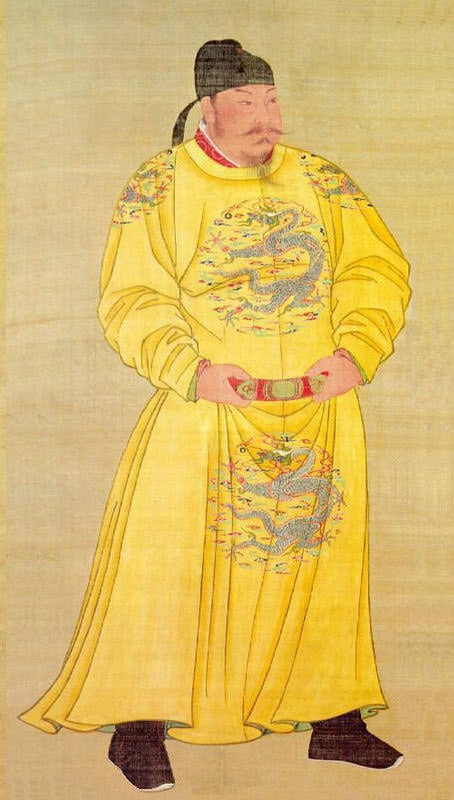
Emperor Taizong of Tang
 China
ChinaAlso known as: Li Shimin, Tang Taizong
生日
January 28, 598
星座
Aquarius
出生地
Wugong County, near Xianyang, Shaanxi, China
年龄
51岁去世
简介
唐太宗,原名李世民,生于598年1月28日,是中国唐朝第二位皇帝,在位期间为626年至649年。他的统治时期——贞观之治,被誉为繁荣、军事扩张和文化成就的黄金时代。太宗将唐朝疆域扩展至中亚深处,击败东突厥,并吞并了丝绸之路上的关键绿洲国家。他改革了科举制度,减轻了赋税,并编纂了一部对东亚影响数百年的法典。他愿意接受像魏征这样的谏臣的批评,成为传奇。截至2026,他的遗产作为理想儒家君主的典范流传至今。他始终位列中国最伟大皇帝之列,其统治时期“贞观”成为善政的代名词。他的谥号为文皇帝,后加谥为“文武大圣大广孝皇帝”,庙号太宗。
早年生活与背景
李世民于598年1月28日出生在武功县(今陕西省咸阳市附近)的一个军事贵族家庭。他的父亲李渊是隋朝将领,母亲窦氏出身于受鲜卑影响的贵族家庭。从小,李世民就接受了严格的儒家经典、军事战略和武术教育。他展现出非凡的智慧和雄心,16岁时便随父征战。转折点出现在617年,当时隋朝因遍地叛乱而濒临崩溃。19岁的李世民说服了犹豫不决的父亲起兵反隋,认为隋朝气数已尽,李氏家族有责任恢复秩序。李世民率军攻占隋都长安,其父于618年称帝,是为唐高祖。李世民被封为秦王,并担任唐军最高统帅。在接下来的八年里,他亲自率军征讨了一系列割据势力,包括薛举、刘武周、王世充、窦建德和刘黑闼,逐一击败他们,巩固了唐朝对中原的控制。他的军事才能和个人魅力为他赢得了将领和官员的忠诚追随。他的名字“世民”意为“济世安民”。他以武艺精湛和箭术高超而闻名,史书记载他身材高大、仪表堂堂、威严十足。
职业发展
626年,太宗发动玄武门之变,伏击并杀死了兄长太子李建成和弟弟李元吉,随后迫使父亲退位。他登基为帝,开启了贞观时代。630年,他的将领李靖大败东突厥,俘虏了可汗颉利,使唐朝成为东亚和中亚的霸主。太宗自称“天可汗”。随后他将目光转向塔里木盆地,于640年吞并高昌,644年吞并焉耆,648年吞并龟兹,确保了唐朝对丝绸之路的控制。在内政方面,太宗强化了科举制度,以选拔有才干的官员,不论出身;改革了法典,减轻了严酷的刑罚;并降低了赋税以减轻农民负担。他任命了房玄龄、杜如晦和魏征等能干的宰相,并鼓励朝堂上的公开辩论。他的统治以宗教宽容为特点,佛教、道教和儒家思想共存。他还主持编纂了多部正史,包括《晋书》。太宗在位23年后于649年去世,由他的第九子李治继位。他于649年7月10日去世,享年51岁,驾崩于终南山翠微宫含风殿。他的昭陵是唐朝最宏伟的皇陵之一。
职业生涯年表
公众形象与风格
在中国史学中,太宗被描绘为理想的皇帝:明智、公正、能干,善于纳谏且关心百姓。贞观之治被誉为繁荣和军事强盛的黄金时代。他乐于接受批评,尤其是来自魏征的谏言,成为千古美谈。现代中国媒体经常在电视剧和电影中将他描绘成一位英雄而复杂的人物。他的统治时期常被引为中国政治话语中善政的典范。名言“以史为镜,可以知兴替”出自他之口。他还告诫继承人:“君,舟也;人,水也。水能载舟,亦能覆舟。”他的自省:“吾有三镜:以史为镜,可以知兴替;以人为镜,可以明得失;以铜为镜,可以正衣冠。”
名气与粉丝圈
Emperor Taizong of Tang commands a global attention profile that spans millennia, anchored by his enduring status as the archetypal Confucian ruler. His reputation transcends historical study to occupy a distinct space in modern cultural consciousness, where he is recognized not merely as a figure of the past but as a benchmark for governance and military strategy. According to the August 2026 iFANN Global Fame Rankings, he holds the position of the 65th most famous person in China and ranks as the 25th most famous person from China. In a classification reflecting the broad scope of his cultural influence which tracks global attention across media coverage, search, and consumption signals worldwide, he is listed as the 6th most famous person in C-Pop / Mandopop. These placements have held steady since the previous cycle, indicating a consistent level of recognition rather than a fleeting surge in popularity. The data suggests his fame is rooted in a deep-seated reverence for the Zhenguan era and the moral complexities of his reign. Regarding his audience, there is no formal or documented fandom name associated with Emperor Taizong. While historians, scholars, and enthusiasts of Chinese history engage deeply with his legacy through academic research and public exhibitions, these groups do not operate as a recreational fanbase with organized rituals or official branding. His engagement with the modern world remains one of study and reflection on his contributions to statecraft rather than the active participation typical of contemporary celebrity culture.
趣闻与传奇
Emperor Taizong personally led cavalry charges in battle, an unusual practice for a Chinese emperor who typically commanded from a distance. He kept a prized falcon named General and composed a poem about this animal companion. He authored the Di Fan, a treatise on governance intended for his heir, and also ordered the compilation of five official histories including the Book of Jin, Book of Liang, Book of Chen, Book of Northern Qi, and Book of Zhou. His Zhao Mausoleum features the famous Six Steeds stone reliefs commemorating his warhorses, and he was an accomplished calligrapher particularly skilled in the flying white style. Historical records describe the Xuanwu Gate Incident as a verified event where he ambushed and killed his brothers to seize power, leading to a dynasty where he reportedly edited the Veritable Records to justify his actions. A central legend involves his relationship with Wei Zheng; after the advisor's death, Taizong famously lamented the loss of a human mirror, stating that while bronze mirrors adjust clothing, history mirrors reveal the rise and fall of dynasties. Another story recounts how he destroyed a statue of Wei Zheng in anger before later reinstating his honor. Modern folklore sometimes cites an ancient ginkgo tree in Northwest China that flourished during his reign as a symbol of his policies' longevity.
著名语录
“With history as a mirror, one can see the rise and fall of dynasties.”
“The ruler is the boat; the common people are the water. The water can support the boat, but it can also capsize it.”
“I have three mirrors: history to see the rise and fall of states, virtuous friends to see my own faults, and honest officials to correct my mistakes.”
家庭与个人生活
太宗的父亲李渊是唐高祖;母亲窦氏在唐朝建立前去世。他至少有三位兄弟,包括太子李建成和齐王李元吉,他在626年杀死了他们。他的正妻长孙皇后(601–636)是他最信任的顾问;她去世后,他再未立后。他有许多妃嫔,包括韦贵妃、杨妃(隋炀帝之女)、燕德妃和阴妃。他有14个儿子和21个女儿。他的第九子李治继位为唐高宗。他的儿子李恪(杨妃所生)是一位能干的将领,但因母亲是隋朝宗室而未被立为太子。他的儿子李承乾曾是太子,但在643年被废黜。他的儿子李祐是阴妃所生。他的儿子李贞是韦贵妃所生。他的儿子李明是杨妃(隋炀帝之女)所生。他还有女儿,包括临川公主。
重要关系
唐太宗与其父李渊(唐高祖)、妻子长孙皇后、宰相魏征、房玄龄和杜如晦关系密切。他的将领李靖和李勣领导了关键战役。他的兄弟李建成和李元吉是他的对手。他的儿子李治继位为唐高宗。
恋情与交往史
太宗的关系结构在皇室一夫多妻制内。他于613年左右迎娶长孙皇后;她是他的正妻和最信任的顾问,育有三子四女。她是隋朝将领的女儿,在李世民成为皇帝前便嫁给了他。她在国事上给予建议,以拒绝干预政治而闻名。636年她去世后,他深表哀悼,并未再立皇后。他的妃嫔包括韦贵妃,生皇子李慎和临川公主;燕德妃,生太子李承乾;阴妃,生皇子李佑;以及两位杨姓妃嫔,一位是隋朝王子杨淑道的女儿,生皇子李恪和李音,另一位是隋炀帝的女儿,生皇子李明。才人徐惠于640年左右入宫,以诗歌和谏言闻名;太宗去世后,她拒绝改嫁,于650年因悲伤过度去世。截至2026年,太宗已故,无现有关系。
- 已婚Empress Zhangsun613 - 636正妻和皇后;育有三子,包括唐高宗,以及四女;636年去世。
- 曾交往Wei Guifei620 - 649贵妃;生皇子李慎和临川公主。
- 曾交往Consort Yang (Yang Shudao's daughter)620 - 649妃嫔;生皇子李恪和李音。
- 曾交往Consort Yang (Emperor Yangdi's daughter)620 - 649妃嫔;隋末帝之女;生皇子李明。
- 曾交往Yan Defei620 - 649德妃;生太子李承乾(643年被废)。
- 曾交往Yin Fei620 - 649妃嫔;生皇子李佑。
- 曾交往Xu Hui640 - 649才人徐惠;以诗才闻名;太宗去世后哀伤过度而死。
逝世与身后事
逝世
July 10, 649 (享年51岁)
逝世地点
Chang'an, Tang Empire
死因
Complications from alchemical poisoning
The death of Emperor Taizong in the summer of 649 was met with profound grief across the Tang Empire, as officials and commoners alike mourned a ruler whose Zhenguan era set the enduring standard for benevolent governance. His passing triggered immediate mourning rites and the swift, uncontested ascension of his son Li Zhi to the throne, securing the dynasty's future without the political turmoil that had marked the previous succession crisis. Li Shimin passed away on July 10, 649, at the Weisheng Hall within the Daming Palace complex in Chang'an, having spent his final months in declining health. Historical chronicles attribute this deterioration to chronic illness exacerbated by the consumption of alchemical elixirs intended to grant immortality, which ultimately resulted in severe skin conditions and systemic toxicity.
The official narrative recorded in the Veritable Records of the Taizong and the Old Book of Tang established these medical complications as the definitive cause, bypassing any modern forensic inquiry or legal inquest in favor of imperial historiography. Following traditional Tang imperial rites, the emperor was interred in the Qianling Mausoleum located on Mount Liang near present-day Xianyang, where he rests alongside Empress Zhangsun. The burial site features a Spirit Way lined with stone statues and animals, serving as a grand reflection of his status as the Heavenly Khan. Posthumous honors included the temple name Taizong and the posthumous title Emperor Wenhuang, cementing his legacy as the ideal Confucian monarch.
His reputation has endured through centuries of scholarly study and cultural commemoration, including the preservation of the Qianling Mausoleum as a significant archaeological landmark and the continued circulation of works like the Essentials of Government of the Zhenguan Reign. Modern exhibitions and historical dramas continue to honor his life, ensuring that the model of leadership he established remains a central subject in the understanding of Chinese imperial history.
奖项与荣誉
View 4 records, honours and achievements代表作
Zhenguan era
626–649 · 皇帝
Defeat of Eastern Turks
630 · 皇帝
Xuanwu Gate Incident
626 · Prince of Qin
Annexation of Karakhoja, Karasahr, Kucha
640–648 · 皇帝
关键词
速览
- 职业
- emperor, poet
- 出生
- +0598-01-28
- 出生地
- Wugong County
- 逝世
- +0649-07-10
- 逝世地点
- Hangfeng Hall, Cuiwei Palace
- 性别
- 男
- 配偶
- Empress Zhangsun, Wei Guifei, Consort Yang, Yan Defei, Yin Fei, Xu Hui
- 星座
- Aquarius
个人资料
- 全名
- Li Shimin
- 配偶
- Empress Zhangsun, Wei Guifei, Consort Yang, Yan Defei, Yin Fei, Xu Hui
- 子女
- 14 sons, 21 daughters
- 教育
- Confucian classics, military strategy, martial arts
常见问题
为什么唐太宗被认为是一位伟大的皇帝?
唐太宗是如何成为皇帝的?
唐太宗杀了他的兄弟吗?
唐太宗的妻子是谁?
唐太宗统治了多久?
相似人物
加入社区
位粉丝正在讨论