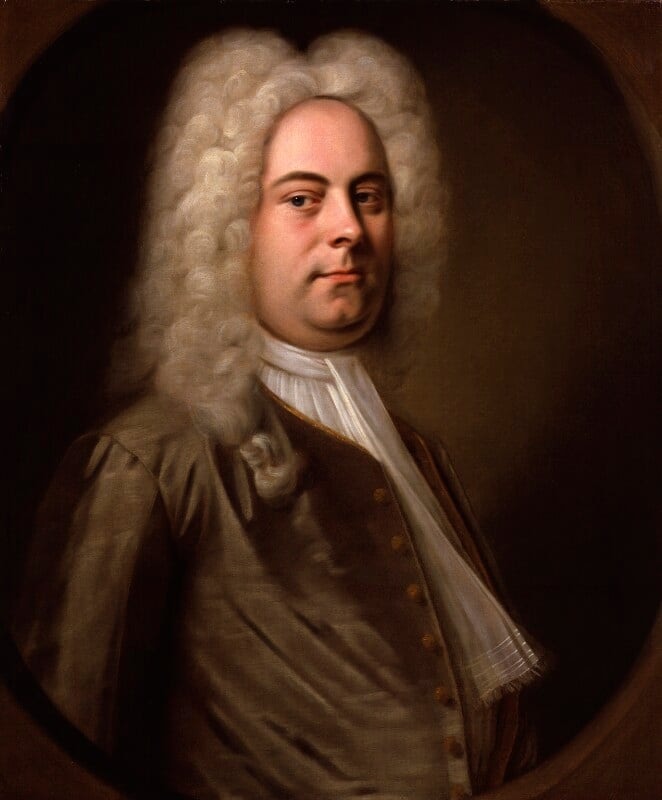
George Frideric Handel
composer•harpsichordist•organist
Also known as: Georg Friedrich Händel
生日
February 23, 1685
星座
Pisces
出生地
Halle, Duchy of Magdeburg, Brandenburg-Prussia (now Halle, Saxony-Anhalt, Germany)
年龄
74岁去世
简介
乔治·弗里德里希·亨德尔是一位出生于德国的英国巴洛克作曲家、羽管键琴家和管风琴家,创作了西方古典音乐中一些最经久不衰的作品。他的音乐代表了高巴洛克风格的巅峰,融合了德国的复调传统与意大利的旋律和戏剧性。亨德尔的职业生涯显著转向英语合唱作品,从而诞生了他最著名的作品——清唱剧《弥赛亚》(1742年)。他的管弦乐作品《水上音乐》和《皇家烟火音乐》至今仍广受欢迎,而他的一首加冕颂歌《祭司撒督》自1727年以来在英国每次加冕典礼上都被演奏。亨德尔于1759年去世,是一位富有且受人尊敬的人物,对后来的作曲家产生了巨大影响。如今,亨德尔被视为一位戏剧天才和古典音乐的基石。每年在许多城市都有《弥赛亚》的合唱活动,他的《哈利路亚合唱》在全球受到庆祝。他的遗产由历史协会和音乐机构维护,保持着一种教育和崇敬的语气。
早年生活与背景
乔治·弗里德里希·亨德尔,后来被称为乔治·弗里德里克·亨德尔,于1685年2月23日出生在勃兰登堡-普鲁士马格德堡公国哈勒(今德国萨克森-安哈尔特州哈勒)。他是格奥尔格·亨德尔(一位63岁的杰出理发外科医生,服务于萨克森-魏森费尔斯宫廷)和多萝西娅·陶斯特(一位牧师的女儿)的儿子。亨德尔从小就展现出非凡的音乐天赋,但他的父亲强烈反对,怀疑音乐能否带来稳定的收入,并且不允许他拥有乐器。然而,他的母亲支持并鼓励他秘密发展才华。到9岁时,亨德尔已经成为一名熟练的键盘演奏者。
他唯一正式的音乐教育来自哈勒当地的管风琴家和作曲家弗里德里希·W·查霍,学习键盘演奏和作曲原理。他还就读于哈勒的拉丁学校,校长约翰·普雷托里乌斯据称是一位热心的音乐家。亨德尔11岁时父亲去世,他的教育费用已经得到保障。在父亲的坚持下,他于1702年进入哈勒大学学习法律。在此期间,他还成为哈勒改革教堂的管风琴师,任职仅一年。他对音乐不可抑制的热情无法被压制,在短暂学习法律后,他离开大学全身心投入音乐。1703年,18岁的亨德尔完全投身音乐,在汉堡歌剧院的鹅市场剧院担任小提琴手。他通过私人音乐课补充收入。虽然主要担任小提琴手,但他在管风琴和羽管键琴上的非凡技艺很快为他赢得了关注,并获得了更多在歌剧中表演的机会。
1705年1月8日,他主持了第一部歌剧《阿尔米拉》在汉堡歌剧院的首次演出,取得了巨大成功。同年他还创作了《尼禄》。在汉堡积累了这些初步经验后,亨德尔于1707年至1710年前往意大利,在三个歌剧季中游览了主要城市,并向意大利大多数主要音乐家介绍了自己。在意大利,他为罗马、佛罗伦萨和威尼斯的赞助人服务,创作了大量康塔塔、罗马天主教堂音乐、他的第一部清唱剧以及两部新歌剧。他的清唱剧《复活》(1708年)和歌剧《阿格里皮娜》(1709年)证明了他对意大利巴洛克风格的日益精通。在威尼斯,他遇到了对伦敦音乐界感兴趣的人。
职业发展
亨德尔于1710年离开威尼斯前往伦敦,在那里遇到了国王剧院的经理,后者委托他创作一部歌剧。在短短两周内,他创作了《里纳尔多》,该剧在伦敦歌剧季期间上演,成为他的突破性作品,为他赢得了广泛认可。1712年,他永久定居伦敦,在那里度过了职业生涯的大部分时间。他于1717年为泰晤士河上的皇家驳船派对创作了《水上音乐》,这是他最著名的管弦乐作品之一。1723年,他被任命为皇家礼拜堂作曲家。1727年,他成为归化的英国臣民,并为乔治二世的加冕礼创作了《祭司撒督》;自那时起,这首颂歌在每次英国加冕典礼上都被演奏。1727年,在与皇家音乐学会合作制作了几部歌剧后,他还成立了新的皇家音乐学会。
在1737年遭受身体崩溃(可能是中风)后,他从意大利歌剧转向面向中产阶级的英语合唱作品。1741年,他在短短24天内创作了他最著名的清唱剧《弥赛亚》。该剧于1742年4月13日在都柏林首演。在1740年代和1750年代,他创作了主要的清唱剧,包括《参孙》(1743年)、《贝尔沙扎》(1745年)、《犹大·马加比》(1747年)、《所罗门》(1749年)和《狄奥多拉》(1750年)。1749年,他为伦敦格林公园的庆祝活动创作了《皇家烟火音乐》。他于1759年4月14日在伦敦去世,并在威斯敏斯特教堂举行了国葬。
职业生涯年表
公众形象与风格
名气与粉丝圈
The admirers of George Frideric Handel do not gather under a single branded banner like the Swifties or Beyhive. Instead, his legacy is sustained by Early Music enthusiasts, Baroque specialists, and members of formal institutions such as the San Francisco Early Music Society. This audience operates through opera houses and educational outreach rather than internet subcultures, yet their rituals are deeply ingrained in global culture. The most enduring tradition involves standing for the Hallelujah Chorus during Messiah performances, a custom born from an 18th-century royal reaction that persists in concert halls today. Handel democratized high art by shifting from aristocratic operas to English oratorios for the general public, creating a communal anthem that links modern listeners directly to British history and national ceremony. While no viral street shutdowns ever occurred, his work maintains a steady, institutional vitality through holiday traditions and community-focused revivals worldwide. His influence stretches across centuries, with recent productions reinterpreting his operas for new generations while digital archives preserve his voice for future discovery. According to the iFANN Global Fame Rankings, George Frideric Handel is currently the 38th most famous person in Classical, holding this position steadily from the previous cycle.
趣闻与传奇
George Frideric Handel shares his birth year, 1685, with Johann Sebastian Bach and Domenico Scarlatti. He composed his masterpiece Messiah in a mere 24 days. Despite his father forbidding him from owning instruments, he practiced secretly, eventually abandoning his brief law studies to pursue music full-time. A stroke in 1737 temporarily paralyzed his right arm, yet he recovered to continue composing. Beethoven later hailed him as 'the greatest composer that ever lived.' A legendary story surrounds the premiere of Messiah where King George II stood up during the Hallelujah Chorus, prompting the entire court to rise; this tradition continues today. Historical records also confirm that despite suffering from blindness and strokes in his final years, Handel remained active until his death in 1759.
著名语录
“I should be sorry if I only entertained them; I wished to make them better.”
“Whether I was in the body or out of the body when I wrote it I know not.”
家庭与个人生活
重要关系
恋情与交往史
逝世与身后事
逝世
April 14, 1759 (享年74岁)
逝世地点
London, England
死因
Reported stroke (apoplexy)
George Frideric Handel died on April 14, 1759, at his residence located at 25 Brook Street in London. His final days followed a decline after he fainted while conducting Judas Maccabaeus on April 6 and collapsed again during Messiah on April 10. Contemporary biographer John Mainwaring recorded that the composer lost the power of speech and sight before passing away from what was described as a stroke or apoplexy. The public reaction was immediate and profound, with King George II ordering a state funeral and declaring the nation had lost its most distinguished subject. Bells tolled at St. Paul's Cathedral, theaters observed moments of silence, and large crowds gathered outside Brook Street to pay their respects. The funeral procession on April 20 drew over 3,000 mourners along the route to Westminster Abbey, where Handel was interred in the north transept reserved for national heroes.
The service featured Let God Arise, an anthem composed specifically for the occasion, and was attended by royalty and the entire musical establishment of London. Tributes poured in from peers and institutions like the Royal Society and the University of Oxford, cementing his legacy through continued performance. His estate was handled privately by his nephew, John Christopher Smith, who oversaw the publication of unpublished works and inherited the bulk of the assets. In the decades following his death, Handel experienced a resurgence in popularity, particularly for Messiah, and is now frequently cited as one of the greatest composers in history. Beethoven famously called him the greatest that ever lived.
身价(遗产价值)
$10 Million
iFANN编辑团队估算
Handel died a wealthy man in 1759, leaving an estate valued at approximately £20,000, equivalent to several million pounds today. He left substantial bequests to servants, the Foundling Hospital, and other charities. His music entered the public domain long ago, but his works continue to generate revenue through performances, recordings, sheet music sales, and licensing for film and television. The Handel House Museum in Halle and London preserves his legacy, while his manuscripts remain held by major libraries including the British Library. Per iFANN's editorial analysis, his estimated net worth stands at $10 Million. As of 2026, the ongoing use of his compositions in concerts, recordings, and media ensures his financial legacy remains significant, though no single estate valuation exists.
获奖 (2)
亨德尔生前并没有正式的音乐奖项。不过,他获得了王室赞助,于1723年被任命为皇家礼拜堂作曲家,并担任王室公主们的音乐教师。他在18世纪30年代获得了牛津大学荣誉音乐博士学位。他在威斯敏斯特教堂以国葬规格安葬,这对音乐家来说是罕见的荣誉。
1730 · 荣誉学位
University of Oxford
1723 · 皇家任命
Chapel Royal
代表作
Messiah
1741 · 作曲家
Water Music
1717 · 作曲家
Music for the Royal Fireworks
1749 · 作曲家
Zadok the Priest
1727 · 作曲家
Rinaldo
1711 · 作曲家
关键词
来源
速览
- 职业
- composer, harpsichordist, organist
- 出生
- February 23, 1685
- 出生地
- Halle, Duchy of Magdeburg, Brandenburg-Prussia
- 逝世
- April 14, 1759
- 逝世地点
- London, England
- 性别
- 男
- 星座
- Pisces
个人资料
- 全名
- Georg Friedrich Händel
- 教育
- Lateinschule Halle; University of Halle (law, 1702); musical training under Friedrich W. Zachow
常见问题
亨德尔结过婚吗?
亨德尔是怎么去世的?
亨德尔最著名的作品是什么?
亨德尔去世时多大年纪?
亨德尔有孩子吗?
加入社区
位粉丝正在讨论