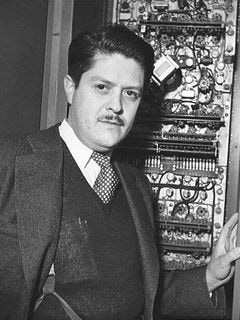
Guillermo González Camarena
 Mexico
工程师
生日
February 17, 1917
星座
Aquarius
出生地
Guadalajara, Jalisco, Mexico
年龄
48岁去世
身高
5 ft 7 in (170 cm)
简介
吉列尔莫·冈萨雷斯·卡马雷纳是一位墨西哥发明家和工程师。他最著名的是创造了最早的彩色电视系统之一,并于1940年为其场序彩色电视系统申请了专利。1946年8月31日,他在墨西哥进行了首次公开彩色电视广播,并于1952年创立了拉丁美洲第一家电视台XHGC-TV(现为第五频道)。他的创新成果,包括阿波罗计划中使用的一台彩色摄像机,至今仍是现代电视的基础。他的遗产通过他在广播技术领域的开创性工作的持久影响而受到今天的赞誉。
早年生活与背景
吉列尔莫·冈萨雷斯·卡马雷纳于1917年2月17日出生在墨西哥哈利斯科州瓜达拉哈拉,是七个孩子中最小的一个。他的早年生活在一个繁忙的家庭中,父亲是一名法官,母亲管理家庭。即使还是个孩子,吉列尔莫就表现出非凡的电子学天赋。当他年轻时全家搬到墨西哥城,他对这个领域的热情真正开始蓬勃发展。在12岁这个了不起的年纪,他用废旧零件制作了自己的第一台无线电发射机,展示了与生俱来的工程天赋。十几岁时,他通过自己搭建的一台简陋的电视接收机进一步磨练了技能,这一切都在他精心布置的家庭工作室内完成。
他的正规教育包括在墨西哥城的国立理工学院学习电气和机械工程。正是在那里,他开始认真探索彩色传输的复杂性。虽然他从未正式学习过电视技术这一特定学科,但他通过严格的阅读和大量的动手实践自学成才,驱动他的是永不满足的好奇心。到1934年,年仅17岁的冈萨雷斯·卡马雷纳已经深入投入到彩色电视系统的实验中,决心攻克一个困扰全球工程师的技术难题。
这种不懈的努力在1939年取得了重大突破。他成功开发出创新彩色系统的工作原型。这一关键成就为他次年在1940年申请专利铺平了道路。他的发明——一种场序彩色电视系统——巧妙地利用旋转彩色轮盘产生生动的图像,标志着电视技术史上基础性的一步。
职业发展
1940年,冈萨雷斯·卡马雷纳为其场序彩色电视系统申请了专利,该系统于1942年在美国获得专利号2,296,019。该系统使用一个带有红、绿、蓝滤光片的旋转轮盘,放置在黑白摄像机和接收机前。1946年8月31日,他创造了历史,在墨西哥进行了首次公开彩色电视广播,从他家的客厅将妻子的脸传输到十个街区外的一家医院。
六年后,即1952年,他创办了拉丁美洲第一家电视台XHGC-TV,以其姓名首字母命名。他亲自设计并建造了该台的大部分传输设备。20世纪60年代,他为教育电视开发了一种简化、廉价的彩色系统,使学校能够使用彩色电视。他与美国国家航空航天局(NASA)的合作最为深远:他为阿波罗计划设计了一套彩色电视系统,该系统用于1969年首次登月的转播,那是在他去世四年之后。
职业生涯年表
公众形象与风格
冈萨雷斯·卡马雷纳被认为是谦逊的天才,他在一个小型家庭实验室里工作,驱动力是好奇心而非名气。媒体将他描绘为墨西哥科学和创新的民族英雄。他的粉丝自称Camarenistas,在2月17日他的生日当天,通过社交媒体使用#GuillermoGonzálezCamarena标签表达敬意。他的公众形象是安静坚定、不懈追求彩色,一个改变了世界看待电视方式的人物。他常被引为拉丁美洲年轻工程师的灵感源泉。
名气与粉丝圈 (iFAMOUS Rankings)
Guillermo González Camarena occupies a unique space in the global consciousness, not as a celebrity with a devoted following, but as a foundational pillar of modern visual culture. His legacy is sustained by educational institutions, historians, and cultural organizations rather than a grassroots fanbase that organizes campaigns or creates rituals. While some enthusiasts celebrate his birthday on February 17 as Mexican Inventor's Day, this observance is an institutional commemoration of his contributions to science rather than a fandom activity centered on his persona. There is no documented name for his supporters, and no organized groups exist to champion his memory beyond official government decrees and media coverage during heritage months. The iFANN Global Fame Engine has evaluated his standing and found that he does not currently hold a placement in the published rankings. Guillermo González Camarena is not ranked within the Global Top 1,000, nor does he appear on any Top-100 scope list. This absence from the charts reflects his status as a historical figure whose fame is rooted in enduring utility and national pride rather than contemporary celebrity metrics. His influence remains profound, yet it exists outside the competitive sphere of current fame rankings.
趣闻与传奇
Guillermo González Camarena built his first radio transmitter at age 12 using scrap metal and vacuum tubes salvaged from old radios. He was a self-taught engineer who never formally studied television technology, yet he patented his field-sequential color system in 1940. His first public color broadcast featured the face of his wife, transmitted from his living room to a hospital ten blocks away. His simplified color system allowed existing black-and-white televisions to adapt, making the technology affordable for schools. After his death, his color system was utilized by NASA to broadcast the Apollo 11 moon landing in 1969. A somber legend surrounds his life: he died in a car accident in Amozoc, Puebla, at the age of 48, cutting short the career of a man who solved a problem that stumped the rest of the world. Stories often retell how a Mexican engineer became the father of color television, turning a personal laboratory into a global standard.
著名语录
“I wanted to give the world a way to see colors as they really are, not just in black and white.”
“Television is not just a machine; it is a window to the soul of humanity.”
“My greatest invention was not the color wheel, but the patience to try again when everyone said it was impossible.”
家庭与个人生活
吉列尔莫于1941年与玛丽亚·安东尼塔·贝塞拉·阿科斯塔结婚,她成为他工作的坚定支持者。她是他的第一次彩色广播的对象。这对夫妇有三个孩子:吉列尔莫、阿图罗和玛丽亚·安东尼塔。他的儿子们后来管理他的遗产。这家人住在墨西哥城,吉列尔莫在那里维持着他的家庭实验室。他是一位虔诚的天主教徒,他的家人经常和他一起在工作室里。他去世后,他的孩子们确保他的专利和贡献得到认可。
重要关系
冈萨雷斯·卡马雷纳最亲密的合作者是他的妻子玛丽亚·安东尼塔·贝塞拉·阿科斯塔,她出现在他的第一次彩色广播中。他与NASA的工程师合作,包括威廉·H·皮克林博士,共同开发阿波罗彩色电视系统。他还与RCA合作,在美国授权其专利。墨西哥总统米格尔·阿莱曼·巴尔德斯支持XHGC-TV的开播,为该台提供了关键支持。
恋情与交往史
González Camarena有一段已知的恋爱关系。他于1941年与María Antonieta Becerra Acosta结婚。他们通过墨西哥城的共同朋友相识,她成为他工作的坚定支持者。她曾作为他1946年第一次彩色电视广播的主题出现。这对夫妇共有三个孩子。他们的婚姻被描述为稳定且相互支持,直到他于1965年因车祸意外去世。截至2026年,他已去世,其遗产由家人继承。
- 已婚María Antonieta Becerra Acosta1941 - 1965他们通过墨西哥城的共同朋友相识。她是他工作的坚定支持者,并出现在他的第一次彩色广播中。他们共有三个孩子。
逝世与身后事
逝世
April 18, 1965 (享年48岁)
逝世地点
未知
死因
未知
The Mexican engineering community and his family received the news of Guillermo González Camarena's passing on April 18, 1965, confirming the end of a life dedicated to broadcast innovation. He was forty-eight years old when he died in Mexico City, though the specific medical cause or circumstances surrounding his final days were never formally detailed by authorities or his household. His death occurred just as his work was gaining international recognition, leaving a gap in the leadership of XHGC-TV and the ongoing development of his simplified educational color systems. Immediate reactions from peers focused on the sudden loss of a visionary who had already secured a place in history with his field-sequential color patent and contributions to the Apollo program.
The funeral arrangements were handled privately by his wife, María Antonieta Becerra Acosta, and their three children, ensuring a quiet departure away from the spotlight that often followed his professional achievements. His sons later took up the mantle of managing his estate, preserving the patents and technical documents that would continue to generate royalties for decades. In the years following his death, the depth of his contribution became increasingly apparent as the world adopted color broadcasting standards. Institutions began to recognize his foundational role, with his chromoscopic adapter concepts influencing global transmission methods long after his passing.
Modern commemorations during Hispanic Heritage Month and tributes from space agencies have since highlighted how his early 20th-century innovations paved the way for the moon landing broadcasts and modern high-definition imaging. The legacy he left behind is not one of public mourning rituals from 1965, but of a silent, enduring impact on the technology that defines visual communication today.
身价(遗产价值)
$4 Million
iFANN编辑团队估算
Per iFANN's editorial analysis, the estate of Guillermo González Camarena is valued at around $4 Million as of 2026. His wealth accumulated primarily through patent royalties paid by television manufacturers like RCA and Philco during the 1940s and 1950s, alongside his salary as an engineer and owner of XHGC-TV. He was not a wealthy media mogul; his fortune remained modest throughout his life. The estate is managed by his sons, Guillermo and Arturo González Camarena Becerra. Posthumous revenue includes licensing of his name for educational and commemorative purposes, though most patents have expired. No major merchandise lines exist.
获奖 (2)
González Camarena因其工程贡献获得了多项荣誉,包括20世纪50年代的墨西哥电视行业奖和20世纪60年代的墨西哥政府功绩勋章。国立理工学院追授他为杰出校友。他的工作不属于娱乐领域,因此他没有获得艾美奖或奥斯卡奖。
1950 · 对电视的贡献
Color television system
1960 · 科学贡献
Color television and educational TV system
代表作
Color television system
1940 · 发明家
XHGC-TV (Canal 5)
1952 · 创始人
Apollo program color TV system
1963 · 设计师
关键词
速览
- 职业
- engineer
- 出生
- +1917-02-17
- 出生地
- Guadalajara
- 逝世
- +1965-04-18
- 逝世地点
- Amozoc de Mota
- 性别
- 男
- 星座
- Aquarius
个人资料
- 全名
- Guillermo González Camarena
- 身高
- 5 ft 7 in (170 cm)
- 配偶
- María Antonieta Becerra Acosta
- 子女
- 3 (Guillermo, Arturo, María Antonieta)
- 教育
- National Polytechnic Institute (IPN), Mexico City
常见问题
Guillermo González Camarena发明了什么?
Guillermo González Camarena是怎么死的?
Guillermo González Camarena曾与NASA合作过吗?
Guillermo González Camarena在2026年的身价是多少?
Guillermo González Camarena去世时多大年纪?
加入社区
位粉丝正在讨论