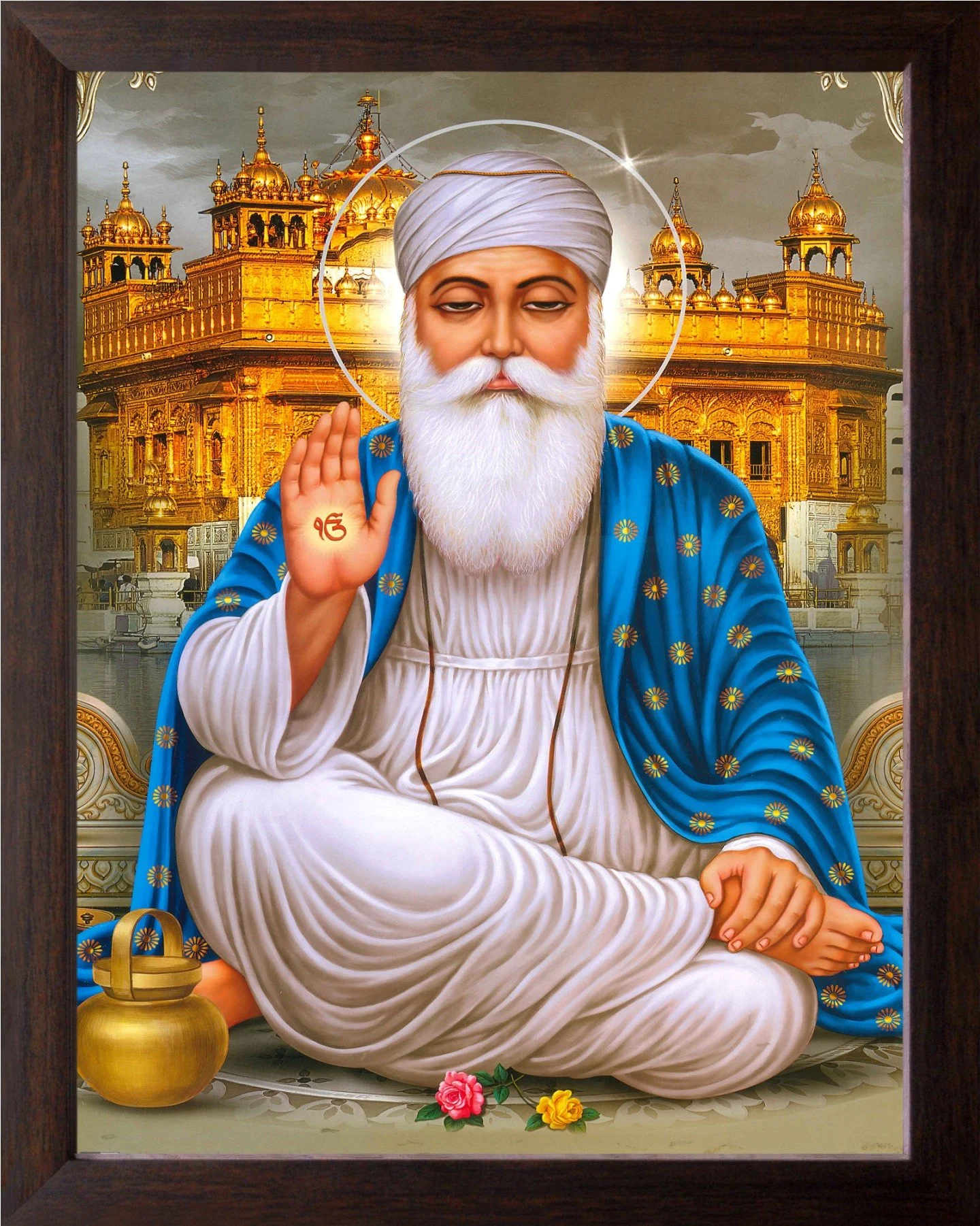
Guru Nanak
 Kiribati
Also known as: Nanak, Baba Nanak, Nanak Dev
生日
April 15, 1469
星座
Aries
出生地
Rai Bhoi Ki Talwandi (now Nankana Sahib, Pakistan)
年龄
70岁去世
简介
Guru Nanak was the founder of Sikhism and the first of the ten Sikh Gurus. He was a spiritual teacher, mystic, and poet who lived from 1469 to 1539. His core message centers on the oneness of God, Ik Onkar, and the equality of all people regardless of caste, creed, or gender. Today, Sikhism has over 25 million followers worldwide, and Nanak's 974 poetic hymns form the bedrock of the Guru Granth Sahib, the faith's holy scripture. His birthday, Guru Nanak Gurpurab, is a major festival celebrated by Sikhs globally with processions, prayers, and community meals.
早年生活与背景
古鲁那纳克于1469年4月15日出生在拉伊博伊基塔尔万迪村,即今巴基斯坦境内的南卡纳萨希布。他的父亲梅赫塔·卡卢是村里的会计,母亲玛塔·特里普塔是家庭主妇。他有一个姐姐贝贝·纳纳基,对他十分敬爱。从小那纳克就表现出沉思的天性,常常质疑周围的仪式和社会分歧。他从一位印度教老师那里学习印地语和梵语,后来又在一位穆斯林学者指导下学习波斯语,从而精通两种宗教传统。16岁时,他娶了玛塔·苏拉赫尼,育有两个儿子。他曾一度为当地穆斯林统治者担任仓库管理员,但内心的灵性不安日益增长。大约30岁时,在一次失踪三天后(期间他在河中沐浴,出来后宣称“没有印度教徒,也没有穆斯林”),他开始传道。
职业发展
灵性觉醒后,古鲁那纳克开始了五次主要旅行(udasis),历时二十多年。他徒步穿越印度、西藏、斯里兰卡、中东和阿拉伯,行程数千英里。在麦加,他通过将脚朝向克尔白,宣称神无处不在,挑战了宗教正统。他用旁遮普语(普通人的语言)创作赞美诗,并配以各种拉格。他最著名的作品包括晨祷《贾普吉·萨希卜》和关于神圣正义的赞美诗《阿萨迪·瓦尔》。他在卡塔普尔建立了一个社区,并推行了“兰加尔”(免费公共厨房)的做法,对所有人开放。在1539年去世前,他指定拜·莱纳为继承人,将其重命名为古鲁安加德,确保其教义的延续。
职业生涯年表
公众形象与风格
古鲁那纳克被尊为一位谦逊、慈悲、无畏的导师,他挑战社会不公。在锡克传统中,他被描述为驱散黑暗的“古鲁”。在流行文化中,他的形象常被描绘为留着飘逸的胡须、穿着简朴的长袍、神情安详。他以机智和直率著称,比如关于“酒鬼”的故事——他说酒鬼比那些虚伪祈祷的人更诚实。古尔普拉布节的年度庆祝活动包括“纳加尔基尔坦”游行,信徒们吟唱他的赞美诗。他关于平等的教义超越了锡克教,影响了全球的跨宗教对话。
名气与粉丝圈
Guru Nanak commanded a devotion that transcended centuries, evolving from the teachings of a 15th-century mystic into a global movement of millions. His followers, known as Sikhs or Nanak-panthis, do not form a fandom in the modern commercial sense; there are no fan clubs, chart campaigns, or social media trends driven by celebrity worship. Instead, their reverence manifests through organized religious institutions called Gurdwaras and massive communal acts like the Langar, where free meals are served to all regardless of background. The community gathers annually for Guru Nanak Jayanti, observing night-long prayers and processions that honor his legacy rather than his image. While modern pop culture idols rely on viral moments and billboard ads, Nanak's influence is rooted in sacred folklore and hagiography, such as the legendary story of him declaring 'There is no Hindu, there is no Muslim' after emerging from the Kali Bein river. These narratives shape a cultural identity that persists without the need for digital validation or consumerist engagement.
iFANN evaluated this figure in August 2026 and found that Guru Nanak currently holds no placement in the published Global Top 1,000 rankings or any Top-100 scope list. The evaluation confirms he does not appear on the current fame charts.
趣闻与传奇
Historical records note that Guru Nanak traveled to Baghdad to debate with Sufi mystics and visited Haridwar, where he famously threw water westward instead of toward the sun to challenge ritualistic beliefs about ancestors. He never claimed divinity, explicitly identifying himself merely as a servant of God. Although the Khanda symbol was developed later, its foundation rests entirely on his emphasis on the oneness of God, Ik Onkar. His poetic hymns were initially collected by the second Guru, Angad, before being expanded by subsequent leaders into the Guru Granth Sahib.
Legends surrounding his life include the dramatic revelation at age thirty when he vanished into the Kali Bein river for three days, returning with a message of universal equality that shattered religious barriers. Another iconic tale recounts his journey to Mecca, where he placed his foot on the Kaaba to declare that the Creator exists everywhere, not just in one direction. Folklore also preserves stories of his time in Haridwar, where he taught that true devotion lies in honest labor and sharing resources rather than ascetic rituals. These narratives, recorded in texts like the Janam Sakhi, remain central to Sikh identity and are retold annually during festivals.
著名语录
“There is but one God, He is the supreme truth, He is the creator of all.”
“Speak the truth, live truthfully, and walk the path of truth.”
“Recognize that there is one God, and His ways are true.”
“I am neither Hindu nor Muslim; I am a follower of God.”
“The world is a drama, and God is the only director.”
家庭与个人生活
古鲁那纳克的父亲梅赫塔·卡卢是一位印度教会计,为一位穆斯林地主服务。他的母亲玛塔·特里普塔以虔诚著称。他的姐姐贝贝·纳纳基在他早年生活中扮演了重要角色;她是第一个认识到他灵性深度的人。那纳克娶了商人女儿玛塔·苏拉赫尼,育有两子:斯里·钱德(后来创立了苦行僧式的乌达西教派)和拉克米·达斯(过着世俗生活)。那纳克去世后,他的儿子们并未继承他的事业;相反,他的弟子古鲁安加德延续了灵性传承。
重要关系
古鲁那纳克的继承人是拜·莱纳,即古鲁安加德。他的妻子玛塔·苏拉赫尼支持他的使命。他的儿子斯里·钱德和拉克米·达斯并未追随他的灵性道路。他的姐姐贝贝·纳纳基是早期的支持者。莫卧儿皇帝巴布尔在那纳克的赞美诗中被提及为暴君。
恋情与交往史
古鲁那纳克大约在1485年与玛塔·苏拉赫尼结婚。她是巴塔拉镇商人穆拉的女儿。这桩婚姻由他的父母安排。他们育有两个儿子:斯里·钱德(约1494年出生)和拉克米·达斯(约1497年出生)。玛塔·苏拉赫尼在那纳克早期旅行时陪伴他,后来与他一起住在卡塔普尔。她在那纳克之后去世,但具体年份没有记录。截至他1539年去世,那纳克仍与她保持婚姻关系。
- 已婚Mata Sulakhni1485 - 1539包办婚姻;育有两子:斯里·钱德和拉克米·达斯。
逝世与身后事
逝世
September 22, 1539 (享年70岁)
逝世地点
Kartarpur
死因
Illness and advanced age
According to tradition, when Hindu and Muslim followers arrived at Kartarpur in 1539 to perform last rites, they found flowers covering his body, symbolizing that his legacy belonged to all humanity. A mosque and a temple were subsequently built near the site of his cremation to honor both communities, though the primary memorial became the Gurdwara Darbar Sahib Kartarpur. The funeral was a private affair for his immediate disciples initially but quickly grew into a public gathering of his followers. Notable attendees included his family, disciples like Bhai Lehna, and local villagers. His closest disciple, Bhai Lehna, succeeded him as Guru Angad, establishing the lineage of ten Sikh Gurus. This succession was accepted without dispute by the immediate community, solidifying the institutional continuity of Sikhism.
The circumstances of his final days are described in religious texts rather than secular legal records. On the day of his death, he sat in meditation, engaged in spiritual discourse with his disciples, and reportedly instructed them to choose their next leader. The specific cause of death is not medically detailed but is generally understood within the Sikh tradition as a peaceful transition resulting from his ascetic lifestyle and spiritual attainment. Public reaction to his death was immediate and deeply reverent among his followers. Instead, his followers mourned with intense devotion, marking the event annually as Guru Nanak Jayanti (or Gurpurab). Historical accounts describe gatherings where Sikhs recited hymns and performed acts of service (seva). Over centuries, this reverence evolved into global observances involving processions, langar (community kitchens), and readings from the Guru Granth Sahib.
Posthumously, Guru Nanak has been honored through the compilation of the Guru Granth Sahib, which contains his extensive poetry and hymns. Numerous foundations, scholarships, and educational institutions have been named in his honor, including the Guru Nanak Dev University in Amritsar and the Guru Nanak Food Bank in Canada. Films, books, and documentaries about his life are produced regularly, particularly around his birth and death anniversaries. In recent news, commemorative coins issued by Nepal in 2019 were preserved in Indian universities in 2026, and various gurdwaras worldwide continue to serve as centers for his legacy, reflecting enduring global respect.
奖项与荣誉
View 4 records, honours and achievements代表作
Founding of Sikhism
1499 · 创始人
Japji Sahib
1521 · 作曲家
Asa di Var
1521 · 作曲家
关键词
速览
- 职业
- guru, religious leader, poet
- 出生
- +1469-04-15
- 出生地
- 南卡纳萨希布
- 逝世
- +1539-09-22
- 逝世地点
- Kartarpur
- 性别
- 男
- 配偶
- Mata Sulakhni
- 星座
- Aries
个人资料
- 全名
- Nanak
- 配偶
- Mata Sulakhni
- 子女
- Sri Chand, Lakhmi Das
- 教育
- Traditional education in Hindi, Sanskrit, and Persian
常见问题
古鲁那纳克是谁?
古鲁那纳克的身价是多少?
古鲁纳纳克的主要教义是什么?
锡克教认为古鲁纳纳克是神吗?
古鲁纳纳克葬于何处?
相似人物
加入社区
位粉丝正在讨论