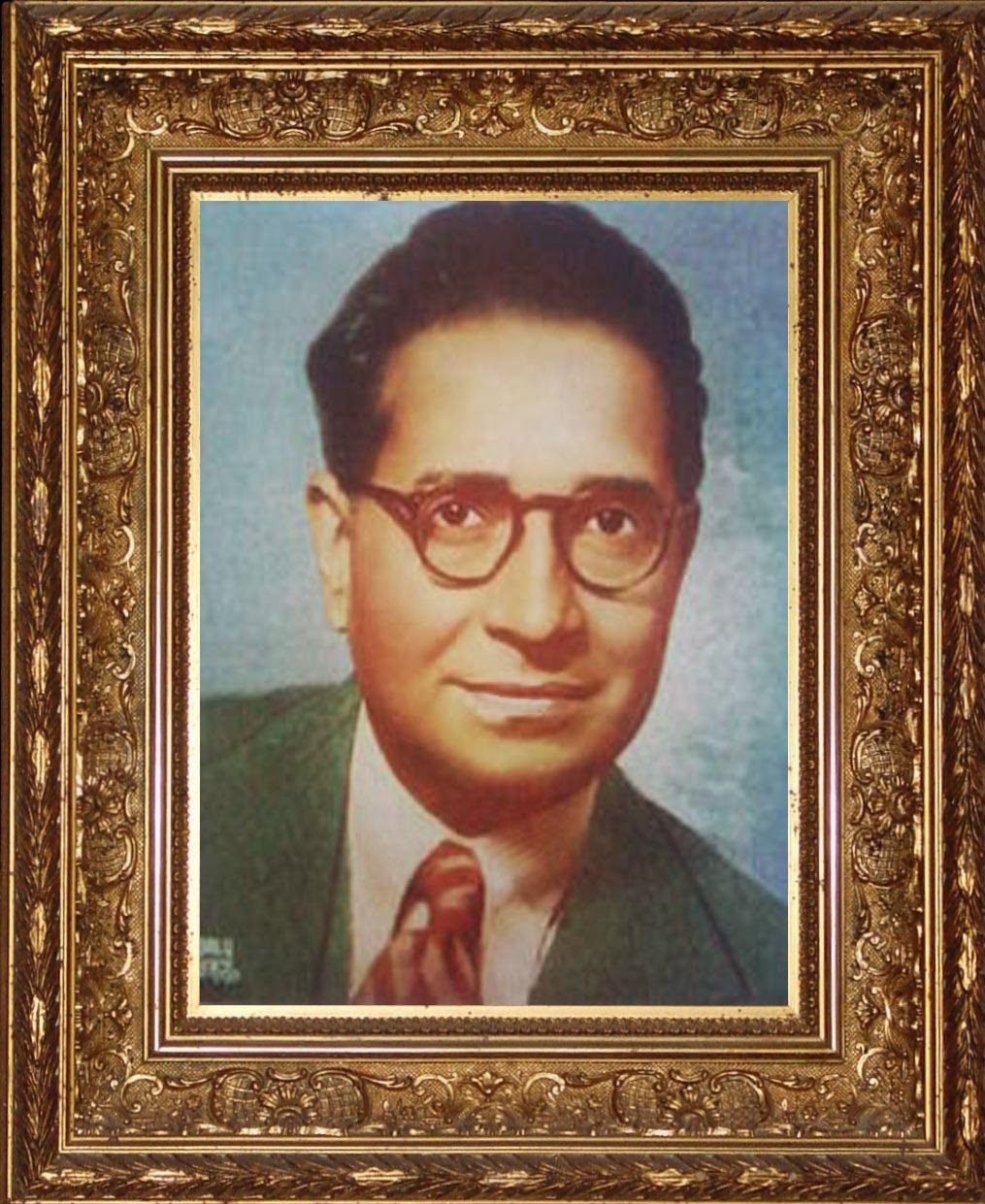
Kariamanickam Srinivasa Krishnan
 India
IndiaAlso known as: K. S. Krishnan, Sir K. S. Krishnan
生日
December 4, 1898
星座
Sagittarius
出生地
Watrap, Tamil Nadu, India
年龄
62岁去世
简介
Kariamanickam Srinivasa Krishnan 是一位印度物理学家和天体物理学家,他的实验才华帮助揭示了光的一个基本现象。他最出名的是作为拉曼散射的共同发现者,他的导师 C. V. Raman 因该效应于 1930 年获得了诺贝尔奖。Krishnan 本人严谨的工作为该发现奠定了实验和理论基础。
除了拉曼效应,Krishnan 在晶体的磁性方面做出了开创性贡献,开发了测量磁各向异性的技术。他既擅长理论也擅长实验,这种罕见的结合使他成为印度最多才多艺的物理学家之一。作为国家物理实验室的第一任主任,他帮助塑造了印度独立后的科学基础设施。他于 1940 年当选为皇家学会会员,并于 1954 年获得莲花装勋章。
早年生活与背景
Krishnan 出生于一个婆罗门家庭,在泰米尔纳德邦 Watrap 附近的一个村庄 Viluppanoor。他的父亲是一位农民,也是一位精通泰米尔文学和哲学的学者,他的母亲则负责管理家里的农田。Krishnan 从父亲那里继承了对泰米尔经典和史诗的热爱。
他开始在 Watrap 的 Hindu Higher Secondary School 受教育,之后转到 Madurai 的 American College。他继续在 Madras Christian College 深造,并获得了物理学学位。毕业后,他在同一所大学担任化学演示员。他在午餐时间进行的关于物理学和化学的非正式讲座非常受欢迎,以至于学生们都围拢过来听。正是在这个时期,他的科学好奇心引起了 C. V. Raman 的注意,后者于 1920 年邀请他前往 Calcutta。
职业发展
1920年,克里希南加入了加尔各答的印度科学文化协会,与C. V. Raman共事。这次合作非常密切。在接下来的八年里,他们探索了光在液体和固体中的散射现象。1928年,他们观察到散射光中包含原始光束中不存在的波长,这就是拉曼效应。克里希南后来称这段时期是他科学生涯中最充实的一段。
发现之后,克里希南移居达卡大学担任讲师,在那里他将研究重点转向了磁学。他开发了测量晶体磁各向异性的方法,这项工作至今仍有影响力。1942年,他成为阿拉哈巴德大学物理系主任。随后在1948年,总理Jawaharlal Nehru任命他为新德里国家物理实验室的第一任主任。在那里,克里希南建立了研究项目,招募了年轻科学家,并建立了成为印度计量学支柱的计量实验室。
职业生涯年表
公众形象与风格
名气与粉丝圈
Kariamanickam Srinivasa Krishnan stands as a monumental figure in the history of Indian science, revered not for celebrity status but for his pivotal role in one of physics' greatest discoveries. Despite being the essential experimentalist behind the Raman Effect, he does not currently hold a placement in the published Global Top 1,000 or any Top-100 scope list within the iFANN rankings. This absence reflects the unique nature of his legacy; while he commands immense respect among physicists and historians, he lacks the mass-market commercial metrics that drive modern fame charts. The scientific community has long debated whether his contributions were overshadowed by his mentor C.V. Raman, a narrative that has sparked renewed academic interest in recent years rather than a surge in pop culture visibility. His recognition remains anchored in institutional naming, academic citations, and the annual observance of National Science Day, where his work is acknowledged alongside Raman's Nobel Prize. There is no formal fandom name associated with Krishnan, nor are there organized fan clubs, social media campaigns, or ritualistic gatherings dedicated to him. Instead, his audience consists of students, researchers, and science communicators who advocate for a more complete historical record of his life. This intellectual rediscovery serves as his form of tribute, ensuring that the story of the man who helped unlock the secrets of light scattering is told with the gravity it deserves. While he never experienced the frenzy of a rock star or the adoration of a movie idol, his standing in the annals of science is absolute, securing his place as a foundational architect of independent India's research infrastructure.
趣闻与传奇
Kariamanickam Srinivasa Krishnan possessed a rare ability to captivate audiences with stories from the Ramayana and Mahabharata, often weaving deep philosophical insights into his narratives. His dedication was so profound that he began laboratory work at 6 a.m. every single day. Beyond the lab, he was a passionate football fan who spent many evenings watching matches. He was fluent in Sanskrit and Tamil, possessing a deep knowledge of their classical literature that complemented his scientific rigor. Colleagues frequently noted that he was equally skilled in theory and experiment, a combination that set him apart from his peers. The most enduring legend surrounding Krishnan involves his critical role in the co-discovery of the Raman Effect. While C.V. Raman received the Nobel Prize in 1930, a persistent story in scientific circles credits Krishnan with conducting the crucial experiments that proved the effect was real. This narrative of the "unsung hero" who laid the groundwork while receiving less public acclaim has become a central part of his lore, sparking ongoing discussions about credit attribution in science. Another iconic chapter in his life is his appointment as the first Director of the National Physical Laboratory in New Delhi following India's independence. This achievement is widely cited as a reflection of his leadership, marking the beginning of organized scientific research infrastructure in the newly independent nation.
家庭与个人生活
重要关系
恋情与交往史
逝世与身后事
逝世
June 14, 1961 (享年62岁)
逝世地点
New Delhi
死因
reported heart attack
Sir Kariamanickam Srinivasa Krishnan passed away early in the morning of June 14, 1961, in New Delhi, as reported by contemporary accounts including The New York Times. The eminent physicist and co-discoverer of Raman scattering succumbed to a heart attack at the age of 62, marking the end of a life dedicated to unlocking the fundamental properties of light and magnetism., the medical cause was established through immediate reports from his location without dispute regarding the date or circumstances of his passing. The scientific community and the nation responded with profound reverence rather than mass public gatherings.
Prime Minister Jawaharlal Nehru offered a defining tribute, describing Krishnan as a perfect citizen, a sentiment that echoed through official retrospectives and cemented his status within India's intellectual history. His legacy had already been secured by his pivotal role alongside C.V. Raman in the discovery that earned the Nobel Prize, and he remained a respected figure even after receiving the Bharat Ratna posthumously in 1958. Although specific details about funeral arrangements or burial locations remain unrecorded in standard sources, his contributions were immortalized through the National Physical Laboratory in New Delhi, an institution he helped establish as its first director.
In the decades following his death, Krishnan became the subject of numerous academic publications and biographies aimed at highlighting his foundational role in Indian science. He was inducted into various halls of fame and recognized as a key architect of the country's scientific infrastructure, with his life story frequently featured in documentaries and news segments discussing his proof of the Raman Effect. No films or books focus solely on his demise, yet his influence persists through the standards laboratories and research programs he built.
获奖 (4)
1940 · 科学
1954 · 平民
代表作
Co-discovery of Raman scattering
1928 · 联合发现者
Magnetic anisotropy of crystals
1930 · 研究员
First Director of National Physical Laboratory
1948 · 导演
关键词
来源
速览
- 职业
- physicist, astrophysicist
- 出生
- December 4, 1898
- 出生地
- Watrap, Tamil Nadu, India
- 逝世
- June 14, 1961
- 性别
- 男
- 星座
- Sagittarius
个人资料
- 全名
- Kariamanickam Srinivasa Krishnan
- 教育
- Madras Christian College (Physics degree)
常见问题
Kariamanickam Srinivasa Krishnan 是谁?
拉曼效应是什么?克里希南在其中扮演了什么角色?
Krishnan的其他科学贡献是什么?
克里希南在印度科学管理方面扮演了什么角色?
K. S. Krishnan 何时何地出生,何时去世?
加入社区
位粉丝正在讨论