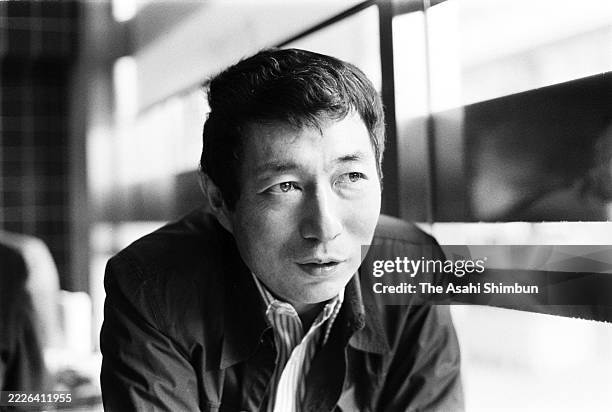
Shūji Terayama
 Japan
Japan生日
December 10, 1935
星座
Sagittarius
出生地
Hirosaki, Aomori Prefecture, Japan
年龄
47岁去世
身高
5 ft 7 in (170 cm)
简介
寺山修司是一位日本前卫诗人、剧作家和电影制作人,其作品难以归类。在1983年去世前仅25年的职业生涯中,他创作了惊人的作品量:数百首诗、数十部戏剧、十部长片电影以及无数散文和广播剧。许多评论家认为他是战后日本最具挑衅性的创作力量之一,其影响自20世纪70年代以来一直回荡在电影人、戏剧导演和诗人之中。如今,他的遗产估值约为300万美元,通过遗作电影修复、书籍翻译以及一套标准收藏版盒装套装,他的作品在新一代中得以延续。
早年生活与背景
寺山修司出生于弘前,父亲寺山八郎是警官,母亲寺山初是家庭主妇。九岁时,父亲在二战中去世。母亲因经济拮据做住家保姆,年幼的修司被送到青森县三泽市的亲戚家寄养。这种流离失所和早期丧父的经历,为他整个职业生涯中关于漂泊和记忆的主题提供了素材。
他就读于三泽小学和初中,在那里如饥似渴地阅读日本经典和西方文学。在青森县立三泽高中,他开始创作俳句和短歌,并投稿参加全国比赛。17岁时,他凭借短歌作品获得《短歌研究》杂志的短歌奖,这是对他才华的早期认可。1954年他移居东京,曾短暂就读于早稻田大学教育学院,但一年后退学,觉得学术过于束缚。他沉浸在东京的前卫文学圈中,与诗人上田忠彦和大冈信成为朋友。他的第一部诗集《盲人赞歌》于1957年出版,奠定了他作为实验诗坛新星的地位。
职业发展
寺山修司的突破发生在1967年,当时他在东京创立了天井桟敷剧团,该剧团迅速成为日本地下表演的中心。剧团上演挑衅性的、让观众沉浸其中的作品,打破第四面墙,模糊现实与虚构。1971年,他发布了突破性电影《扔掉书本上街跑》,这是一部混乱、自传式的记忆、政治和反叛拼贴画,赢得了戛纳电影节影评人奖。他最受赞誉的电影《田园:死于乡村》于1974年问世,获得了洛迦诺电影节特别评审团奖。在接下来的十年里,他又发布了八部长片,包括《拳击手》(1975年)和他的最后一部电影《再见方舟》(1979年)。1981年,他出版了16卷《寺山修司全集》,巩固了他的文学遗产。他的职业生涯因1983年死于肝硬化而中断,但他的作品通过回顾展和修复持续被重新发现。
职业生涯年表
公众形象与风格
寺山修司的公众形象是一个不懈的挑衅者。他的作品以超现实、梦幻般的意象、非线性叙事以及现实与虚构的不断模糊为特点。他的电影常描绘荒凉的风景、废弃的建筑和被困在记忆循环中的角色。他的戏剧具有对抗性,打破第四面墙,直接让观众参与其中。评论家称他为“日本的戈达尔”或“日本的费里尼”,尽管他的作品更加无政府主义,政治教条性较弱。他在前卫圈备受尊敬,但在日本以外的主流观众中仍然鲜为人知。粉丝们有时自称“寺山主义者”或“桟敷派”,每年在他的忌日组织放映活动,称为“寺山日”。由早稻田大学档案馆管理的官方社交媒体账号保持着学术和档案化的口吻,发布稀有照片和电影片段。
名气与粉丝圈
Shūji Terayama commands a focused, global attention that resonates deeply within avant-garde circles, film archives, and academic institutions rather than the mainstream pop consciousness. His work remains a touchstone for those exploring the boundaries of surrealism and underground theater, though his reach is defined by enduring influence rather than mass-market saturation. iFANN has evaluated this figure's standing in the cultural landscape, and the Global Fame Engine currently determines that Shūji Terayama does not hold a placement in the published rankings, including the Global Top 1,000 or any Top-100 scope list. This absence from the ranked lists reflects his status as a niche historical icon whose legacy is preserved through specialized study rather than contemporary viral metrics. The appreciation for his life and art is sustained by a fragmented community of scholars, cinephiles, and artists who operate without a formalized fanbase structure. There is no documented fandom name associated with Terayama; instead, his supporters are scattered across university departments, film festival attendees, and the underground art scene. Unlike modern celebrities who cultivate organized clubs or digital armies, the Terayama community engages through scholarly analysis, preservation efforts, and curated retrospectives hosted by institutions like the Harvard Film Archive. While social media accounts exist to archive his work, they function as historical repositories rather than hubs for interactive fan campaigns or grassroots organizing. His relationship with audiences was historically confrontational and non-reciprocal, designed to disrupt passive consumption rather than foster a traditional celebrity following.
趣闻与传奇
Terayama was a compulsive gambler who once wagered his entire advance for a poetry collection on a horse race; he lost the bet but later channeled the experience into a poem. A lifelong baseball enthusiast, he frequently wrote essays drawing parallels between the sport and theatrical performance. His Tenjō Sajiki troupe famously staged a play inside a moving train, turning passengers into an unwilling audience. Although he composed over 1,000 haiku during his lifetime, only 200 were published before his death, with the remainder discovered posthumously. His film Farewell to the Ark drew direct inspiration from a dream he experienced after reading Gabriel García Márquez's One Hundred Years of Solitude. Beyond these personal anecdotes, Terayama left behind legendary moments that define his mythos. The 1970 street performance titled Throw Away Your Books, Rally in the Streets stands as a defining event where hundreds of participants disrupted public space to challenge the established literary order. Another iconic work, The Boxer (1977), subverted the sports drama genre with its raw aesthetic and philosophical questioning of violence, featuring the now-famous line, Can you hate people? I can! His short film The War of Jan Ken Pon transformed the children's game Rock-Paper-Scissors into a grotesque allegory for war, spreading as a shocking visual incident through word-of-mouth in avant-garde circles long before the internet age.
著名语录
“The past is not dead. It is not even past.”
“I make films because I cannot remember my childhood. The camera is my memory machine.”
“Theatre is not a place to escape reality. It is a place to confront it, naked and screaming.”
“Poetry is the only language that can speak of death without lying.”
家庭与个人生活
寺山修司的父亲寺山八郎是警官,在二战中去世,当时修司九岁。母亲寺山初做住家保姆,他在三泽由亲戚抚养长大。1961年,他与诗人兼小说家九条今日子结婚,她本人也是一位重要的文学人物,以告白诗和女权主义散文闻名。他们有一个儿子寺山透,出生于1962年,后来成为摄影师和作家,现在管理着遗产。这段婚姻非常反传统,两人都是极其独立的艺术家,九条后来坦率地写下了寺山的婚外情和酗酒问题。她比寺山多活了许多年,于2021年去世。
重要关系
寺山修司是电影人大岛渚的密友,他们经常争论艺术在政治中的作用。他的妻子九条今日子在诗歌方面对他有重要影响,也是他的合作者。他与摄影师大谷义男在几部电影中合作,作曲家汤浅让二为他的许多作品配乐。他早年的导师是诗人大冈信。他的儿子寺山透现在管理着他的遗产。
恋情与交往史
寺山修司于1961年与诗人兼小说家九条今日子结婚。他们的婚姻非常规,两人都是独立不羁的艺术家,育有一子寺山徹。九条后来坦率地写到了寺山的婚外情和他与酒精的斗争。在1960年代末,他与天井桟敷剧团成员Reiko有一段众所周知的婚外情,九条在她的回忆录中承认了这一点。在1970年代末,据传他与剧团中的一位年轻女演员有染,多本传记中均提及此事。寺山与九条保持婚姻关系直至1983年去世。
- 已婚Kyōko Kujō1961 - 1983在东京文学圈相识;育有一子寺山徹;她写到了他的婚外情和酗酒问题。
- 曾交往Reiko1968 - 1972与天井桟敷剧团成员的婚外情;九条今日子承认此事。
- 传闻中Yoshiko1978 - 1982据传与剧团中的一位年轻女演员有染;传记中提及。
逝世与身后事
逝世
May 4, 1983 (享年47岁)
逝世地点
未知
死因
未知
The release of Farewell to the Ark in 1979 marked his final cinematic statement, a work that would stand as a haunting reflection of his vision before the world lost its most provocative creative force. Shūji Terayama passed away on May 4, 1983, at the age of forty-seven, bringing an abrupt end to a career that had spanned just twenty-five years of intense production. While specific details regarding the location of his passing and the precise medical circumstances remain unrecorded in available archives, it is widely acknowledged within the community that he succumbed to cirrhosis, a condition that had long shadowed his life. His son, Tōru Terayama, assumed the role of managing the estate and overseeing the Shūji Terayama Archive at Waseda University, ensuring that the poet-filmmaker's extensive body of work remained accessible to future generations. Posthumous efforts have since focused on restoring his films and translating his poetry, keeping the flame of his avant-garde influence alive through retrospectives and new editions of his complete works.
身价(遗产价值)
$3 Million
iFANN编辑团队估算
Because Terayama died in 1983, his net worth refers to the estate value and posthumous earnings. Per iFANN's editorial analysis, the estate is valued at approximately $3 million as of 2026. The estate is managed by his son, Tōru Terayama, and the Shūji Terayama Archive at Waseda University. Revenue sources include posthumous film releases and licensing fees from retrospectives worldwide, book royalties from poetry collections and essays (increasingly translated into English, French, and other languages), occasional revivals of Tenjō Sajiki plays, merchandise such as T-shirts and art books sold through museum shops, licensing fees for his name and image in documentaries and academic studies, and residuals from digital streaming on platforms like the Criterion Channel. The estate's wealth is almost entirely intellectual property-based, with no real estate or business ventures.
获奖 (8)
寺山的奖项反映了他先锋派和反主流文化的地位。他凭借《抛掉书本上街跑》于1971年获得戛纳评审团奖,凭借《田园之死》于1974年获得洛迦诺特别评审团奖。他凭借《拳击手》于1975年获得日本电影导演协会最佳导演奖,凭借《再见方舟》于1981年获得每日电影奖最佳影片奖。1982年,他获得日本艺术院奖,以表彰其对文学和戏剧的终身贡献。
1971 · 故事长片
Throw Away Your Books, Rally in the Streets
1974 · 故事长片
Pastoral: To Die in the Country
代表作
Throw Away Your Books, Rally in the Streets
1971 · Director, Writer
Pastoral: To Die in the Country
1974 · Director, Writer
Farewell to the Ark
1979 · Director, Writer
Boxer
1975 · Director, Writer
关键词
速览
- 职业
- poet, playwright, filmmaker
- 出生
- +1935-12-10
- 出生地
- Hirosaki, Aomori Prefecture, Japan
- 逝世
- +1983-05-04
- 逝世地点
- Suginami, Tokyo, Japan
- 性别
- 男
- 配偶
- Kyōko Kujō
- 星座
- Sagittarius
个人资料
- 全名
- Shūji Terayama
- 身高
- 5 ft 7 in (170 cm)
- 配偶
- Kyōko Kujō
- 子女
- Tōru Terayama
- 教育
- Waseda University (dropped out after 1 year)
影视作品
10
总计
10
电影
0
电视
常见问题
寺山修司以什么闻名?
寺山修司是怎么去世的?
寺山修司2026年的身价是多少?
寺山修司今天仍有影响力吗?
寺山修司和谁结婚了?
社交媒体
加入社区
位粉丝正在讨论