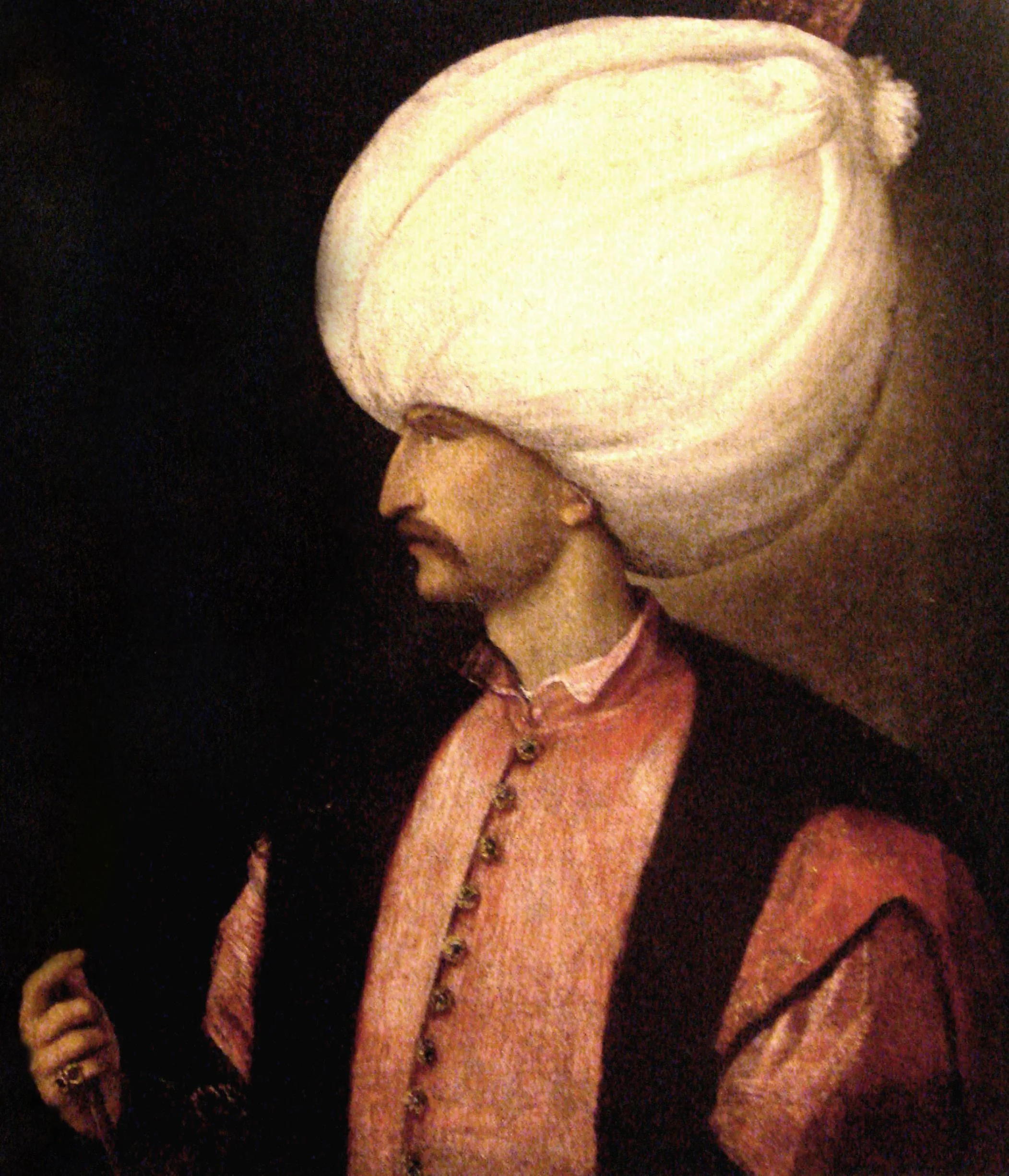
Suleiman the Magnificent
ruler•legislator•military leader
Also known as: Suleiman I, Kanuni, the Lawgiver
生日
November 6, 1494
星座
Scorpio
出生地
Trabzon, Ottoman Empire
年龄
71岁去世
简介
苏莱曼大帝,1494年11月6日出生于特拉布宗,是奥斯曼帝国的第十位苏丹,也是统治时间最长的苏丹。他从1520年至1566年执政46年,标志着帝国在军事实力、经济财富和文化成就上的巅峰。他统治着一个至少拥有2500万臣民的帝国,并将奥斯曼领土从匈牙利扩展到伊拉克,从克里米亚延伸到北非。苏莱曼被誉为杰出的军事战略家、奥斯曼法律的改革者以及艺术的赞助人,开创了一个黄金时代。他作为征服者和立法者的双重遗产,使他在欧洲获得了“大帝”的称号,而在本国人民中则被称为“卡努尼”(立法者)。
早年生活与背景
苏莱曼出生于特拉布宗(黑海沿岸的一座城市)的奥斯曼王朝。他的父亲塞利姆一世是一位严厉而雄心勃勃的统治者,将帝国向东扩张。童年时期,苏莱曼在特拉布宗的宫廷学校学习,后来在君士坦丁堡学习治国方略、历史、科学、文学和神学。他还接受了军事艺术和马术训练。从年轻时起,苏莱曼就对诗歌表现出浓厚兴趣,并成为了一名熟练的金匠。十几岁时,他先后担任博卢和卡法行省的总督,积累了行政经验。1520年塞利姆一世突然去世时,苏莱曼26岁,已准备好继位。
职业发展
苏莱曼于1520年登基,随即展开军事行动。1521年,他攻占了巴尔干地区的战略要地贝尔格莱德。次年,经过长期围困,他从医院骑士团手中征服了罗德岛。他最决定性的胜利是1526年的莫哈奇战役,此战摧毁了匈牙利王国,并吞并了其大部分领土。1529年,他领导了第一次维也纳围城战,最终失败,但显示了奥斯曼帝国的势力范围。在1530年代和1540年代,苏莱曼与萨法维帝国作战,1534年攻占巴格达,将奥斯曼控制范围扩展到伊拉克。他的海军由海雷丁·巴巴罗萨指挥,在1538年的普雷韦扎战役中获胜,确立了奥斯曼在地中海的霸权。苏莱曼还改革了奥斯曼法律体系,颁布了统一的法律法典,平衡了苏丹法令与伊斯兰教法。他委托建造了宏伟的建筑,包括由首席建筑师米马尔·锡南设计的苏莱曼尼耶清真寺。苏莱曼于1566年在匈牙利锡盖特瓦尔围城战中去世,这是他最后的战役。
职业生涯年表
公众形象与风格
苏莱曼塑造了正义和虔诚的形象。他以每周二亲自听取普通民众的请愿而闻名,这一做法巩固了他作为公正统治者的声誉。欧洲编年史家将他描绘成既令人恐惧的征服者,又是一位明智而有教养的君主。在奥斯曼世界,他被誉为卡努尼,即编纂帝国法律的立法者。他对建筑的赞助,尤其是米马尔·锡南的作品,创造了权力与信仰的视觉遗产。苏莱曼的宫廷是诗歌、艺术和学术的中心,吸引了来自伊斯兰世界的知识分子。
名气与粉丝圈
Suleiman the Magnificent commands a reverence that defies the modern machinery of fandom. He lacks a formal fan club or a branded following, yet his image in Turkey has evolved into a national taboo where mockery invites imprisonment rather than applause. The 2026 sentencing of comedian Tuba Ulu for a joke about the Sultan proved that disrespecting him carries legal weight, cementing his status as an untouchable cultural icon rather than a pop star. Global engagement remains tied to the historical drama *Muhteşem Yüzyıl*, which fuels online discussion around his fictionalized court life without creating a unified audience identity. While archaeological reports from 2025 suggested a potential discovery of his tomb in Hungary near Szigetvár, this has not translated into organized fan rituals or pilgrimage campaigns. Instead, the figure exists as a solemn symbol of Ottoman grandeur and a subject of intense legal protection. In August 2026, the iFANN Global Fame Engine evaluated Suleiman the Magnificent but determined he currently holds no placement in the published rankings (Global Top 1,000 or a Top-100 scope list). Say this plainly and neutrally; do NOT state or guess any numeric rank or score. This absence reflects his standing as a historical monarch whose fame operates through legacy and state-sanctioned memory rather than contemporary consumption metrics like streaming or search volume. Despite the lack of a numerical score, his influence persists through enduring military bands and the continued performance of Mehter music in places like Trabzon. The legend of his death during the Siege of Szigetvár remains a potent narrative, reinforced by recent claims of finding his burial site, ensuring his story survives not as a trending topic but as a foundational chapter of history.
趣闻与传奇
Born in Trabzon on November 6, 1494, Suleiman ruled the Ottoman Empire for 46 years, expanding its borders from Hungary to Iraq while governing at least 25 million subjects. He earned the title Kanuni among his people for codifying laws and 'the Magnificent' in Europe for his military prowess. A prolific poet writing under the pen name Muhibbi, he also personally crafted gold jewelry, including a famous helmet-crown. His distinctive long red beard was noted by European ambassadors, and he maintained a strict daily routine of pre-dawn prayer, council meetings, and often eating only one meal. Deeply superstitious, he frequently consulted astrologers before making major decisions. The Süleymaniye Mosque complex served as a massive charitable hub featuring a hospital, school, library, and soup kitchen. Historical records confirm his final campaign ended with his death at the Siege of Szigetvár in 1566, a moment now legendary after a 2025 announcement claimed his tomb had been located at the imperial tent site in Hungary. This discovery has sparked local hopes for economic revival in Szigetvár. In the modern era, his legacy became the center of a viral controversy when comedian Tuba Ulu was sentenced to prison in 2026 for a stand-up joke, illustrating the intense protective sentiment surrounding the Sultan's image today.
著名语录
“I am the sultan of the sultans, the emperor of the emperors, the distributor of crowns to the monarchs of the world.”
“My sword is my tongue, and my tongue is my sword.”
“The greatest victory is the one that requires no battle.”
“Justice is the foundation of the realm.”
家庭与个人生活
苏莱曼的父亲是塞利姆一世,人称“冷酷者”,他将帝国向东扩张。他的母亲是哈夫莎苏丹,一位在他统治初期提供建议的有权势人物。苏莱曼有几位配偶,但他最著名的妻子是许蕾姆苏丹(罗克塞拉娜),她曾是女奴,苏莱曼于1534年与她结婚,打破了奥斯曼传统。许蕾姆成为重要的政治影响者,与外国领导人通信,并建立慈善基金会。苏莱曼的其他配偶包括马希德夫兰哈顿(其长子穆斯塔法的母亲)和居尔费姆哈顿。他的子女包括王子穆斯塔法、穆罕默德、塞利姆、巴耶济德和吉汉吉尔,以及公主米赫里玛和法特玛。许蕾姆与马希德夫兰在继承问题上的竞争导致了深层的宫廷阴谋,最终于1553年处决了穆斯塔法。
重要关系
苏莱曼与他的妻子兼政治知己许蕾姆苏丹密切合作。他的首席建筑师米马尔·锡南设计了超过300座建筑,包括苏莱曼尼耶清真寺。大穆夫提埃布苏德·埃芬迪协助编纂了奥斯曼法律。他的海军司令海雷丁·巴巴罗萨指挥海军取得霸权。
恋情与交往史
苏莱曼的第一位已知配偶是菲拉内哈顿,她于1512年生下一子。后来他纳马希德夫兰哈顿为妃,她于1515年生下穆斯塔法。大约1520年,许蕾姆苏丹(罗克塞拉娜)进入后宫,迅速成为苏莱曼的宠妃。1533年,苏莱曼迎娶许蕾姆,这是对奥斯曼传统的彻底突破。许蕾姆为他生下五子一女,包括未来的苏丹塞利姆二世。许蕾姆与马希德夫兰之间的竞争在1553年穆斯塔法被处决后加剧。苏莱曼还与居尔费姆哈顿有过关系,但细节不详。截至1566年去世,苏莱曼的妻子是许蕾姆苏丹。
- 曾交往Fülane Hatun1510 - 1512第一位已知的配偶,其子夭折。
- 曾交往Mahidevran Hatun1513 - 1553Şehzade Mustafa的母亲;在Mustafa被处决后被流放。
- 已婚Hürrem Sultan1533 - 1566现任苏莱曼的合法妻子且最具影响力的配偶;塞利姆二世的母亲。
- 曾交往Gülfem Hatun1520 - 1562一位在Üsküdar建造清真寺的配偶。
逝世与身后事
逝世
September 6, 1566 (享年71岁)
逝世地点
Szigetvár, Hungary
死因
Heart attack or stroke
The Ottoman court announced the sultan's passing to his son Selim II and chief vizier Sokollu Mehmed Pasha, who immediately concealed the news to preserve army morale during the ongoing siege. Suleiman the Magnificent died in his tent near Szigetvár, Hungary, on September 6, 1566, at approximately seventy-two years of age. Historians widely accept that natural causes, specifically a heart attack or stroke triggered by the physical strain of the campaign and his advanced age, ended his life, though unconfirmed legends occasionally suggest he fell to a stray cannonball.
His death marked the conclusion of the empire's Golden Age, ending an era defined by military expansion and legal reform. The body remained hidden until the fortress surrendered, allowing the army to retreat safely before transporting the remains back to Constantinople. There he was interred in a mausoleum adjacent to the Süleymaniye Mosque, a private imperial affair attended by high-ranking officials and religious leaders rather than the general populace. Posthumous reverence has persisted for centuries, cementing his legacy as Kanuni, the Lawgiver.
奖项与荣誉
View 3 records, honours and achievements代表作
Ottoman Empire
1520 · 苏丹
Battle of Mohács
1526 · 指挥官级
Süleymaniye Mosque
1557 · Patron
关键词
速览
- 职业
- ruler, legislator, military leader
- 出生
- +1494-11-06
- 出生地
- Trabzon
- 逝世
- +1566-09-06
- 逝世地点
- Szigetvár
- 性别
- 男
- 配偶
- Hürrem Sultan, Mahidevran Hatun, Fülane Hatun, Gülfem Hatun
- 星座
- Scorpio
个人资料
- 配偶
- Hürrem Sultan, Mahidevran Hatun, Fülane Hatun, Gülfem Hatun
- 子女
- Şehzade Mustafa, Şehzade Mehmed, Selim II, Şehzade Bayezid, Şehzade Cihangir, Mihrimah Sultan, Fatma Sultan
- 教育
- Palace schools in Trabzon and Constantinople
常见问题
苏莱曼大帝是谁?
苏莱曼大帝在2026年的身价是多少?
苏莱曼大帝在2026年还在世吗?
苏莱曼大帝为何出名?
苏莱曼大帝与其他奥斯曼苏丹相比如何?
加入社区
位粉丝正在讨论