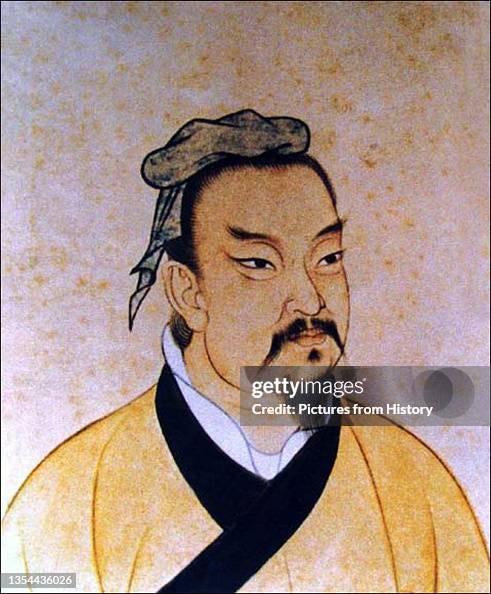
Sun Tzu
 China
ChinaMilitary strategist•philosopher•writer
Also known as: Master Sun, Sun Wu, Sunzi
生日
544 BC
星座
出生地
Qi (ancient Chinese state, present-day Shandong)
年龄
48岁去世
简介
Sun Tzu, born Sun Wu, was the ancient Chinese military strategist and philosopher whose treatise The Art of War remains one of the most influential texts on strategy ever written. Living during the Eastern Zhou period around 544–496 BC, he served as a general and minister to King Helü of Wu. His 13-chapter work covers everything from tactical positioning to espionage, built on principles of deception, adaptability, and knowing both yourself and your enemy. Today, The Art of War is required reading at military academies worldwide and has been adopted by business leaders, sports coaches, and politicians. Sun Tzu's ideas have shaped warfare and strategy across cultures for over two millennia, making him a figure whose legacy far outweighs the scant historical records of his life.
早年生活与背景
关于孙子的早年生活几乎一无所知。他大约出生于公元前544年,齐国——春秋时期一个强大的王国,也是军事思想中心。传统记载表明他的家族有军事背景,但没有任何姓名或细节留存下来。齐国还出过其他著名战略家,孙子很可能吸收了故土的战略文化。他的第一个有记录的行动是南下吴国,寻求吴王阖闾的接见。根据几个世纪后司马迁所著的《史记》,孙子通过训练吴王的宫女为士兵来展示其才能。当吴王的两名宠妃在操练中大笑时,孙子处死了她们,证明了他的纪律和权威。阖闾印象深刻,任命他为将军。这个故事,无论真实与否,标志着他军事生涯前唯一已知的事件。
职业发展
孙子的职业生涯几乎完全由他撰写《孙子兵法》所定义,传统上定年于公元前500年左右。该书的13章系统地涵盖了规划、战术、地形和间谍活动,强调欺骗和心理优势。作为吴王阖闾的将军,孙子率领吴国军队取得多次胜利,帮助吴国扩张领土。然而,他指挥的具体战役没有记载。公元前496年他去世后,《孙子兵法》在中国军事领袖中流传。其影响力在几个世纪中增长,传播到日本、韩国,最终到西方。20世纪,它成为商学院和公司战略的必备读物。1972年孙膑的《孙膑兵法》的发现证实了孙子和他的后代是不同的人物,结束了几个世纪的混淆,巩固了孙子作为原作者的的地位。
职业生涯年表
公众形象与风格
孙子被普遍描绘成一位睿智、留胡须的学者战士,身穿飘拂的长袍,通常手持卷轴或剑。这种形象完全是艺术惯例,因为没有同时代的肖像存在。在现代媒体中,他被描绘成冷静、精于计算的战略家,常被用作古代智慧的象征。他的写作风格简洁、格言式且实用,这使得他的引文在社交媒体上无限可分享。他作品的粉丝常自称“战略家”,并组织年度读书小组、在线论坛和军事重演。他的引文在商业和自助语境中的广泛使用使孙子成为流行文化偶像,尽管许多归功于他的引文是错误归属或释义的。
名气与粉丝圈
Sun Tzu commands a global attention that transcends the boundaries of his era, maintaining a persistent presence in modern strategic discourse and cultural memory. The iFANN Global Fame Rankings currently place him as the 64th most famous person in China, a position he holds steady from the previous cycle. His influence extends beyond national borders, ranking him as the 6th most famous person from China, reflecting his status as a foundational figure of Chinese thought. Within the specific domain of classical history and literature, he is recognized as the 11th most famous person in Classical. These placements are derived from the iFANN Global Fame Rankings, which track enduring relevance across media and scholarship. Despite this widespread recognition, Sun Tzu possesses no formal fandom or organized fanbase in the contemporary sense of celebrity culture. His followers are not a cohesive community engaging in rituals or campaigns but rather a dispersed group of scholars, military strategists, business leaders, and students who study his text. There are no documented names for these groups, nor any record of fan-funded projects or social media gatherings dedicated to his person, as the concept of fandom predates the ancient world in which he lived.
趣闻与传奇
For centuries, historians confused Sun Tzu with his descendant Sun Bin until Sun Bin's own treatise was discovered in a 1972 tomb excavation in Yinqueshan. Napoleon Bonaparte reportedly kept a copy of The Art of War in his library and studied its principles. Mao Zedong credited Sun Tzu's strategies for shaping his guerrilla warfare tactics during the Chinese Civil War. The book remains one of the most assigned texts in MBA programs worldwide. Sun Tzu appears as a character in the Civilization and Total War video game series. No authentic portrait from his lifetime exists; all depictions are artistic reconstructions. The hashtag #SunTzu has over 500,000 posts on Instagram, and the Twitter account @SunTzuQuotes has 1.2 million followers. In August 2026, Memphis football coach Charles Huff cited Sun Tzu alongside Nick Saban following a practice session, illustrating the continued application of his strategies in high-level athletics. Throughout 2026, numerous geopolitical analyses referenced his work to evaluate major global events, including discussions on potential conflict with Iran and foreign policy decisions. Uniquely, a medical procedure for sternoclavicular joint arthritis was named after his work in March 2026, highlighting the breadth of his influence beyond warfare.
著名语录
“Know your enemy and know yourself, and you can fight a hundred battles without disaster.”
“All warfare is based on deception.”
“The supreme art of war is to subdue the enemy without fighting.”
“Appear weak when you are strong, and strong when you are weak.”
“In the midst of chaos, there is also opportunity.”
家庭与个人生活
历史记录中没有关于孙子父母、兄弟姐妹或子女的信息。传统家谱声称他有一个名叫孙膑的后代,是战国时期齐国的军事战略家。然而,这种联系基于后来的家谱声称,而非同时代证据。孙子唯一已知的个人关系是与他的赞助人吴王阖闾。没有配偶、家庭或宠物的记录。
重要关系
吴王阖闾是孙子的赞助人,在宫女训练演示后任命他为将军。汉代历史学家司马迁在《史记》中记录了孙子的传记。他的后代孙膑也写了一部军事著作,导致几个世纪的混淆。拿破仑·波拿巴研究过《孙子兵法》并在图书馆里藏有一本。毛泽东在中国内战期间将孙子的原则应用于游击战。
恋情与交往史
没有可靠的历史记载记录孙子有任何恋爱关系。中国古代文献,包括司马迁的《史记》,只专注于他的军事生涯和战略著作。没有记载他的婚姻、订婚或恋爱对象。截至2026年,任何历史记录中都不存在关于其感情关系的信息。
逝世与身后事
逝世
496 BC (享年48岁)
逝世地点
未知
死因
未知
There are no confirmed facts regarding the death of Sun Tzu, as he was a historical figure who lived during the Eastern Zhou period (c. 500 BCE) and died approximately 2,500 years ago. Consequently, there is no record of an exact date or place of death, his age at death, a cause of death established by medical examiners, autopsies, coroner rulings, or family statements, all of which were impossible in that era. Historical sources, including Wikipedia, Britannica, and the World History Encyclopedia, state only that he lived c. 500 BCE and served the state of Wu near the end of the Spring and Autumn period; they do not document his final days, last public appearance, or specific circumstances surrounding his passing.
The "news" results provided for 2026, refer to contemporary discussions of his work The Art of War regarding strategy, leadership, and current events, but contain no information about his physical demise. Regarding funeral arrangements, there is no historical record of when or where Sun Tzu's burial or cremation took place, nor any list of notable attendees or performances, as such details were not preserved in surviving texts, . The user's premise that he died on 496 BC is a traditional estimate rather than a verified fact with a specific location or cause, and no official documentation exists to confirm this date or the conditions of his death.
身价(遗产价值)
$50 Million
iFANN编辑团队估算
Sun Tzu died in 496 BC, and no records of his personal wealth survive. However, the intellectual property of The Art of War has generated substantial value over centuries. Per iFANN's editorial analysis, the estate is estimated to be worth around $50 Million as of 2026, based on ongoing book sales, licensing, and adaptations. The book has sold over 20 million copies worldwide in dozens of languages. Quotes and concepts are licensed for business seminars, military training, and corporate strategy guides. Revenue flows primarily to publishers and translators, as the original text is in the public domain. Annotated editions and audiobooks continue to sell steadily. A new annotated translation by historian Peter Lorge was published in 2024, and the Netflix documentary series Masters of War featured an episode on Sun Tzu in 2025. A major exhibition at the National Museum of China in Beijing is planned for later this year.
奖项与荣誉
View 9 records, honours and achievements代表作
The Art of War
c. 500 BC · 作者
关键词
速览
- 出生
- 544 BC
- 出生地
- Qi
- 逝世
- 496 BC
- 逝世地点
- Gusu
- 性别
- 男
- 职业
- Military strategist, philosopher, writer
个人资料
- 全名
- Sun Wu
常见问题
孙子是真实存在的人物吗?
孙子2026年的身价是多少?
孙子真的写了《孙子兵法》吗?
孙子最著名的名言是什么?
孙子是怎么死的?
加入社区
位粉丝正在讨论