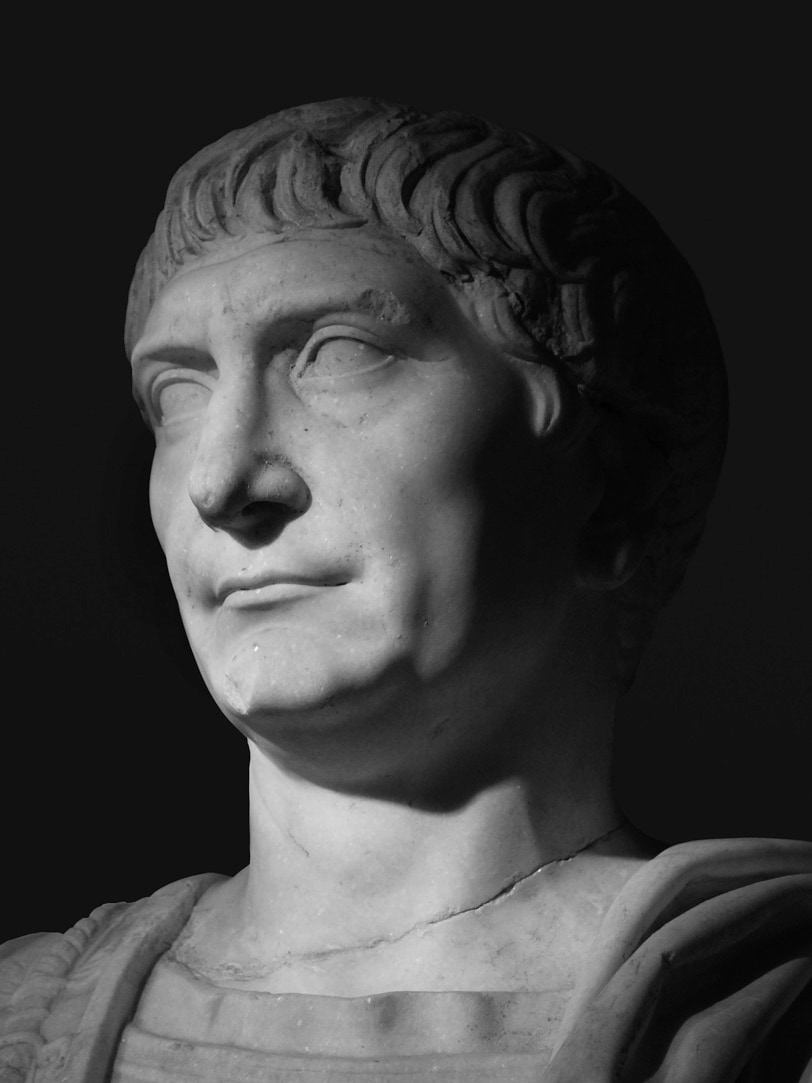
Trajan
生日
September 18, 53 AD
星座
Virgo
出生地
Italica, Hispania Baetica (modern-day Andalusia, Spain)
年龄
63岁去世
简介
图拉真,原名马库斯·乌尔皮乌斯·特拉扬,是一位从公元98年统治至117年的罗马皇帝。他在历史上占据着“五贤帝”中第二位的地位,并因其卓越的军事才能、雄心勃勃的公共工程以及对社会福利的承诺而被铭记。在他的领导下,罗马帝国达到了其领土扩张的巅峰,这一成就至今仍定义着他的遗产。罗马元老院授予他Optimus Princeps(最佳统治者)的称号,这是一项罕见且重要的赞誉,彰显了他在同时代人中的崇高声誉。
如今,图拉真因其对罗马基础设施的持久影响及其征服规模而受到认可。他的建筑项目,如宏伟的图拉真广场和标志性的罗马图拉真柱,有力地提醒着人们他的统治。这些建筑不仅具有实用目的,还展示了他统治下帝国的力量与辉煌。人们经常研究他的行政能力以及他在罗马关键时期带来的稳定,这为后世如何看待皇帝及其所能取得的成就留下了持久的印记。
早年生活与背景
马库斯·乌尔皮乌斯·特拉扬于公元53年出生在希斯帕尼亚·贝提卡(今西班牙南部)的罗马城镇伊塔利卡。他出身于受人尊敬的元老家族——乌尔皮乌斯家族,该家族原籍意大利的翁布里亚。他的父亲,也叫马库斯·乌尔皮乌斯·特拉扬,是一位杰出的将军和元老,曾在韦斯巴芗皇帝麾下任职。这一血统为图拉真本人的崛起奠定了坚实基础。
图拉真早期的职业生涯深深植根于军事领域。他曾在叙利亚担任军事护民官,后来在希斯帕尼亚·塔拉科南西斯担任副将,在帝国各地积累了实践经验。公元89年,在图密善皇帝统治期间,他在镇压莱茵河边境的一场叛乱中发挥了关键作用。这一成功为他带来了极大的认可,并为他在公元91年当选执政官铺平了道路。他的军事才能和日益增长的声望使他成为一位颇具吸引力的人选,当年老的内尔瓦皇帝在图密善遇刺后寻求稳定帝国时,于公元97年收养图拉真为继承人,为他的帝国未来奠定了基础。
职业发展
图拉真于公元98年在内尔瓦去世后继位,立即为积极扩张的统治定下了基调。他的军事成就始于对达契亚的征服,这是公元101-102年和105-106年两次艰苦的战争。这些对抗达契亚国王德凯巴鲁斯的战役被生动地描绘在罗马的图拉真柱上,这座纪念性建筑至今仍在诉说着这些胜利的故事。达契亚(大致相当于现代罗马尼亚)的吞并为罗马国库带来了大量黄金储备,极大地充实了帝国。
不满足于巩固北部边境,图拉真将目光转向东方,于公元114-117年对帕提亚帝国发动了大规模进攻。他攻占了帕提亚首都泰西封,并吞并了美索不达米亚和亚述,将罗马帝国的边界推向了前所未有的广度。他还正式吞并了纳巴泰王国,这一举措有助于巩固帝国对东部重要贸易路线的控制。
除了军事力量,图拉真还是一位不知疲倦的建设者和行政管理者。他在帝国各地委托了众多基础设施项目,其中皇冠上的明珠是罗马的图拉真广场。这座庞大的建筑群包括一座宏伟的巴西利卡、图书馆和他的纪念柱。毗邻的图拉真市场常被称为古代购物中心,展示了他对城市发展的愿景。他还扩大了*alimenta*计划,这是一项为贫困儿童提供支持的社会福利倡议,体现了他对臣民福祉的真正关心。他的统治仍是罗马历史上的一个高峰,以领土扩张和内部繁荣为标志。
职业生涯年表
公众形象与风格
图拉真塑造了一个仁慈而坚定的统治者形象,他是一位深切关注人民福祉和帝国实力的领袖。他的军事行动巩固了他作为杰出指挥官的名声,但他广泛的公共工程和社会计划(如*alimenta*)则展示了他对罗马公民的关怀。这种军事 prowess 与公民奉献的结合为他赢得了深深的尊重。
罗马元老院授予他Optimus Princeps(最佳统治者)的称号,这不仅仅是一种荣誉;它反映了人们对他卓越领导力的普遍看法。他被视为一位务实的皇帝,不像他的一些前任那样专制,并与元老院密切合作。他的形象是一位脚踏实地的领袖,与士兵同甘共苦,并致力于帝国的繁荣,从而与军队和民众建立了牢固的联系。
名气与粉丝圈
The global attention commanded by Trajan remains a matter of historical record rather than contemporary media consumption, with his reputation sustained through academic study and the enduring presence of his monuments in Rome. iFANN has evaluated this figure as part of its ongoing assessment of historical personalities, yet Trajan currently holds no placement within the published Global Top 1,000 or any Top-100 scope list maintained by the engine. This absence of a numeric ranking reflects the nature of his fame, which exists outside the metrics of modern celebrity culture. While he is revered by historians and archaeologists, there is no documented fandom name associated with him; no organized group identifies as 'Trajan Fans,' nor do rituals such as birthday billboards, streaming campaigns, or fan clubs exist for an individual who died nearly two millennia ago. The public interest that does surface is limited to museum audiences engaging with exhibitions like Ancient Splendor: Roman Art in the Time of Trajan, which represents a curatorial event rather than a dedicated fanbase. Consequently, the legacy of Trajan stands as a singular historical phenomenon where influence is measured by the longevity of infrastructure and the preservation of imperial virtue, not by the fluctuating signals of search volume or social engagement.
趣闻与传奇
Trajan was renowned for his imposing physical stature, often described by ancient historians as tall and robust, a fitting image for a warrior emperor. He holds the distinction of being the first Roman emperor born outside of Italy, specifically in Hispania Baetica, a fact that underscored the empire's increasing multicultural nature. The construction of Trajan's Forum required the leveling of a large hill between the Capitoline and Quirinal hills, a monumental engineering feat for its time. Legend holds that Trajan personally led his troops on foot during campaigns, sharing their hardships and earning their deep loyalty. Historical records further preserve a maxim attributed to him regarding accountability: if he fulfilled his duties, use the sword for him; if he failed, use it against him. This philosophy reinforced his status as the Optimus Princeps. His military campaigns, particularly the Dacian Wars between 101–102 CE and 105–106 CE, are depicted in intricate detail on Trajan's Column, serving as a primary source for his conquests. He also funded the alimenta program, a social welfare initiative that provided support for children, demonstrating how state wealth was utilized for the benefit of citizens. Trajan passed away in Selinus, Cilicia, on August 8, 117 CE, marking the end of the empire's peak territorial expansion.
著名语录
“Optimus Princeps" (Best Ruler) - bestowed upon him by the Roman Senate, reflecting his esteemed leadership.”
家庭与个人生活
马库斯·乌尔皮乌斯·特拉扬出生于一个显赫的罗马家庭,他的父亲(也叫马库斯·乌尔皮乌斯·特拉扬)是一位备受尊敬的将军和元老。他母亲的名字在历史记载中并不广为人知,但他的姐姐乌尔皮亚·玛尔恰娜是皇室中的重要人物。她拥有相当大的影响力,并受到其兄弟的尊敬,达契亚的一座城市甚至以她的名字命名为科洛尼亚·乌尔皮亚·特拉亚纳·玛尔恰娜。
图拉真娶了庞培娅·普洛蒂娜,一位以智慧和正直著称的女性。她坚定支持他的政策,并深受罗马民众敬重。这对夫妇没有已知的亲生子女,这一情况后来在皇位继承中发挥了重要作用。普洛蒂娜在确保哈德良(一位亲戚)被收养为图拉真继承人方面发挥了影响力,帮助确保了图拉真去世后权力的平稳过渡。
重要关系
图拉真与其继任者哈德良关系密切,哈德良在图拉真的大规模战役后巩固了罗马帝国的边界。他还与杰出的建筑师大马士革的阿波罗多罗斯有关联,后者负责设计了他的许多纪念性工程,包括图拉真广场和图拉真柱。他的遗产也与达契亚国王德凯巴鲁斯交织在一起,德凯巴鲁斯是他在达契亚战争中的强大对手,其失败是图拉真军事生涯的决定性时刻。
恋情与交往史
图拉真的个人生活,特别是他的婚姻,因其稳定性和妻子的影响力而引人注目。他娶了来自体面罗马家庭的庞培娅·普洛提娜。他们的婚姻长久,普洛提娜以智慧、美德和坚强的性格著称。她不仅是名义上的皇后,还积极支持图拉真的政策,深受罗马人民和元老院的尊敬。
这对夫妇没有已知的亲生子女。这一事实在图拉真生命末期变得尤为重要,为帝国制造了潜在的继承危机。普洛提娜在继承问题上发挥了关键作用,倡导并帮助确保了远亲哈德良被收养为图拉真的继承人。这确保了公元117年图拉真去世后权力的平稳过渡。截至公元117年,图拉真与庞培娅·普洛提娜结婚。
- 已婚Pompeia Plotina? - 117图拉真与庞培娅·普洛提娜结婚,她以智慧和帝国事务中的影响力而闻名。
逝世与身后事
逝世
August 9, 117 AD (享年63岁)
逝世地点
Selinus, Cilicia, Roman Empire
死因
Stroke or apoplexy (reported)
The Roman Empire mourned the loss of its leader with a depth of grief that transcended political boundaries, treating the passing of Trajan as a national calamity. The Senate deified him immediately upon hearing the news, and cities across the known world held moments of silence and religious observances to honor the man they revered as the Best Ruler. This collective sentiment reflected a profound sense of personal loss among subjects who had benefited from his extensive public works and military victories. Trajan died on August 9, 117 AD, in Selinus, a city in Cilicia while returning to Rome from his Parthian campaign. Historical accounts describe his final days as marked by a sudden illness, traditionally identified as a stroke or apoplexy, though some ancient sources later circulated rumors suggesting he was hastened by poison administered by his successor, Hadrian.
Modern historians generally regard these allegations of foul play as unconfirmed political speculation rather than established fact, as primary records from Cassius Dio and the Historia Augusta mention only a natural decline without evidence of criminal intervention. His funeral took place shortly after his death in September 117 AD, necessitating cremation due to the logistical impossibility of transporting a body over such distances. His ashes were interred in the base of the Column of Trajan within the Forum of Trajan in Rome, marking the end of a reign that saw the empire reach its greatest territorial extent. The event was conducted as a state funeral involving high-ranking officials and military leaders, emphasizing his status as a divine figure in the eyes of the Roman people.
Posthumously, Trajan received enduring honors that cemented his legacy as the ideal ruler, including the continued prominence of his forum and market complex in Rome. His estate and titles were managed by his adopted son and successor, Hadrian, who assumed the throne and initially continued many of Trajan's policies before eventually halting further eastern expansion.
身价(遗产价值)
$5 Billion
iFANN编辑团队估算
As a Roman emperor at the height of the empire's power, Trajan commanded resources on an unparalleled scale. Per iFANN's editorial analysis, his net worth is estimated at $5 Billion as of 2026, reflecting not personal liquid assets in the modern sense, but rather the immense wealth of the state he controlled and could deploy. His reign saw the Roman treasury significantly bolstered by the gold mines of newly conquered Dacia, providing substantial revenue for his ambitious projects. Much of this imperial wealth was directed towards public works, like the construction of Trajan's Forum and Trajan's Market, which were among the most expensive and grand architectural endeavors in Roman history. He also funded social welfare programs, such as the alimenta, demonstrating how state wealth under his leadership was used for the benefit of Roman citizens. While emperors did not have personal bank accounts as we understand them today, the power to allocate and utilize the empire's vast resources effectively made him one of the wealthiest and most influential figures of all time. His estate, upon his death, would have primarily consisted of the imperial holdings and assets, which then passed to his adopted heir, Hadrian, maintaining the continuity of imperial control.
奖项与荣誉
View 4 records, honours and achievements代表作
Trajan's Column
113 · Commissioned
Conquest of Dacia
106 · Military Leader
Trajan's Forum
112 · Commissioned
关键词
速览
个人资料
- 全名
- Marcus Ulpius Traianus
- 配偶
- Pompeia Plotina
- 子女
- 教育
常见问题
图拉真是什么人?
图拉真以什么闻名?
图拉真在哪里出生?
谁继承了图拉真的皇位?
什么是图拉真柱?
加入社区
位粉丝正在讨论