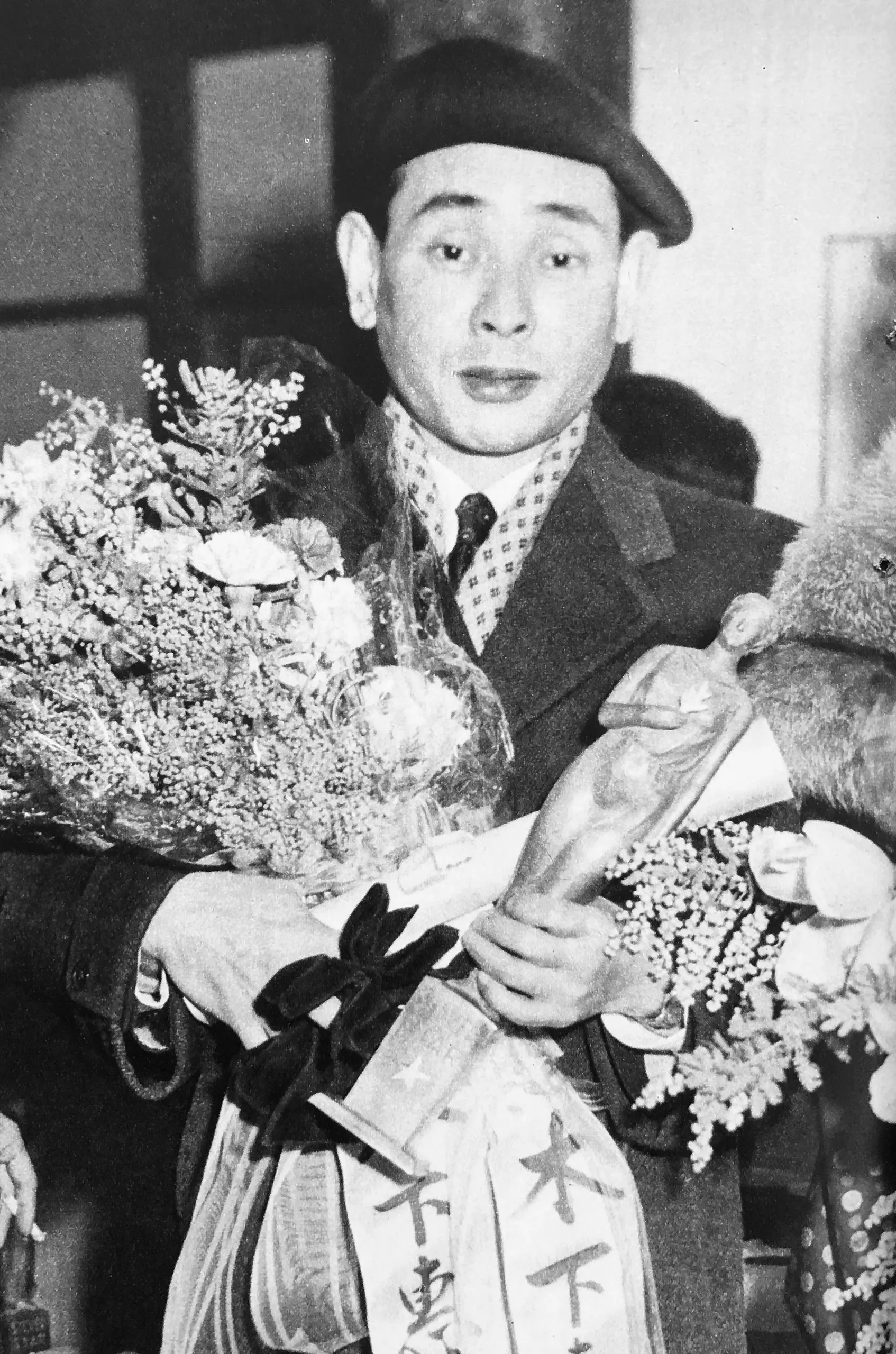
Keisuke Kinoshita
 Japan
Japanfilm director•screenwriter•film producer
生日
December 5, 1912
星座
Sagittarius
出生地
Hamamatsu, Shizuoka Prefecture, Japan
年龄
86岁去世
身高
5 ft 6 in (168 cm)
简介
木下惠介是一位日本电影导演和编剧,其作品从1940年代到1960年代深深打动了国内观众。虽然在国际上不如黑泽明或小津安二郎知名,但木下在日本家喻户晓,以其人文主义叙事和大胆的技术尝试而闻名。他的电影常常将感伤与视觉实验相结合,从日本第一部彩色电影《卡门归乡》(1951年)到受歌舞伎启发的《楢山节考》(1958年)。他最受欢迎的作品《二十四只眼睛》(1954年)仍是日本电影的基石,获得了金球奖最佳外语片奖。在长达四十多年的职业生涯中,木下执导了48部电影,其中许多仍在回顾展中放映,并为新一代修复。他于1998年去世,享年86岁,留下了一位以优雅和真诚捕捉普通日本人情感生活的导演的遗产。
早年生活与背景
木下在滨松长大,这座城市以纺织厂和钢琴厂闻名,他的父亲在那里经营一家和服布料店。父亲早逝后,家庭陷入拮据,母亲独自抚养他和兄弟姐妹。这段母爱牺牲的经历后来成为他电影中反复出现的主题。他就读于滨松中学,在那里通过在当地影院观看西方和日本电影培养了对电影的热爱。毕业后,他于1933年移居东京,加入日本主要电影制片厂之一松竹,在实验室部门担任电影处理员。这是制作阶梯上最低的职位,但木下通过努力升任摄影助理,然后成为助理导演。他在知名导演手下学习技艺,尤其是小津安二郎和木村惠吾。1943年,经过十年的学徒生涯,松竹提升他为导演,他执导了处女作《花开之港》,一部以港口小镇为背景的人文主义剧情片。该片取得了不错的成功,并奠定了其植根于日常生活的叙事声誉。
职业发展
木下的突破性作品是1951年的《卡门归乡》,这是日本第一部长篇彩色电影,使用了实验性的富士彩色工艺。该片是一部喜剧剧情片,讲述了一个乡村女孩在东京成为脱衣舞娘后回到家乡的故事,在商业和评论界都取得了成功。三年后,他执导了《二十四只眼睛》,这是一部史诗般的催泪片,讲述了一位老师和她十二名学生从1928年到战后的故事。该片获得了金球奖最佳外语片奖和每日电影奖最佳影片奖,至今仍是他最著名的作品。1958年,木下推出了《楢山节考》,这是一部改编自民间传说的风格化作品,讲述一位老妇人被带到山上等死的故事。该片使用了受歌舞伎启发的布景、彩绘背景和戏剧性灯光,再次获得了金球奖最佳外语片奖。在整个1960年代,他继续高产执导,作品包括《笛吹川》(1960年)和《香华》(1964年)。1967年,他转向电视导演,执导了几部广受好评的电视剧。他的最后一部电影是电视电影《生命之河》(1986年)。
职业生涯年表
公众形象与风格
在日本,木下被尊为国宝,常被称为人民导演,因为他的电影吸引了大众观众。评论家形容他的风格为人文主义和感伤,反复出现的主题包括母爱、战争对普通人的影响以及时间的流逝。他以大胆的视觉实验而闻名,包括使用色彩、风格化布景和受歌舞伎启发的设计。西方评论家有时将他与道格拉斯·瑟克相比,因其情节剧风格。粉丝们每年3月3日(日本女儿节)会举行《二十四只眼睛》的年度放映,他的作品回顾展定期在世界各地的电影节上吸引观众。他的社交媒体形象由粉丝团体和松竹工作室的官方账号维护。
名气与粉丝圈
Keisuke Kinoshita commands a legacy defined not by the fervor of modern idol worship, but by the enduring reverence of film scholars and cinephiles who study the golden age of Japanese cinema. Unlike contemporary stars with organized fan clubs bearing specific monikers, his audience consists of historians and general enthusiasts who engage with his work through institutional channels like The Criterion Collection and museum retrospectives rather than grassroots campaigns or social media rituals. His cultural footprint remains anchored in the global appreciation for post-war humanism and technical innovation, with commemorative tributes appearing sporadically on significant anniversaries of his birth. While no formal fandom name exists to unify these disparate groups, the collective memory of his films serves as a unifying thread for those dedicated to preserving cinematic history. This quiet, academic devotion stands in stark contrast to the chaotic adoration seen in pop culture, reflecting a relationship built on artistic merit rather than celebrity spectacle. Despite his profound impact on domestic audiences and international recognition from peers like Akira Kurosawa, iFANN's Global Fame Engine has evaluated this person, but they do not currently hold a placement in the published rankings (Global Top 1,000 or a Top-100 scope list). Consequently, no numerical ranking or score is assigned to his current global fame status within the system.
趣闻与传奇
Keisuke Kinoshita directed Japan's first color film, Carmen Comes Home (1951), utilizing Fujicolor technology that produced such vivid hues it reportedly caused eye strain for some viewers. His 1944 film The Army contained subtle anti-war messages that drew the ire of military censors during production. He served as a mentor to Masaki Kobayashi, who worked under him as an assistant director on The Morning of the Osone Family. Among his own body of work, Kinoshita held She Was Like a Wild Chrysanthemum (1955) as his personal favorite. He consistently turned down offers to direct in Hollywood, preferring to remain at Shochiku studio throughout his career. His final words, according to his wife, expressed a desire to make one more film before passing. A notable piece of industry lore involves Akira Kurosawa naming Kinoshita as his favorite Japanese director, a reflection of his standing among peers. His 1958 adaptation of The Ballad of Narayama sparked intense cultural discourse regarding ancient folklore and social customs, often cited for its kabuki-inspired design and controversial themes. These elements combine to form a legacy where the films themselves are the primary ritual for fans, rather than organized fan events.
著名语录
“I wanted to make films that would make people cry, but also make them think.”
“The war took everything from us, but it could not take away our humanity.”
“I never wanted to go to Hollywood. My stories are Japanese stories.”
“A film should be like a poem: concise, beautiful, and full of feeling.”
“My mother was the strongest person I ever knew. I put her into every film.”
家庭与个人生活
木下的父亲在他年幼时去世,留下母亲独自抚养他和兄弟姐妹。他于1956年与女演员久我美子结婚;当时她25岁,他43岁。这对夫妇没有孩子。久我美子主演了他的几部电影,包括《楢山节考》。木下去世后,久我美子成为他遗产的主要保管人,负责监督修复和电影节。她在采访中谈到他对工作的奉献以及他们在东京安静的居家生活。
重要关系
木下与女演员高峰秀子密切合作,她主演了他的几部电影,包括《二十四只眼睛》和《野菊之墓》。他还与作曲家木下忠司(无亲属关系)和编剧野田高梧合作。作为导师,他影响了导演小林正树,后者以木下的助理导演身份开始了自己的职业生涯。
恋情与交往史
木下惠介于1956年与女演员久我美子结婚。两人相识于久我美子出演他的电影《楢山节考》(1958年),但他们在该片上映前两年就已结婚。当时久我美子25岁,木下43岁。夫妇二人没有子女,一直维持婚姻关系直至1998年木下去世。久我美子后来形容他是一位忠诚的丈夫,虽以工作为重,但情感深厚。他去世后,久我美子成为其遗产的主要守护人。可靠资料中未记载其他恋爱关系。
- 已婚Yoshiko Kuga1956 - 1998久我美子出演《楢山节考》时相识;婚姻持续至木下去世。
逝世与身后事
逝世
December 30, 1998 (享年86岁)
逝世地点
未知
死因
未知
The Cannes Film Festival honored the late director by selecting The Ballad of Narayama for its Cannes Classics program in 2012, a retrospective gesture acknowledging his contribution to cinema long after his passing. The Criterion Collection further sustained this appreciation with an Eclipse Series dedicated to Kinoshita and World War II in 2014, while a comprehensive critical volume titled The Cinema of Kinoshita Keisuke: Films of Joy and Sorrow appeared in August 2025. A biographical film named Dawn of a Filmmaker: The Keisuke Kinoshita Story, starring Ryo Kase and directed by Keiichi Hara, served as a major cultural commemoration during the early 2010s. These posthumous releases maintained the visibility of his fifty feature films, which spanned from 1943 to 1988, ensuring his legacy remained active within global archives.
Keisuke Kinoshita passed away on December 30, 1998, at the age of eighty-six. Available records do not specify the exact location where he died, nor do they provide an official statement regarding the cause of death or details concerning his final days. His widow, actress Yoshiko Kuga, managed the estate following his death, overseeing restorations and film festivals while preserving their quiet domestic history in Tokyo., institutions continued to recognize his work through curated screenings and publications. The Keisuke Kinoshita Memorial Museum in Hamamatsu City stands as a physical tribute to his life, though the specific arrangements of his funeral, including whether it was held there or how his remains were interred, remain unrecorded in the historical data.
身价(遗产价值)
$5.5 Million
iFANN编辑团队估算
Per iFANN's editorial analysis, the estate of Keisuke Kinoshita is valued at $5.5 Million as of 2026. During his lifetime, Kinoshita earned a salary as a contract director at Shochiku, estimated at ¥1-2 million per film in the 1950s and 1960s. After his death, his widow Yoshiko Kuga managed the estate, which generates revenue from film restorations, DVD and Blu-ray sales by distributors such as the Criterion Collection, television broadcasts in Japan, and screening fees from film festival retrospectives. A major retrospective at the Museum of Modern Art in New York in 2023 and ongoing restorations by Shochiku and the National Film Archive of Japan have boosted licensing income. The estate does not include significant real estate or business ventures, as Kinoshita focused entirely on his film career.
获奖 (18)
木下惠介凭借《二十四只眼睛》(1955年)和《楢山节考》(1959年)两次获得金球奖最佳外语片奖。他还多次获得每日电影奖,包括凭借《大曾根家的早晨》、《二十四只眼睛》、《野菊之墓》和《楢山节考》获得最佳影片和最佳导演奖。他凭借《二十四只眼睛》和《楢山节考》获得蓝丝带奖最佳影片和最佳导演奖。
1959 · 最佳外国电影
The Ballad of Narayama
1955 · 最佳外国电影
Twenty-Four Eyes
1958 · 最佳电影
The Ballad of Narayama
1958 · 最佳导演
The Ballad of Narayama
1955 · 最佳电影
She Was Like a Wild Chrysanthemum
1955 · 最佳导演
She Was Like a Wild Chrysanthemum
1954 · 最佳电影
Twenty-Four Eyes
1954 · 最佳导演
Twenty-Four Eyes
1951 · 最佳导演
Carmen Comes Home
1947 · 最佳电影
The Morning of the Osone Family
代表作
Twenty-Four Eyes
1954 · 导演
The Ballad of Narayama
1958 · 导演
Carmen Comes Home
1951 · 导演
She Was Like a Wild Chrysanthemum
1955 · 导演
A Japanese Tragedy
1953 · 导演
关键词
速览
- 职业
- film director, screenwriter, film producer
- 出生
- December 5, 1912
- 出生地
- Hamamatsu, Shizuoka, Japan
- 逝世
- December 30, 1998
- 逝世地点
- Tokyo, Japan
- 性别
- 男
- 星座
- Sagittarius
- 身高
- 5 ft 6 in (168 cm)
- 配偶
- Yoshiko Kuga (m. 1956)
- Children
- None
- Education
- Hamamatsu Middle School
个人资料
- 全名
- Keisuke Kinoshita
- 身高
- 5 ft 6 in (168 cm)
- 配偶
- Yoshiko Kuga
- 教育
- Hamamatsu Middle School
影视作品
48
总计
43
电影
5
电视
常见问题
木下惠介去世时多大年纪?
木下惠介以什么最为著名?
木下惠介获得过奖项吗?
木下惠介结婚了吗?
木下惠介执导了多少部电影?
加入社区
位粉丝正在讨论