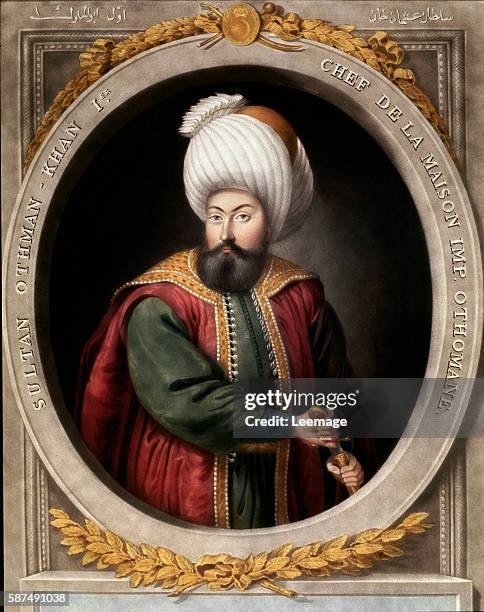
Osman I
Also known as: Osman Ghazi, Osman Bey, Ataman
生日
1258
星座
Leo
出生地
Söğüt, Anatolia
年龄
68岁去世
简介
奥斯曼一世是一位土库曼领袖,也是奥斯曼帝国的创始人。他以建立一个小公国而闻名,该公国后来演变成一个庞大的帝国,持续了六个多世纪,直至1922年。尽管历史学家对他的确切起源存在争议,但他的贝伊国位于拜占庭边境附近的战略位置,使得他及其后代统治期间能够实现显著的扩张。尽管他影响深远,但他在世期间留存的历史记录却很少,导致许多现代学者依赖后来的编年史来了解他的统治。奥斯曼于1326年去世,留下的遗产从根本上塑造了世界历史的进程。
早年生活与背景
奥斯曼一世,被尊称为奥斯曼加齐,约1258年出生在安纳托利亚西北部崎岖地带的一个小镇瑟于特。他的成长岁月沉浸在突厥游牧部落的传统中,这一传统常与乌古斯突厥人传说中的卡耶部落相联系。虽然后来的传统强烈主张这一血统,但一些现代历史学家谨慎地指出,这可能是后来为了加强王朝合法性而构建的。无论其确切的历史起源如何,奥斯曼的早年生活都浸润在一种重视韧性和自给自足的文化中。从年轻时起,他接受了严格的传统突厥游牧训练,掌握了关键的边境技能,如骑马、射箭和剑术——这些技能不仅是娱乐,更是动荡边境地区生存和防御的绝对必要。同时,他的成长深深植根于伊斯兰框架,并辅以深刻的苏菲派精神教育。他在受人尊敬的苏菲派谢赫的指导下学习,其中谢赫·埃德巴利作为他的精神导师,塑造了他的道德指南和哲学观,是一个关键人物。
奥斯曼青年时期的地理和政治背景对于塑造他的性格和能力至关重要。他的家族作为卡耶部落的一部分,被塞尔柱苏丹战略性地分配到了瑟于特及其周边地区。这一任命带来了抵御拜占庭帝国持续压力的关键责任。这个位于比提尼亚、靠近拜占庭边境的位置意味着,年轻的奥斯曼不仅是旁观者,而是频繁小规模战斗和突袭的积极参与者。这种对冲突的持续接触为他提供了宝贵的实际军事经验,磨练了他的战术敏锐度,并从小巩固了他对边境战争的理解。
正是在这个充满挑战的环境中,奥斯曼天生的领导素质和战略远见开始显现。凭借他磨练出的军事才能和他新兴公国固有的有利位置,他成为了一个小型土库曼贝伊国的统治者。这个新兴国家位于动态边境,战略性地定位以扩张,代表了他旅程中的关键第一步,为最终演变成奥斯曼帝国的强大实体奠定了基础。
职业发展
在他父亲埃尔图鲁尔大约1280–1281年去世后,奥斯曼继承了卡耶部落及其小贝伊国的领导权。他对拜占庭领土进行了成功的突袭,攻占了卡拉贾希萨尔要塞,并将耶尼谢希尔作为早期的行政中心。大约在1299年,奥斯曼宣布脱离衰落的罗姆苏丹国独立。这一年传统上被认为是奥斯曼贝伊国的正式建立年份。1302年,奥斯曼在巴菲乌斯战役中战胜了拜占庭军队,这是一次关键胜利,巩固了他对比提尼亚地区的控制。他通过突袭、围城和战略联盟的策略扩张领土,通过提倡对抗非穆斯林土地的意识形态吸引了被称为加齐的边境战士。到1326年,奥斯曼已将控制范围扩展到几座前拜占庭要塞,为围攻布尔萨和伊兹尼克提供了坚实基础。他的儿子奥尔汗于1326年4月6日攻占了布尔萨。
职业生涯年表
公众形象与风格
名气与粉丝圈
Osman I has never been the subject of a modern organized fandom with birthday billboards, subway campaigns, or streaming drives, as these phenomena belong to the digital age rather than the 13th century. While he is revered across Turkey and among diaspora communities as a national hero and the eponymous founder of an empire that lasted over six centuries, this devotion remains cultural and historical rather than structured as a fanbase with rituals or official names. The enthusiasm for his legacy often manifests through the enduring popularity of historical dramas like Kuruluş: Osman, which have sparked renewed interest in his life story without creating a formal group identity. In August 2026, iFANN's Global Fame Engine evaluated his standing and determined that Osman I does not currently hold a placement in the published rankings, meaning he is not ranked within the Global Top 1,000 or any Top-100 scope list. This absence from the charts reflects his status as a medieval figure whose fame operates on a different axis than contemporary celebrities who drive search volume and media consumption signals worldwide. Although he commands immense respect and is frequently depicted in Turkish media as a bearded warrior guiding a divinely appointed destiny, there is no documented fandom name attached to his followers, nor are there records of fan-led projects dedicated to him in the manner seen for living stars. The lack of a numeric rank underscores that while his impact on world history is monumental, his current visibility does not translate into the specific metrics used to generate global celebrity hierarchies today.
趣闻与传奇
The most enduring legend about Osman involves a prophetic dream where a moon emerged from Sheikh Edebali's chest and entered Osman's, followed by a great tree growing from his body to cover the world, symbolizing the future expansion of the Ottoman Empire. Historical accounts suggest his name may have originally been the Turkish Ataman or Atman before being Arabicized to Osman, a detail Byzantine sources consistently record as Atouman or Atman. Folklore also claims that Osman killed his uncle Dündar to eliminate a rival claimant to leadership, though this event remains part of the traditional narrative rather than a verified fact. His rise occurred during the collapse of the Seljuk Sultanate of Rum under Mongol pressure, leaving many small Turkish beyliks competing for power. A widely retold story from his era notes that tradition states he was born on the same day the Mongols destroyed Baghdad in 1258. Cultural narratives describe him as a warrior, judge, and visionary leader who waged war against the Byzantine Empire and rival Turks, cementing his place in foundational national myths. These stories, recorded centuries later in chronicles such as those by Aşıkpaşazade, remain central to how his legacy is understood today.
家庭与个人生活
恋情与交往史
鉴于奥斯曼一世生活在13至14世纪,详细的浪漫史依赖于后来的奥斯曼编年史和传说,而非当代记录。他在1280年代左右与拉比亚·巴拉·马尔·哈屯结婚。她是奥斯曼精神导师谢赫·埃德巴利的女儿。据传说,奥斯曼在结识她父亲并被其智慧打动后娶了她。她传统上被认为是奥斯曼的主要配偶之一。他还在1280至1290年代左右与马尔洪·哈屯结婚。她有时被认为是奥尔汗一世的母亲,但这一点在历史学家中存在争议。截至1326年,奥斯曼一世去世时已丧偶。
- 已婚Rabia Bala Mal Hatun1280 - 1326谢赫·埃德巴利之女;在结识其父后成婚。
- 已婚Malhun Hatun1285 - 1326可能是奥尔汗一世的母亲;厄梅尔贝伊之女。
逝世与身后事
逝世
1326 (享年68岁)
逝世地点
Söğüt
死因
Reported natural causes
Osman I spent his final years in Söğüt, the quiet capital of his beylik in northwestern Anatolia, overseeing the consolidation of lands that had been won through decades of raids and sieges against Byzantine forces. By 1326, the founder of what would become a vast empire had passed away at the age of roughly sixty-eight, leaving behind a transformed tribal confederation ready for expansion. Historical chronicles from the era do not record a specific medical cause; he is simply remembered as having died naturally after a long reign of territorial growth. Succession followed established dynastic tradition rather than litigation, with his son Orhan immediately assuming leadership to continue the conquests.
The immediate aftermath involved a private burial consistent with Islamic traditions of the period, held within the city of Söğüt where Osman had ruled. His tomb, now known as the Osman Gazi Mosque and Tomb, stands today as a significant religious and historical site in Bilecik Province, serving as a focal point for centuries of cultural memory. Modern tributes manifest in the naming of major landmarks like the Osman Gazi Bridge and various academic studies that keep his legacy alive.
身价(遗产价值)
奖项与荣誉
View 3 records, honours and achievements代表作
Founding the Ottoman Empire
1299 · 创始人
Battle of Bapheus
1302 · 指挥官级
关键词
来源
速览
- 职业
- 奥斯曼帝国的建立者
- 出生
- 1258
- 出生地
- Söğüt, Anatolia
- 逝世
- 1326
- 逝世地点
- Söğüt
- 性别
- 男
- 配偶
- Rabia Bala Mal Hatun, Malhun Hatun
- 星座
- Leo
个人资料
- 配偶
- Rabia Bala Mal Hatun, Malhun Hatun
- 子女
- Orhan I, Alaeddin Bey, Çoban Bey
- 教育
- Traditional Turkic nomadic training in horsemanship, archery, and combat; Islamic and Sufi spiritual education under Sheikh Edebali
常见问题
奥斯曼一世是谁?
奥斯曼一世是如何去世的?
奥斯曼一世的妻子是谁?
奥斯曼一世以什么闻名?
奥斯曼一世是真实的历史人物吗?
加入社区
位粉丝正在讨论