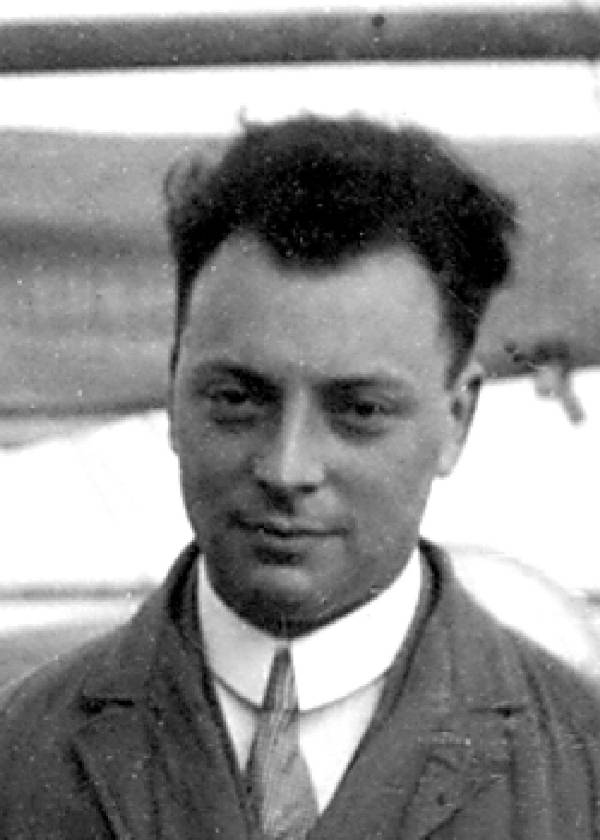
Wolfgang Pauli
theoretical physicist•university teacher
生日
April 25, 1900
星座
Sagittarius
出生地
Vienna, Austria-Hungary
年龄
58岁去世
简介
沃尔夫冈·泡利是一位奥地利裔瑞士理论物理学家,量子力学的奠基人之一,被誉为二十世纪最杰出、最严谨的物理学家之一。他以敏锐的才智和严苛的标准著称,为理解原子和亚原子世界做出了根本性贡献。他的精确和洞察力定义了他的工作。泡利最著名的贡献是泡利不相容原理,即两个电子不能占据同一个量子态,这一发现解释了原子的结构和元素周期表,并为他赢得了诺贝尔物理学奖,提名来自阿尔伯特·爱因斯坦。该原理是现代对物质理解的基础。他还做出了一个深刻的理论飞跃,提出存在一种微小、中性、几乎无法探测的粒子来解释放射性衰变中的一个谜题,该粒子后来被命名为中微子,直到几十年后才被直接探测到。这一预测是理论物理学的里程碑。他以批判性和苛刻著称,在同事中以严谨的怀疑态度闻名,所谓的泡利效应也成了一个幽默的传说。他聪明、有影响力且不妥协,是现代物理学发展的核心人物。他深刻而严谨,塑造了这一领域。沃尔夫冈·泡利被铭记为量子时代最伟大的理论物理学家之一。
早年生活与背景
泡利出生于维也纳,父亲沃尔夫冈·约瑟夫·泡利是胶体化学教授,母亲贝尔塔·卡米拉·舒茨是记者。他从小接受罗马天主教教育,教父是物理学家兼哲学家恩斯特·马赫。他的妹妹赫塔后来成为作家和演员。在德布林格中学,他是个神童:十二岁时,父亲带他去听物理学家阿诺德·索末菲的讲座,泡利指出了索末菲计算中的一个错误。还在中学时,他就研读了爱因斯坦关于相对论的论文,在无聊的课堂上把它们藏在课桌下。1918年7月以优异成绩毕业后两个月,他发表了第一篇关于广义相对论的论文。随后,他在慕尼黑的路德维希·马克西米利安大学师从索末菲,1921年以关于电离双原子氢量子理论的论文获得博士学位,成绩优异。在索末菲的建议下,他为《数学科学百科全书》撰写了一篇200页的相对论文章,这篇论文至今仍被视为经典。
职业发展
博士毕业后,泡利在哥廷根担任了马克斯·玻恩一年的助手,又在哥本哈根与尼尔斯·玻尔共事一年。1924年2月,他在汉堡大学完成了教授资格论文,并在此担任讲师直至1928年。1925年,他提出了泡利不相容原理,这一突破解释了原子结构和元素周期表。次年,他利用维尔纳·海森堡的理论推导出了氢原子的观测光谱。1928年,他被任命为苏黎世联邦理工学院理论物理学教授。1930年,他假设了中微子的存在以解决β衰变的能量危机,该粒子后来由恩里科·费米命名,并于1956年被探测到。在20世纪30年代,他曾在普林斯顿高等研究院担任访问职位,并于1940年成为那里的理论物理学教授。1945年,他因不相容原理获得诺贝尔物理学奖,由爱因斯坦提名。1946年他返回苏黎世联邦理工学院,同年成为美国公民,1949年成为瑞士公民。1958年,他获得了马克斯·普朗克奖章。
职业生涯年表
公众形象与风格
沃尔夫冈·泡利被铭记为才华横溢、尖刻的“物理学良心”,一个烟不离手、在智力上毫不妥协的理论家,他要求严谨,并 famously 将草率的工作斥为“连错都算不上”。他的公众形象是一个言辞尖锐的批评者,既令人畏惧又极具洞察力。媒体和物理学家都将他描绘成一个脾气暴躁的天才,容易引发传奇的“泡利效应”——实验室设备在他面前会出故障。尽管外表严厉,他对音乐(尤其是巴赫)、心理学和梦境分析有着私密的热情,与卡尔·荣格有大量书信往来。没有一个有特定名称的有组织的粉丝群,但科学界的崇拜者通常自称受其遗产启发的物理学家。苏黎世联邦理工学院和欧洲核子研究组织等机构的社交媒体账号偶尔会强调他的工作,但他本人没有个人网络存在。他的形象是典型的中世纪学者:正式西装、眼镜和严肃表情,定格在标志性的黑白照片中。
名气与粉丝圈
Wolfgang Pauli commanded a global audience of unparalleled magnitude within the scientific community, though his reach in popular culture remains distinct from that of modern entertainers. His intellectual footprint defines the architecture of matter, yet his standing in contemporary fame metrics reflects a specialized rather than ubiquitous presence. The iFANN Global Fame Engine has evaluated Wolfgang Pauli, but he does not currently hold a placement in the published rankings, meaning no specific ordinal position is assigned to him in the Global Top 1,000 or any Top-100 scope list. This absence of a numerical rank indicates that while his historical contributions are absolute, his current volume of public engagement does not meet the threshold for a ranked listing in the general population. Consequently, there is no formal fandom name documented for his followers; the collective group honoring his legacy consists of physicists and historians rather than an organized fanbase with a designated title. No official organizations, chart pushes, or charity drives bear his name, and his influence is measured strictly through academic impact rather than social media engagement or consumer behavior. While streets like the Wolfgang-Pauli-Strasse at ETH Zurich stand as institutional tributes, these are honors bestowed by universities rather than acts of a fan movement. The absence of a named fandom underscores the distinction between a celebrated scientist whose work is revered and a celebrity whose persona drives a commercial following.
趣闻与传奇
Pauli and Richard Kuhn, who later won the Nobel Prize in chemistry, were classmates at the Döblinger Gymnasium. Under the influence of physicist Otto Stern, he transitioned from a teetotaler to a champagne enthusiast. Even as a professor, he maintained a bohemian lifestyle, frequenting pubs and working late into the night. When asked to schedule a lecture at 8 AM, he famously replied that he could not stay up that long. His grandmother, a soprano at the royal opera house, sparked his lifelong enthusiasm for music, particularly the works of Bach. He left the Catholic Church at age 29. His extensive correspondence with psychoanalyst Carl Jung analyzed his own dreams and contributed significantly to Jung's concept of synchronicity. Beyond these biographical details, legends persist regarding his sharp intellect and perceived influence on physical reality. A widely retold story in the physics community describes the "Pauli Curse," a humorous folklore suggesting that his mere presence or critical comments caused laboratory equipment to malfunction. David Fathi documented this phenomenon in 2016, noting that instruments often broke when Pauli visited, leading physicists to jokingly blame him for experimental failures. Another enduring anecdote involves his acerbic wit; he is frequently cited for dismissing sloppy theoretical work as "not even wrong," a phrase that entered the cultural lexicon to describe hypotheses too poorly constructed to be falsified. These stories highlight his reputation as the conscience of physics, where his scrutiny seemed to physically disrupt the very experiments he observed.
著名语录
“I do not mind your thinking slowly; I mind your publishing faster than you think.”
“Not even wrong.”
“What God has put asunder, let no man join together.”
“I cannot stay up that long.”
家庭与个人生活
重要关系
恋情与交往史
泡利于1929年与舞蹈家凯特·玛格丽特·德普纳结婚。这段婚姻短暂,于1930年以离婚告终。未生育子女。1934年,他与弗朗齐斯卡·贝特拉姆结婚。两人一直保持婚姻关系,直到泡利于1958年12月15日去世。这段婚姻也未记录有子女。泡利去世时,其配偶为弗朗齐斯卡·贝特拉姆。
- 已婚Käthe Margarethe Deppner1929 - 19301929年结婚,1930年离婚。无子女。
- 已婚Franziska Bertram1934 - 19581934年结婚,一直维系到泡利1958年去世。无子女。
逝世与身后事
逝世
December 15, 1958 (享年58岁)
逝世地点
Zurich, Switzerland
死因
Pancreatic cancer
Wolfgang Ernst Pauli passed away at the University Hospital in Zurich on December 15, 1958, following a period of declining health attributed to pancreatic cancer. Medical records from the facility confirm the diagnosis as the official cause, ending a life marked by recurring ailments and a long history of psychoanalysis with Carl Jung. Although he had largely stepped back from active teaching and research duties in his final years due to his deteriorating condition, he remained engaged with physics until shortly before his hospitalization. The scientific community responded with profound grief, recognizing the loss of one of quantum mechanics' primary architects. Albert Einstein, who considered Pauli his intellectual heir, mourned the physicist deeply, while institutions such as ETH Zurich observed moments of silence rather than public vigils.
His funeral was a private affair held shortly after his death in Zurich, attended by immediate family and close colleagues. He was cremated, and his ashes were interred in the Zollikerberg Cemetery. In the decades following his death, Pauli's legacy has been preserved through the establishment of the Wolfgang Pauli Institute in Vienna and various scholarships supporting students in physics. The exclusion principle remains a cornerstone of quantum mechanics, frequently cited in educational contexts. His papers and correspondence were archived at institutions like CERN and ETH Zurich, ensuring his intellectual property remained accessible to researchers. Streets bearing his name, such as Wolfgang-Pauli-Strasse at ETH Zurich, have undergone renovations, serving as lasting tributes to his contributions to science.
身价(遗产价值)
获奖 (2)
1958 · 物理学
1945 · 物理学
Discovery of the Exclusion Principle
代表作
Pauli Exclusion Principle
1925 · Discoverer
Neutrino
1930 · Postulated
Electron spin
1925 · Introduced
关键词
来源
速览
- 职业
- theoretical physicist, university teacher
- 出生
- April 25, 1900
- 出生地
- Vienna, Austria-Hungary
- 逝世
- December 15, 1958
- 逝世地点
- Zurich, Switzerland
- 性别
- 男
- 配偶
- Käthe Margarethe Deppner, Franziska Bertram
- 星座
- Sagittarius
- Education
- PhD from University of Munich
个人资料
- 全名
- Wolfgang Ernst Pauli
- 配偶
- Käthe Margarethe Deppner, Franziska Bertram
- 教育
- PhD from University of Munich
常见问题
沃尔夫冈·泡利是如何去世的?
沃尔夫冈·泡利结婚了吗?
什么是泡利不相容原理?
沃尔夫冈·泡利获得过诺贝尔奖吗?
沃尔夫冈·泡利发现了什么?
相似人物
加入社区
位粉丝正在讨论