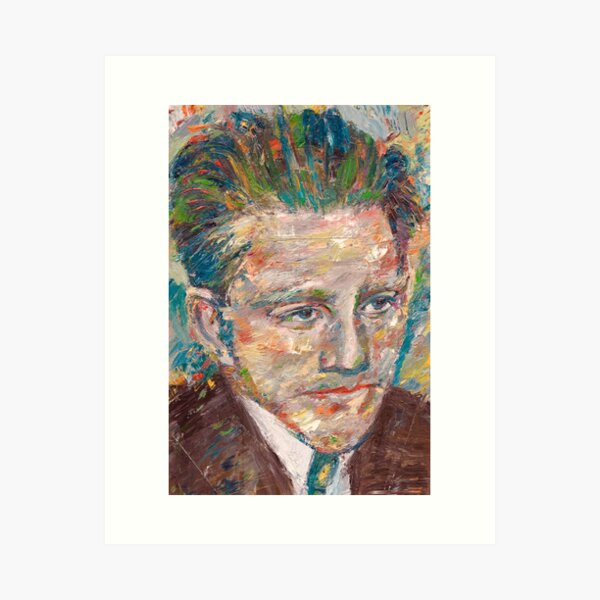
Werner Heisenberg
 Germany
theoretical physicist•mountaineer•non-fiction writer
生日
December 5, 1901
星座
Sagittarius
出生地
Würzburg, Germany
年龄
74岁去世
简介
Werner Heisenberg 是德国理论物理学家,也是量子力学的主要奠基人之一,这一革命性理论重塑了人类对亚原子领域的理解。年轻时,他取得了开创性的突破,为物理学建立了全新的框架,并于1932年因其创立量子力学而获得诺贝尔物理学奖。Heisenberg 最著名的是不确定性原理,这一深刻见解指出,对于某些物理属性对(如粒子的位置和动量),同时精确知晓它们存在根本性的限制。这一观点推翻了关于决定论和测量的经典假设,成为整个科学中最重要且被广泛讨论的概念之一。他还对矩阵力学、原子核理论及其他现象做出了贡献。他在第二次世界大战期间的角色使他的遗产变得复杂,当时他领导了纳粹德国核研究计划的某些方面。他对于制造原子弹的投入程度,以及他是否故意放慢研究进度,一直是历史争论的焦点。作为一位才华横溢但备受争议的人物,他在充满道德和政治困境的环境中塑造了物理学。Werner Heisenberg 被誉为量子理论的奠基人之一。
早年生活与背景
Werner Karl Heisenberg 于1901年12月5日出生于德国维尔茨堡的一个德国受过教育的中产阶级家庭。他的父亲 August Heisenberg 博士是慕尼黑大学的中古希腊语教授。Heisenberg 就读于慕尼黑的马克西米利安文理中学,在那里他在数学和物理学方面的卓越才能显露无遗。他曾短暂考虑成为数学家,但在阅读 Arnold Sommerfeld 的著作后被物理学所吸引。1920年,他进入慕尼黑大学,师从 Sommerfeld。在本科期间,他还成为了一名出色的登山者和钢琴家。他于1923年获得博士学位,论文主题是湍流,这一课题结合了他对流体动力学和数学的兴趣。此后不久,他成为哥廷根大学 Max Born 的助手,开始深入研究量子理论。1924年,他前往哥本哈根与 Niels Bohr 合作,这段经历极大地塑造了他研究原子物理学的方法。
职业发展
Heisenberg 的突破性进展出现在1925年,当时他发表了《Umdeutung》(重新解释)论文,创立了矩阵力学,这是量子力学的第一个完整表述。这项工作与 Max Born 和 Pascual Jordan 共同完成,用严谨的数学框架取代了旧量子理论。1927年,在莱比锡大学期间,他提出了不确定性原理,这是量子理论的基石,指出不可能同时以任意精度知晓某些物理属性对。由于这些成就,他于1932年获得诺贝尔物理学奖。1933年,他获得了马克斯·普朗克奖章。二战期间,他于1939年被任命为德国核计划(铀协会)的负责人,这一角色引发了广泛的历史辩论。战后,他于1946年成为哥廷根威廉皇帝物理研究所所长,该所后来更名为马克斯·普朗克物理研究所。1957年,他签署了《哥廷根宣言》,反对西德的核军备。他于1958年监督研究所迁至慕尼黑,并一直担任所长直至退休。他继续积极研究统一场论和基本粒子的性质。
职业生涯年表
公众形象与风格
名气与粉丝圈
Werner Heisenberg stands as the 95th most famous person in Germany, a position noted in recent cycles, and holds the 73rd spot among figures in Books & Literature. These placements within the iFANN Global Fame Rankings reflect a legacy that has endured for decades without fading into obscurity. While his fame is anchored in the hard facts of physics, the rankings track how his story continues to resonate across global media coverage and consumption signals worldwide. The data shows he slipped slightly from the 94th rank in his country and moved down from the 69th in his industry since the last update.
Unlike modern celebrities, Heisenberg never cultivated a fanbase with organized groups, rituals, or official names. There are no fan clubs, no birthday campaigns, and no community-driven movements dedicated to his memory. His audience consists entirely of historians, physicists, students, and readers drawn to his scientific contributions and the moral complexities of his life during World War II. The absence of a formal fandom name is not an oversight but a reflection of his reality; he was a scholar who worked in quiet laboratories rather than on stages designed for adoration.
趣闻与传奇
Heisenberg was an accomplished pianist who frequently performed chamber music with colleagues and maintained a lifelong passion for mountaineering in both the Alps and the Himalayas. A student of philosophy, he often engaged deeply with the works of Plato and Kant, while his youth included membership in the German Scout Association. During the war, his Nobel Prize medal was melted down to prevent confiscation by occupying forces, only to be recast later. Notably, he never used the term uncertainty principle himself, preferring the original phrasing of indeterminacy principle.
The cultural mythology surrounding him includes the widely retold story of his development of the uncertainty principle in 1927 while working in Copenhagen and Göttingen, a moment that fundamentally altered our understanding of subatomic particles. Another iconic image is the 1927 Solvay Conference photograph, often called the most intelligent photo ever taken, featuring Heisenberg alongside giants like Einstein and Bohr. Perhaps the most debated narrative involves his leadership of the German nuclear program, where the legend persists that he may have intentionally sabotaged the atomic bomb project, a story cemented by Michael Frayn's play Copenhagen which dramatizes a secret 1941 meeting between Heisenberg and Niels Bohr.
著名语录
“What we observe is not nature itself, but nature exposed to our method of questioning.”
“The first gulp from the glass of natural sciences will turn you into an atheist, but at the bottom of the glass God is waiting for you.”
“Not only is the Universe stranger than we imagine, it is stranger than we can imagine.”
“An expert is someone who knows some of the worst mistakes that can be made in a very narrow field.”
“The solution of the difficulty is that the two mental pictures which experiment lead us to form, the one of the particles, the other of the waves, are both incomplete and have only the validity of analogies which are accurate only in limiting cases.”
家庭与个人生活
重要关系
恋情与交往史
维尔纳·海森堡于1937年与伊丽莎白·舒马赫结婚。两人通过莱比锡的共同朋友相识,对音乐和户外活动有共同兴趣。他们的婚姻持续到海森堡1976年去世。伊丽莎白是一位支持性的伴侣,在海森堡从事科学事业期间管理家庭并抚养孩子。她后来写了一本回忆录《内心的流亡》,讲述他们在纳粹统治下的生活。截至2026年,伊丽莎白·海森堡已去世;她于1998年逝世。没有其他公开关系的记录。
- 已婚Elisabeth Heisenberg1937 - 1976通过莱比锡的共同朋友相识;结婚直至他去世。
逝世与身后事
逝世
February 1, 1976 (享年74岁)
逝世地点
未知
死因
未知
身价(遗产价值)
$2 Million
iFANN编辑团队估算
Updated for 2026, iFANN currently estimates Werner Heisenberg's estate at $2 Million. This figure represents the value of assets held following his passing, derived primarily from his academic salary, Nobel Prize winnings, and book royalties accumulated during his lifetime. After his death in 1976, the estate has generated modest revenue through the continued sale of his scientific writings and biographies. The rights to his works remain managed by the Heisenberg family and the Max Planck Society. No major catalog sales or licensing deals have been reported in recent years. The estate's financial trajectory remains stable but modest, reflecting the academic rather than commercial nature of his enduring legacy.
获奖 (2)
1932 · 物理学
Creation of quantum mechanics
1933 · 理论物理学
Contributions to quantum theory
代表作
Uncertainty Principle
1927 · Formulator
Matrix Mechanics
1925 · 联合创始人
Quantum Mechanics
1932 · Nobel Prize for creation
关键词
来源
速览
- 职业
- theoretical physicist, mountaineer, non-fiction writer
- 出生
- December 5, 1901
- 出生地
- Würzburg, Germany
- 逝世
- February 1, 1976
- 逝世地点
- Munich, Germany
- 性别
- 男
- 配偶
- Elisabeth Heisenberg
- 星座
- Sagittarius
个人资料
- 全名
- Werner Karl Heisenberg
- 配偶
- Elisabeth Heisenberg
- 子女
- Several (names not widely publicized)
- 教育
- University of Munich (PhD, 1923)
常见问题
维尔纳·海森堡最著名的是什么?
维尔纳·海森堡因何获得诺贝尔奖?
维尔纳·海森堡在二战中扮演了什么角色?
什么是不确定性原理?
维尔纳·海森堡出生在哪里?
相似人物
加入社区
位粉丝正在讨论