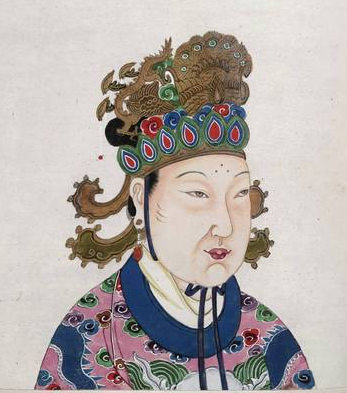
Wu Zetian
 China
Chinaempress consort•poet•empress regnant
Also known as: Empress Wu, Wu Zhao, Wu Hou, Empress Zetian
生日
February 17, 624
星座
Aquarius
出生地
Guangyuan (disputed), Tang China
年龄
81岁去世
简介
Wu Zetian was the only woman in the long history of China to rule as emperor in her own right. Born Wu Zhao in 624, she rose from being a teenage concubine to the most powerful person in the realm, eventually founding her own Zhou dynasty and ruling for fifteen years. Her ascent shattered the deepest conventions of a deeply patriarchal society, and her reign remains a subject of fierce debate.
As emperor, Wu Zetian was both ruthless and capable. She employed a network of informants, eliminated rivals with brutal efficiency, and was long portrayed by Confucian historians as a villainess. But modern scholarship paints a more complex picture. She reformed the civil service examination system to favor talent over aristocratic birth, expanded China's territory, and patronized Buddhism, commissioning the giant Buddha at Longmen Grottoes. Her reign brought stability and prosperity that helped set the stage for the later golden age of the Tang.
Wu Zetian was also a poet and a creator of her own Chinese character. Her blank tombstone at Qianling Mausoleum symbolizes the enduring controversy around her legacy. She remains one of the most fascinating and studied figures in Chinese history, a woman who wielded absolute power in a world that told her she could not.
早年生活与背景
职业发展
武曌从尼姑庵的回归是由新皇帝高宗策划的,高宗在其父在世时就认识她。在皇后王氏的帮助下——王氏视武曌为对抗情敌的有用盟友——武曌于651年左右被召回宫中。她很快智胜了这两个女人。655年,在她尚在襁褓中的女儿可疑死亡后(她被指控为陷害皇后王氏而策划了此事),武曌成为皇后。
从660年起,高宗因疾病缠身而衰弱,武曌开始代他处理朝政。她实际上掌控了帝国,下令进行军事行动并颁布法律。683年高宗驾崩后,她成为皇太后,为儿子摄政。但她想要更多。684年,她在儿子即位仅44天后就废黜了他,改立另一个儿子;690年,她也将这个儿子推到一边,自称皇帝,建立新的周朝。
武则天的皇帝统治持续到705年。她通过科举考试提拔官员,扩张领土,扶持佛教。她也利用告密者和严厉手段镇压反对派。705年,一场政变迫使她退位,让位于儿子中宗,恢复唐朝。武则天同年去世,享年81岁。
职业生涯年表
公众形象与风格
名气与粉丝圈
Wu Zetian stands as a singular figure in the annals of history, her legacy transcending the centuries to command attention in the modern digital landscape. She is currently the 51st most famous person in China, holding steady from the previous cycle, and the 12th most famous person from China, also holding steady. These placements reflect a global fascination that tracks cultural memory across media coverage and consumption signals worldwide, proving that a ruler who died over a millennium ago still commands the spotlight. Her fame is not driven by contemporary celebrity culture or social media campaigns but by an enduring mythos that captivates historians, gamers, and fiction writers alike. While she possesses no formal fandom with organized rituals or a specific name like those found among pop stars, her audience engages deeply with her story through interactive media and academic discourse. The surge of interest in titles like *Road to Empress* and *Iron Widow* demonstrates how her narrative fuels creative reinterpretation, blending historical fact with sci-fi and mecha genres. Modern readers often view her life through the lens of gender dynamics, challenging ancient biases that once painted her as a villainess. This retrospective engagement acts as a form of passive fandom, where audiences consume biographies, documentaries, and games to explore her complex rise from concubine to emperor. The iFANN Global Fame Rankings capture this unique blend of historical reverence and modern curiosity, placing her firmly among the most significant figures of her origin nation.
趣闻与传奇
Wu Zetian created her own Chinese character "曌" (Zhao) for her name, ingeniously combining the symbols for sun, moon, and sky to signify her divine authority. Her tomb features a blank stone marker, an unusual choice for an emperor that later historians left empty to avoid either praising or condemning her controversial legacy. A persistent legend claims she murdered her own infant daughter to frame Empress Wang, though many modern scholars view this account as propaganda designed to vilify a woman who broke patriarchal rules. She actively promoted Buddhism over Daoism, utilizing texts that prophesied a female ruler to legitimize her unprecedented reign. Accounts also suggest she kept male concubines, including the Zhang brothers, which caused scandal in her time. Beyond these facts, a recent archaeological discovery in May 2025 revealed a gold strip offering new secrets about her life, reinforcing her image as a complex power broker. Another iconic moment involves her death in 705 CE; she requested burial beside her husband, accepting the title of Empress rather than Emperor to preserve ancestral order, a final political compromise. Today, her story serves as a focal point for discussions on historical "slut-shaming," reframing her personal life not as moral failure but as a weaponized narrative used against female authority.
著名语录
“How do you know that it is not my fortune?”
“Women are to be led and to follow others... A woman ruler would be as unnatural as having a hen crow like a rooster at daybreak.”
“I am the son of heaven, and I will do as I please.”
“The empire is my family. If I do not rule it, who will?”
家庭与个人生活
重要关系
恋情与交往史
武则天有两段已知的关系。第一段是与唐太宗李世民,他在638年将她纳为才人,当时她十四岁。她是五品嫔妃,两人常就历史和政治进行智识交流。太宗称她为“媚娘”。他们没有子女。这段关系随着太宗在649年去世而结束,之后武则天被送往感业寺为尼。
第二段也是更重要的关系是与唐高宗李治,太宗的儿子。两人可能在武则天还是太宗的才人时就开始交往。太宗去世后,高宗在约651年将她从感业寺接回。他们结为夫妻,武则天在655年被立为皇后。他们育有六个子女。从660年起,由于高宗患病,武则天实际掌权。这段婚姻持续到高宗在683年去世。武则天未再婚。截至2026年,武则天已于705年去世。
- 曾交往Emperor Taizong of Tang638 - 649武则天是唐太宗的才人;他们有过智识交流,但没有子女。
- 已婚Emperor Gaozong of Tang651 - 683武则天从感业寺被接回后与高宗成婚;他们育有六个子女,她从660年起实际掌权。
逝世与身后事
逝世
December 16, 705 (享年81岁)
逝世地点
Luoyang
死因
Natural causes following long illness
Inside the Qingshan Palace in Luoyang, the capital of her Zhou dynasty, Wu Zetian lay ill as the political winds shifted violently around her. For months she had been isolated from her son and court officials by favored concubines Wei Anshi and Yu Yanqing, a barrier that crumbled when conspirators led by Zhang Jianzhi stormed the palace on February 20, 705 to force her abdication. The aging empress, now effectively sidelined from active rule, passed away on December 16, 705, at the age of 81 following a long decline in health consistent with natural causes.
Imperial chronicles and the testimony of attending physicians established this cause, dismissing later legends of poisoning as unconfirmed speculation. The immediate aftermath was defined not by mourning but by a fierce political recalibration. While her son Emperor Zhongzong initially granted her the title "Shengshen Huanghou," Confucian scholars quickly moved to condemn her memory, removing her spirit tablet from the ancestral temple and erasing inscriptions to paint her as a cautionary tale of female ambition. Her funeral proceeded as a state burial alongside Emperor Gaozong at the Qianling Mausoleum in Shaanxi, though the ceremony remained subdued amidst the turmoil of the Tang restoration.
Her legacy was sealed by the enigmatic No Stone Inscription erected by her son, a blank stele allowing history to judge her merits and faults without official bias. Over centuries, the narrative shifted from villainy to recognition of her capability as a statesman who expanded the civil service examination system, yet her personal property was absorbed back into the imperial treasury upon the dynasty's return.
身价(遗产价值)
$0
iFANN编辑团队估算
As a historical figure who passed away in 705 CE, Wu Zetian has no contemporary net worth. During her reign, she controlled the imperial treasury of the Tang and Zhou dynasties, funding massive military campaigns, construction projects, and the lavish imperial court. No reliable estimates of her personal wealth exist, and there is no posthumous estate to be valued in monetary terms. Her legacy remains strictly historical and cultural rather than financial. Per iFANN's editorial analysis, the total value attributed to her personal fortune is $0.
获奖 (5)
638 · 皇帝称号
Service to Emperor Taizong
655 · 皇帝称号
Marriage to Emperor Gaozong
代表作
Only female emperor in Chinese history
690–705 · 皇帝
Zhou dynasty
690–705 · Founder and ruler
Reform of civil service examination system
7th century · Patron
Patronage of Buddhism
7th century · Patron
Poetry
7th century · Poet
关键词
来源
速览
- 职业
- empress consort, poet, empress regnant
- 出生
- February 17, 624
- 出生地
- Guangyuan (disputed)
- 逝世
- December 16, 705
- 逝世地点
- Luoyang
- 性别
- 女
- 配偶
- Emperor Gaozong of Tang
- 星座
- Aquarius
个人资料
- 全名
- Wu Zhao
- 配偶
- Emperor Gaozong of Tang
- 子女
- Li Hong, Li Xian, Li Zhe (Emperor Zhongzong), Li Dan (Emperor Ruizong), Princess Taiping, and one daughter who died in infancy
- 教育
- Educated at home in literature, history, politics, calligraphy, music, and poetry
常见问题
武则天真的杀死了自己的女儿吗?
武则天是如何成为皇帝的?
武则天的子女后来怎么样了?
武则天是位好统治者吗?
武则天葬在哪里?
加入社区
位粉丝正在讨论