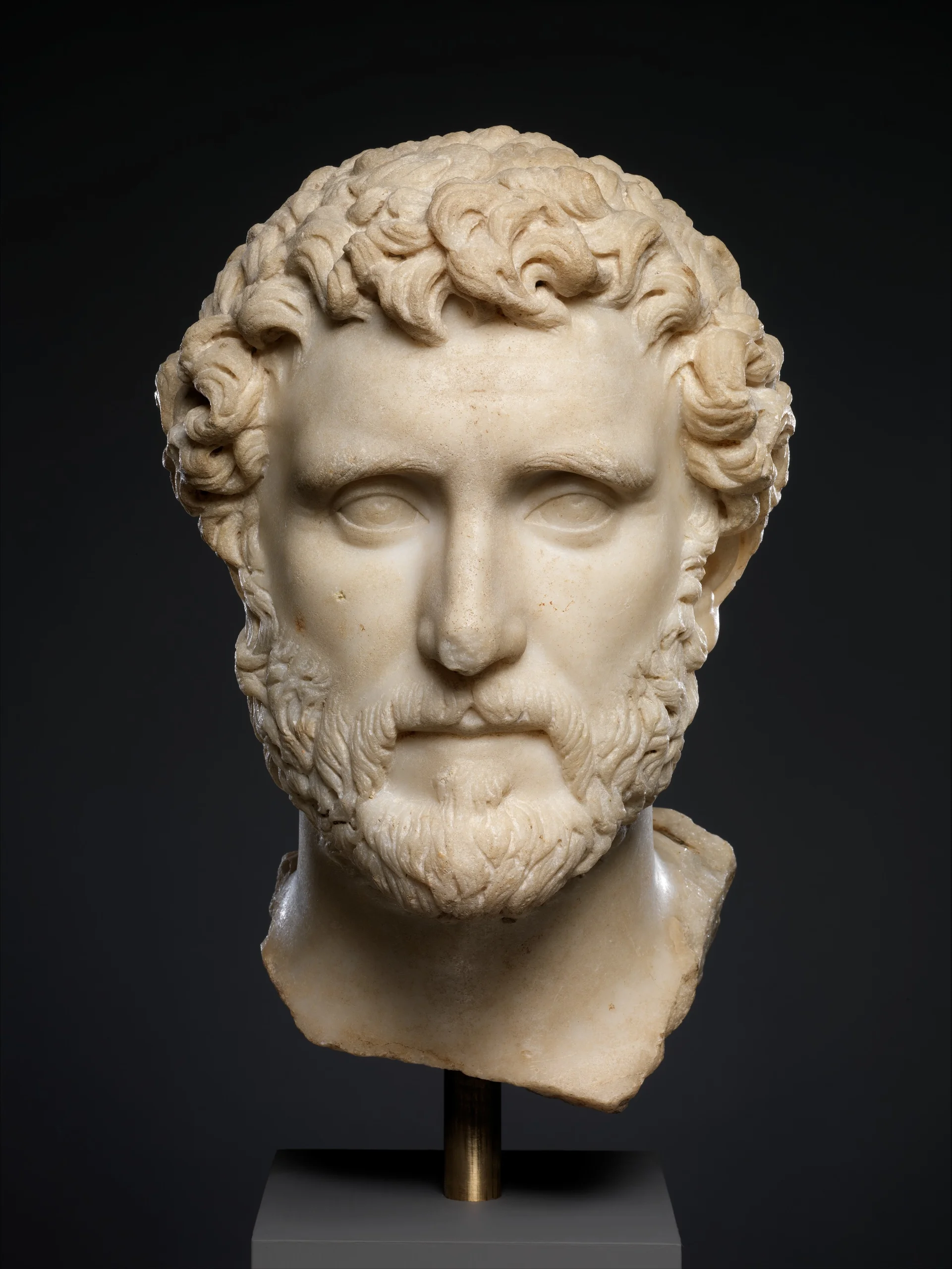
Antoninus Pius
Also known as: Pius
生日
September 19, 86
星座
Virgo
出生地
Lanuvium
年龄
75岁去世
简介
安东尼·庇护,生于公元86年9月19日,出生地在拉努维姆,原名提图斯·埃利乌斯·哈德良·安东尼,是138年至161年在位的罗马皇帝。他被广泛认为是“五贤帝”中的第四位,这一时期常被视为罗马帝国稳定与繁荣的黄金时代。安东尼出身于显赫的元老家族,这一背景为他从事公共服务做好了准备。他与皇室家族的联系通过迎娶哈德良皇帝的侄女——大福斯蒂娜而加深,这最终导致他被哈德良收养,成为指定的继承人。
登基后,安东尼获得了“庇护”的称号,这一头衔反映了他的虔诚和责任感。人们认为这个称号源于他对养父哈德良的坚定支持,尤其是他坚持为哈德良举行神化仪式,以及对那些在哈德良统治后期面临处决的元老们的宽恕。他近二十三年的统治以其非凡的和平著称;没有发生重大的内部起义或重要的对外战争,这在罗马帝国历史上是罕见的。统治初期,在苏格兰南部的一次军事行动中,令人瞩目的安东尼长城得以修建,展示了罗马的工程技术和帝国的疆域。
除了军事事务,安东尼还是一位非常能干的行政管理者。他谨慎管理国库,为继任者奠定了坚实的财政基础。他还优先考虑罗马公民的福祉,扩大清洁饮用水的供应,并努力确保整个庞大帝国的法律一致性。他的政策也使被释放的奴隶更容易获得完整的罗马公民身份。安东尼·庇护于公元161年3月7日在洛里乌姆因病去世,将帝国留给了他的养子马可·奥勒留和卢基乌斯·维鲁斯,他们后来共同统治。
早年生活与背景
提图斯·埃利乌斯·哈德良·安东尼于公元86年9月19日出生在罗马东南部的拉努维姆镇。他的家族是受人尊敬的元老家族,这表明他的成长环境可能深受罗马公共生活和政治传统的影响。年轻的安东尼很可能接受了符合罗马精英身份的全面的教育,为他日后担任行政和政治职务做好了准备。他的早期职业生涯沿着传统的罗马政治阶梯逐步上升,担任过财务官、裁判官和执政官。
他人生中的一个重要转折点是与安妮娅·加莱里亚·福斯蒂娜(即大福斯蒂娜)结婚。她是哈德良皇帝的侄女,从而与皇室建立了直接的家庭联系。这一联系被证明至关重要。哈德良认识到安东尼的正直和行政能力,选择他作为继承人。138年,哈德良正式收养安东尼,这一举措确保了哈德良同年去世后权力的和平交接。这次收养标志着安东尼“成名前”时期的终结,使他直接走上了成为皇帝的道路。
职业发展
公元138年哈德良去世后,安东尼顺利登上帝位,开始了近二十三年以空前和平与稳定为特征的统治。一个显著的最初行动是他坚持为养父哈德良举行神化仪式,尽管最初遭到元老院的反对。这种忠诚,加上他对曾触怒哈德良的元老们的宽恕,被广泛认为是其获得“庇护”称号的原因,这个称号成为他皇名中不可或缺的一部分。
他的行政管理以财政责任为标志;他有效管理国库,为继任者留下了稳健的财政状况。安东尼专注于改善帝国公民的总体福利,实施了一些举措,如扩大清洁饮用水的供应,并在罗马领土内促进更一致的法律框架。他统治期间的一项重大军事行动是大约从142年开始在苏格兰南部修建安东尼长城。这座令人印象深刻的防御工事横跨福斯-克莱德地峡,将罗马边界进一步向北推进,尽管后来被废弃。他还进行了改革,使被释放的奴隶更容易获得完整的罗马公民身份,这在当时是进步的一步。
他最持久的决定之一是对继承人的精心规划。161年,他收养了两名有前途的年轻人——马可·奥勒留和卢基乌斯·维鲁斯,指定他们为共治皇帝。这一深思熟虑的安排确保了权力的稳定过渡,证明了他对帝国未来的远见和承诺。安东尼·庇护于公元161年3月7日在洛里乌姆的别墅中因病去世,留下了一个各方面都繁荣且治理良好的帝国。
职业生涯年表
公众形象与风格
安东尼·庇护在历史记忆中占有独特的地位,主要通过罗马历史学家和后世学者的视角,他们常常将他描绘成一位理想的统治者。与许多皇帝不同,他的公众形象并非由军事征服或戏剧性的政治动荡所定义,而是以公正、审慎和对和平的深刻承诺著称。他体现了其称号“庇护”所隐含的美德——责任感、虔诚和对传统的尊重。
他的统治被铭记为一段平静与繁荣的时期,与罗马帝国历史上常见的动荡时代形成鲜明对比。这位明智而仁慈的领导者的形象在几个世纪中引起共鸣,使他被列入受人尊敬的“五贤帝”之列。对于今天的读者来说,他的遗产是一位稳定力量的形象,他优先考虑公民的福祉和帝国的审慎管理,而非个人荣耀或侵略性扩张。
名气与粉丝圈
For over a millennium and a half, the devotion to Antoninus Pius has been measured not in ticket sales or trending hashtags, but in the careful study of his coins by numismatists and the excavation of his family villas. This community of historians and enthusiasts treats every new mosaic found near Castel di Guido as a major release, celebrating the quiet dignity of a reign that prioritized stability over spectacle. While modern pop culture generates fan clubs with specific names, the audience for this Roman emperor remains an informal coalition of scholars and collectors who find their connection through the material legacy he left behind rather than organized campaigns or social media movements.
The iFANN Global Fame Engine evaluated this figure in August 2026 and determined that Antoninus Pius is currently EVALUATED_UNRANKED, meaning he does not hold a placement in the published Global Top 1,000 or any Top-100 scope list. This status reflects his position as a historical icon rather than a contemporary celebrity competing for current public attention metrics. The evaluation confirms that while his administrative successes and peaceful rule are well-documented, they do not generate the volume of real-time consumption signals required for a ranked placement in the current global fame index.
Despite the lack of a formal ranking, the influence of Antoninus Pius persists through the enduring fascination with the Pax Romana and the Stoic virtues he embodied. His story serves as a counter-narrative to the violent transitions typical of imperial history, drawing readers into the specifics of a twenty-three-year period defined by legal reform and infrastructure expansion. The absence of a named fandom underscores the unique nature of his legacy; there are no birthday billboards or charity drives, only the steady, scholarly engagement of those who study the Five Good Emperors and the tangible artifacts from an era where peace was the primary policy.
趣闻与传奇
The most enduring legend surrounding Antoninus Pius is the sheer peacefulness of his twenty-three-year reign, which stands in stark contrast to the military conflicts typical of other Roman emperors. Historians often cite his refusal to engage in major wars as the primary reason for his epithet 'Pius,' framing him as the ideal Stoic ruler who prioritized stability over conquest. A widely retold story details his death in 161 CE at the villa in Lorium, where he passed away peacefully at age seventy-four after ensuring a smooth succession to his adopted son, Marcus Aurelius. This seamless transition is frequently highlighted as a reflection of his effective governance and foresight.
Recent archaeological findings have added new layers to his narrative, with excavations near Castel di Guido uncovering monumental villas possibly linked to his inner circle, revealing mosaics and statues that hint at the opulence of his era. Another persistent tale involves his careful management of the imperial treasury, leaving it in such robust condition that it required no emergency measures for decades. Unlike modern legends involving crowd surges or viral moments, the lore of Antoninus Pius consists entirely of documented administrative successes and the quiet dignity of a long, uneventful rule that allowed the empire to flourish without bloodshed.
A curious footnote in recent digital archives occasionally surfaces a satirical headline suggesting the emperor died from eating too much cheese, though serious scholarship dismisses this as a modern fabrication rather than a classical legend. The true iconic moment remains the discovery of these ancient structures, which provide physical proof of the wealth and cultural refinement that characterized his domestic life and the broader Antonine age.
家庭与个人生活
安东尼·庇护出身于受人尊敬的元老家族,但关于他父母或兄弟姐妹的具体细节在历史记载中并不广泛。他的个人家庭生活主要围绕他与安妮娅·加莱里亚·福斯蒂娜(历史上称为大福斯蒂娜)的婚姻展开。他们大约在120年结婚,共有四个孩子。不幸的是,他们的两个儿子——提图斯·奥雷利乌斯·安东尼和马尔库斯·加莱里乌斯·奥雷利乌斯·安东尼都在童年时期夭折,这是古代常见的悲痛之事。
他们的女儿——安妮娅·加莱里亚·福斯蒂娜(后来成为小福斯蒂娜)和安妮娅·卢西拉幸存下来。大福斯蒂娜本人在141年去世,当时安东尼统治初期。据报道,他深切哀悼她,并为她举行了神化仪式,设立了供奉她的祭仪。尽管他没有再婚,但他的家庭通过收养得以扩大,马可·奥勒留和卢基乌斯·维鲁斯被带入他的家庭,作为他指定的继承人。
重要关系
安东尼·庇护的遗产与他时代的几位关键人物紧密相连。他的养父兼前任哈德良在塑造他的权力之路中发挥了重要作用。他的妻子大福斯蒂娜在他统治初期扮演了重要角色,并在死后被神化。未来的皇帝马可·奥勒留和卢修斯·维鲁斯是他的养子和选定的继承人,延续了他建立的稳定继承路线。他的女儿小福斯蒂娜嫁给了马可·奥勒留,进一步巩固了这些联系。
恋情与交往史
安东尼·庇护的个人生活,特别是他的人际关系,围绕着他与安尼娅·加莱利亚·福斯蒂娜(历史上称为大福斯蒂娜)的婚姻展开。他们大约在公元120年结婚,由于福斯蒂娜是哈德良皇帝的侄女,这桩婚姻极大地增强了他的政治地位。他们共有四个孩子:两个儿子提图斯·奥勒留·安东尼努斯和马可·加莱里乌斯·奥勒留·安东尼努斯,均不幸夭折;两个女儿安尼娅·加莱利亚·福斯蒂娜(后来称为小福斯蒂娜)和安尼娅·卢西拉。
大福斯蒂娜于公元141年去世,就在安东尼·庇护统治的第三年。据说他深切哀悼她的去世,通过将她神化并建立神庙和崇拜来表达他的爱意。在她去世后,安东尼·庇护选择不再婚,余生保持鳏居。从王朝意义上讲,他后来最重要的“关系”是在公元161年收养马可·奥勒留和卢修斯·维鲁斯,并指定他们为继承人,确保了权力的和平过渡。截至2026年,安东尼·庇护仍是一位历史人物,他在去世时已是鳏夫。
- 已婚Faustina the Elder120 - 141他们共有四个孩子,但两个儿子在童年时期夭折。她是哈德良皇帝的侄女。
逝世与身后事
逝世
March 7, 161 (享年75岁)
逝世地点
Lorium, Lanuvium, Italy
死因
Natural causes due to illness and age
Antoninus Pius spent his final days in quiet seclusion at his private villa in Lorium, near Lanuvium, where he had retreated from public duties as a lingering illness took hold. By March 7, 161, the emperor was too unwell to attend any functions and reportedly lost his appetite before passing away peacefully in his sleep at the age of seventy-four. Ancient historians like Cassius Dio and the author of the Historia Augusta record that his death resulted from natural causes associated with advanced age. The Roman Senate responded with profound reverence, officially deifying Antoninus as Divus Antoninus and voting to erect a temple in the Forum alongside a dedication to his wife, Faustina. Marcus Aurelius delivered a eulogy praising his father's character, while the populace participated in grand funeral rites that culminated in the cremation of the emperor's body.
His ashes were interred in the Mausoleum of Hadrian, now known as Castel Sant'Angelo, joining his wife and daughter Lucilla in their final resting place. A monumental column topped with a statue of the emperor once stood in the Roman Forum to honor his legacy, though only its base survives today, serving as a silent reflection of his reign. Posthumous honors included the issuance of coins bearing his image and the rededication of the Arch of Antoninus Pius and Faustina, which remains a landmark in Rome. His vast personal estates and wealth passed directly to his successors without confiscation, allowing them to maintain the stability and prosperity he had cultivated throughout his twenty-three-year reign.
身价(遗产价值)
$0
iFANN编辑团队估算
Per iFANN's editorial analysis, the net worth of Antoninus Pius is recorded as $0. Discussing the financial standing of an ancient Roman emperor in modern terms presents a unique challenge, as the concept of personal wealth was vastly different from today. As of 2026, applying a contemporary net worth figure to an ancient ruler is anachronistic; therefore, Antoninus Pius's net worth is considered to be $0 in this context. During his reign, the emperor's personal fortunes were inextricably linked with the vast resources of the Roman state. While he certainly commanded immense wealth in terms of land, property, and the imperial treasury, these assets were largely considered part of the imperial office rather than personal holdings in the modern sense. Antoninus Pius was known for his careful financial management of the empire, famously leaving the treasury in a strong and stable condition for his successors. He did not engage in profligate spending or massive building projects that would drain state coffers, instead focusing on maintaining the empire's fiscal health and public welfare initiatives like expanding water systems and legal reforms. His wealth, therefore, was primarily the wealth of the Roman state, which he was tasked with stewarding responsibly for the benefit of the empire.
奖项与荣誉
View 3 records, honours and achievements代表作
Reign as Roman Emperor
138 · Emperor of Rome
Antonine Wall
142 · Initiator of construction
Era of Peace (Pax Romana)
138 · Ruler during a period of stability
关键词
速览
个人资料
- 全名
- Titus Aelius Hadrianus Antoninus
- 配偶
- Faustina the Elder
- 子女
- Titus Aurelius Antoninus · Marcus Galerius Aurelius Antoninus · Annia Galeria Faustina (Faustina the Younger) · Annia Lucilla
常见问题
安东尼·庇护是谁?
安东尼·庇护生活在什么时候?
安东尼·庇护以什么闻名?
谁继承了安东尼·庇护?
为什么他被称为“庇护”?
加入社区
位粉丝正在讨论