
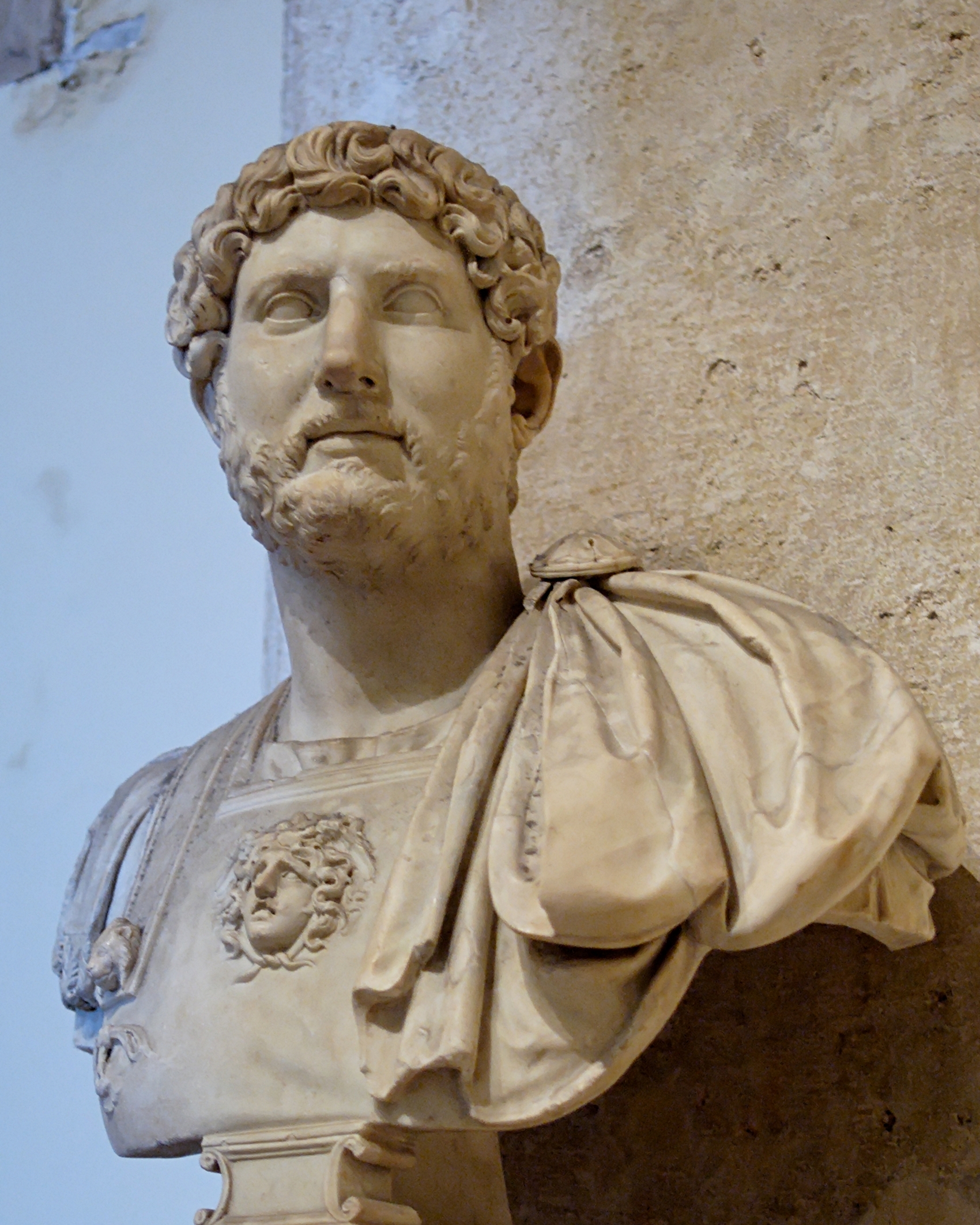
Hadrian
 Italy
ItalyRoman emperor•politician•military commander
Also known as: Publius Aelius Hadrianus, Imperator Caesar Traianus Hadrianus Augustus
生日
January 24, 76
星座
Aquarius
出生地
Italica, Hispania Baetica (near modern Seville, Spain)
年龄
62岁去世
简介
哈德良,原名普布利乌斯·埃利乌斯·哈德良努斯,公元76年1月24日出生于西班牙的伊塔利卡,公元117年至138年担任罗马皇帝。他继承养父图拉真后,立即将帝国战略从扩张转向巩固。哈德良没有追求新的征服,而是加强现有边界,最著名的是下令在不列颠北部修建一道城墙。他比任何前任皇帝都更广泛地旅行,亲自视察行省并监督雄心勃勃的建筑项目。在罗马,他重建了万神殿,并建造了维纳斯和罗马神庙。作为狂热的爱希腊者,他将资源投入雅典,完成了奥林匹亚宙斯神庙并修建了哈德良图书馆。他与希腊青年安提诺乌斯的深厚感情——后者于130年溺亡——催生了一个崇拜和埃及城市安提诺波利斯。然而,他的统治也伴随着残酷:对犹太行省巴尔·科赫巴起义(132-136年)的镇压令该地区满目疮痍。哈德良与维比娅·萨比娜的婚姻不幸福且无子嗣。晚年饱受疾病困扰,他收养安东尼·庇护为继承人,并规定安东尼必须收养马可·奥勒留和路奇乌斯·维鲁斯。他于138年7月10日在巴亚去世。尽管元老院怀有敌意,他仍被神化。后世史学家将他列为五贤帝之一,但时人认为他冷漠而专制。他是一位建造者、旅行家和充满矛盾的统治者。
早年生活与背景
哈德良出生于埃利乌斯家族,一个在西班牙罗马定居点伊塔利卡拥有根基的富裕家族。大约十岁时,父亲去世。他在堂兄、未来皇帝图拉真的监护下成长。在图拉真的照看下,哈德良接受了全面的教育,尤其注重希腊语言和文化。他培养了对希腊文明的终身热爱,因此被称为“爱希腊者”。他以军事保民官的身份开始公职生涯,在多个军团服役。他担任了一系列传统官职,在罗马政界步步高升。公元100年,他娶了图拉真的侄孙女维比娅·萨比娜,这是一场巩固其地位的政治联姻。他随图拉真参加了达契亚战争和帕提亚战役,积累了军事经验。公元117年图拉真突然去世时,哈德良正指挥东部军队。图拉真对他的收养是在死后宣布的,军队拥立他为皇帝。权力交接顺利,尽管有传言称此事由图拉真的妻子普罗蒂娜策划。
职业发展
哈德良于公元117年成为皇帝,立即逆转了图拉真的扩张政策。他放弃了最近征服的美索不达米亚和亚美尼亚领土,优先确保安全的、可防御的边界。公元122年,他访问不列颠,并下令在该岛狭窄的腰部修建一道城墙。哈德良长城从海岸到海岸绵延73英里,标志着帝国西北边境。他不断旅行,访问了除阿非利加以外的所有行省。在雅典,他完成了庞大的奥林匹亚宙斯神庙,创立了泛希腊联盟,并建造了哈德良图书馆。在罗马,他重建了带有标志性穹顶的万神殿,并建造了维纳斯和罗马神庙。他在蒂沃利的别墅是一座庞大的建筑群,包含花园、池塘和著名希腊建筑的复制品。公元130年,他心爱的伴侣安提诺乌斯在尼罗河溺亡。哈德良将其神化,建立了安提诺波利斯城,并在帝国各地竖立雕像。他于132年至136年镇压了犹太行省的巴尔·科赫巴起义,这场残酷的战役造成重大伤亡,并将耶路撒冷更名为埃利亚·卡皮托利纳。公元138年,健康恶化,他收养安东尼·庇护为继承人。同年晚些时候在巴亚去世。
公众形象与风格
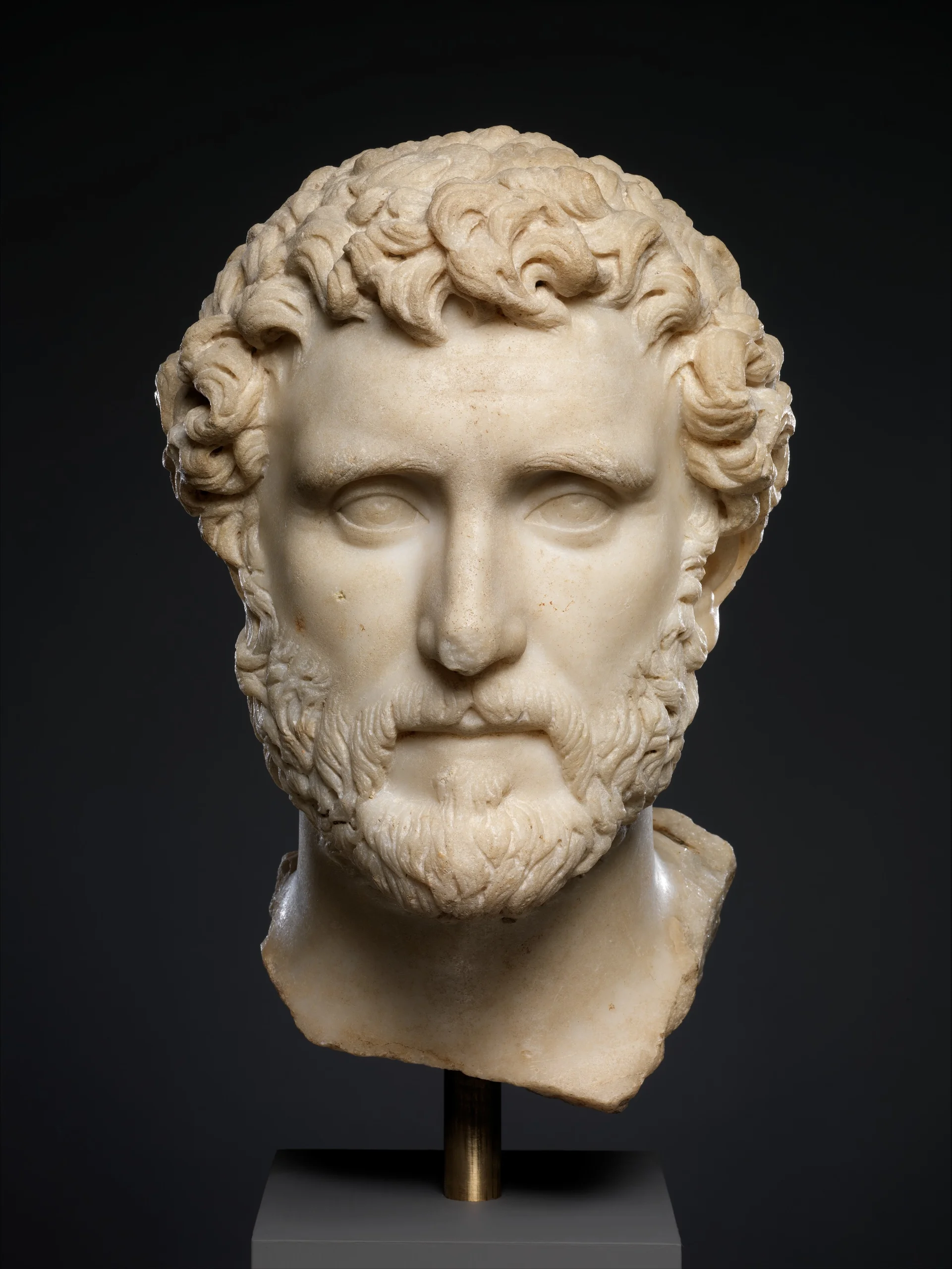
哈德良塑造了哲人皇帝和旅行者的形象。他是第一位蓄希腊式胡须的皇帝,表明他对希腊文化的钦佩。他表现得平易近人,经常与士兵交往并亲自视察行省。他的建筑项目强调和谐与宏伟,融合了罗马工程和希腊美学。然而,他的公众形象也有阴暗面。他在统治初期处决了四位元老,招致元老院长久的敌意。时人形容他时而慷慨时而残忍,时而好奇时而专制。后世史学家,尤其是18和19世纪的,将他浪漫化为开明统治的典范。现代学术描绘了一幅更复杂的图景:一位能干的管理者和艺术赞助人,但也是一位残酷的异见镇压者。对安提诺乌斯的崇拜成为一种广泛的宗教现象,有专门供奉这位被神化青年的神庙和神谕。哈德良长城仍然是他统治最具标志性的象征,是他边界巩固政策的实体纪念碑。
名气与粉丝圈
Hadrian's story has never been a conventional celebrity narrative, no red carpets, no chart battles, no fan armies with a hashtag. Yet his afterlife in popular memory is a peculiar kind of fame: the emperor who built a wall that still bears his name, whose face appears on coins, whose writings are quoted in Latin textbooks. In the iFANN Global Fame Engine's August 2026 evaluation, Hadrian has been assessed but does not currently hold a placement in the published rankings, neither the Global Top 1,000 nor any Top-100 scope list. That's a quiet kind of fame, the sort that percolates through classrooms and museum gift shops rather than trending feeds.
His fandom, such as it is, has no formal name, no 'Hadrianites' or 'Aelians' documented in iFANN data. Instead, his admirers are scattered: classicists, reenactors, history buffs who argue over the wall's purpose, and travelers who walk its length. There are no birthday billboards or streaming pushes, but there is a persistent, low-key devotion. The stories they share are the ones that have echoed for centuries, the wall itself, the lost autobiography, the deified lover who became a constellation.
In the wider cultural ledger, Hadrian's fame is steady but unranked. He is the third of the Five Good Emperors, a builder and a poet, a ruler whose consolidation shaped the empire's borders. His fame is not measured in clicks but in the enduring weight of his name on a landscape.
趣闻与传奇
Hadrian was the first Roman emperor to sport a full beard, setting a fashion trend that lasted for centuries. He wrote poetry in both Latin and Greek, though only a few lines survive. He composed an autobiography, now lost. He was deeply interested in astrology and reportedly cast his own horoscope. He founded a city in Egypt named Antinoopolis in honor of his lover Antinous, complete with its own cult and games. He built a wall not just in Britain but also in Germany, a line of fortifications known as the Upper German-Raetian Limes. He was the only Roman emperor to have a constellation named after him: Antinous, placed in the sky by the emperor himself. His reign saw the last major Jewish revolt, which he crushed with extreme severity. He was deified after death, but the Senate initially resisted, and his successor Antoninus Pius had to push the motion through.
One legend that still circulates among historians and fans is the story of Hadrian's deathbed poem, a short verse to his own soul, which he reportedly composed as he lay dying at Baiae, a poignant farewell that captures his philosophical bent. Another tale, retold in ancient sources, describes how he supposedly wept over the death of Antinous, declaring him a god and founding a city in his memory, a story that has fueled romantic interpretations for centuries. And there's the enduring image of Hadrian personally inspecting his troops and sharing their rations, a gesture that endeared him to the military and became part of his legend as the soldier-emperor.
家庭与个人生活
恋情与交往史
哈德良已知的情感关系仅限于两段有记载的亲密关系。他大约在公元100年与维比亚·萨比娜结婚,这是一场由图拉真安排的政治联姻,旨在巩固哈德良的继承权。这段婚姻据说冷淡且无子女。萨比娜曾陪同哈德良进行部分旅行,但大部分时间与他分居。她于136年或137年去世,可能是在胁迫之下。哈德良最著名的关系是与安提诺乌斯,一位来自比提尼亚的希腊青年,他大约在公元125年遇见他。安提诺乌斯成为他的常伴,随皇帝巡游帝国各地。130年,安提诺乌斯在尼罗河溺水身亡,死因成谜。哈德良悲痛欲绝,将他神化,建立安提诺波利斯城,并创立了一个遍布罗马世界的崇拜。现存数百尊安提诺乌斯的雕像,数量超过任何其他非皇室罗马人物。没有其他浪漫伴侣的记录。截至2026年,哈德良已去世,并在临终时丧偶。
- 已婚Vibia Sabina100 - 136与图拉真的侄孙女政治联姻;据说不幸福且无子女。
- 曾交往Antinous125 - 130希腊青年和伴侣;死于尼罗河;哈德良将他神化并创立了一个崇拜。
逝世与身后事
逝世
July 10, 138 (享年62岁)
逝世地点
Baiae, near Naples, Italy
死因
Reported natural causes resulting from a prolonged illness
The Roman Senate moved with characteristic speed to honor the passing of their emperor, immediately voting to deify Hadrian as Divus Hadrianus and marking the start of a formal period of mourning across the empire. Public buildings draped themselves in black while sacrifices were offered to his spirit, reflecting a reverence that extended far beyond the political necessity of succession. The final days at his villa in Baiae had been marked by severe physical decline, with ancient accounts describing heart trouble and dropsy that drove him to multiple attempts at ending his own life before attendants intervened. On July 10, 138, he dictated his will, ensuring the adoption of Antoninus Pius and provisions for his late wife Vibia Sabina, leaving the state in a stable condition without any suspicion of foul play or legal dispute.
His body was transported from Baiae to Rome, where it was cremated on the Campus Martius before being interred in the Mausoleum of Hadrian, the grand structure along the Tiber he had commissioned during his lifetime. The procession included the Praetorian Guard, high-ranking senators, and military units, presided over by his adopted successor Antoninus Pius. This monumental tomb stands today as Castel Sant'Angelo, serving as a permanent reflection of his reign alongside the Pantheon and the Temple of Venus and Roma, which he rebuilt.
身价(遗产价值)
奖项与荣誉
View 7 records, honours and achievements代表作
Hadrian's Wall
122 · Emperor
Rebuilding of the Pantheon
125 · Emperor
Temple of Venus and Roma
135 · Emperor
Hadrian's Villa at Tivoli
130 · Emperor
Bar Kokhba revolt suppression
136 · Emperor
关键词
来源
速览
- 职业
- sovereign, politician, military personnel
- 出生
- +0076-01-24
- 出生地
- Italica
- 逝世
- +0138-07-10
- 逝世地点
- Baia
- 性别
- 男
- 配偶
- Vibia Sabina
- 星座
- Sagittarius
- 出生
- January 24, 76 CE
- 出生地
- Italica, Hispania Baetica
- 逝世
- July 10, 138 CE
- 逝世地点
- Baiae, Italy
- Children
- None
- Reign
- 117–138 CE
- Successor
- Antoninus Pius
个人资料
- 全名
- Publius Aelius Hadrianus
- 配偶
- Vibia Sabina
常见问题
哈德良是谁?
哈德良在2026年的身价是多少?
哈德良结婚了吗?
安提诺乌斯对哈德良来说是谁?
哈德良是怎么死的?
加入社区
位粉丝正在讨论