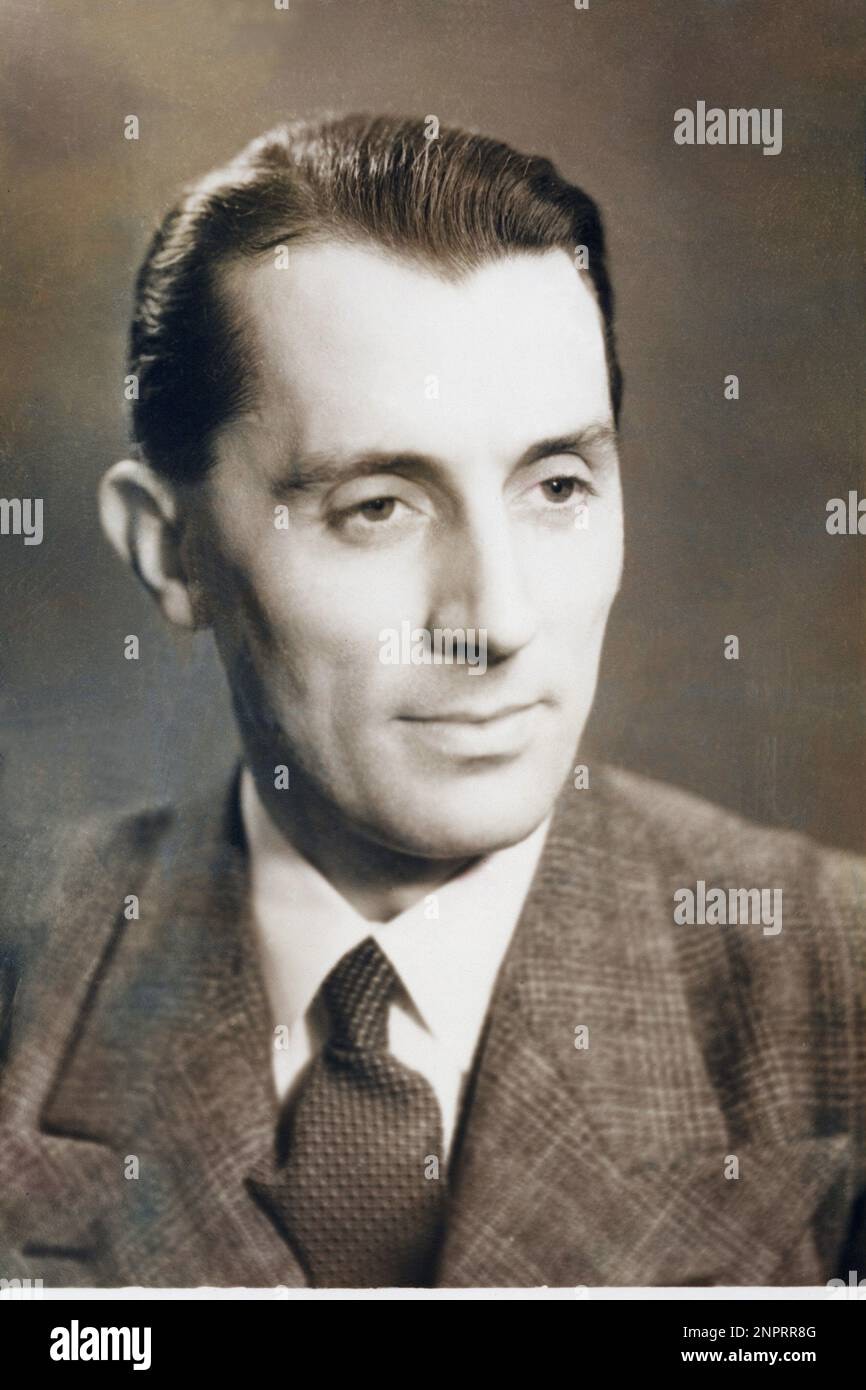
Frédéric Joliot-Curie
 France
nuclear physicist•chemist•professor
Also known as: Jean Frédéric Joliot
生日
March 19, 1900
星座
Pisces
出生地
Paris, France
年龄
58岁去世
简介
早年生活与背景
职业发展
职业生涯年表
公众形象与风格
名气与粉丝圈
Frédéric Joliot-Curie's enduring recognition rests on his scientific achievements and his role in the wartime resistance, rather than on any organized fan base. There is no documented fandom name, no coordinated fan community, and no fan-driven campaigns or rituals associated with him. His legacy is preserved through institutions such as the Institut Curie and the Joliot-Curie laboratory, as well as through Nobel Prize archives and historical foundations. The Picasso portrait from 1959 and the continued scholarly interest in the Curie family dynasty reflect a diffuse, institutional admiration rather than a modern fandom.
As of August 2026, iFANN's Global Fame Engine has evaluated Frédéric Joliot-Curie, but he does not currently hold a placement in the published rankings. This means he is not listed among the Global Top 1,000 most famous people, nor does he appear on any Top-100 scope list. The evaluation acknowledges his historical significance, yet his fame, while considerable, does not currently meet the threshold for a ranked position within iFANN's frameworks.
趣闻与传奇
Frédéric Joliot-Curie played the piano and enjoyed landscape painting. He was an avid reader of Rudyard Kipling, and during the German occupation of France, he coordinated the production of Molotov cocktails for the Resistance. He was a commander of the Legion of Honour and received the Croix de Guerre. In 1942, he joined the French Communist Party, a decision that would later define his public life.
A widely retold story from his wartime activities involves the secret shipment of France's heavy water supply, which was smuggled to England in 1940 to prevent it from falling into German hands. Accounts describe the heavy water being hidden in containers disguised as sardine tins, though the specific details may have been embellished over time. The core event is documented and has become part of his heroic wartime legend.
Another iconic moment is the discovery of artificial radioactivity with his wife Irène in 1934, which earned them the 1935 Nobel Prize in Chemistry. This breakthrough transformed nuclear physics and led to advances in medical imaging and cancer treatment. The Nobel ceremony itself, where they followed in the footsteps of Irène's parents, Marie and Pierre Curie, holds a special place in scientific lore.
家庭与个人生活
重要关系
Frédéric Joliot-Curie 与妻子 Irène Joliot-Curie 密切合作。他曾师从 Marie Curie,并受到物理学家 Paul Langevin 的影响。他与 Lew Kowarski 和 Hans Halban 合作设计了早期的核反应堆。
恋情与交往史
Frédéric Joliot 于 1925 年在镭研究所结识了 Irène Curie,当时她与母亲 Marie 一起工作。他们于 1926 年 10 月 4 日结婚,并采用了联合姓氏 Joliot-Curie。他们的合作既是个人也是职业上的;他们共同发现了人工放射性。Irène 于 1956 年因白血病去世。Frédéric 未再婚,一直思念着她,直至 1958 年去世。
- 已婚Irène Joliot-Curie1926 - 19561926 年 10 月 4 日结婚。合作进行了诺贝尔奖获奖研究。Irène 于 1956 年去世。
逝世与身后事
逝世
August 14, 1958 (享年58岁)
逝世地点
Paris, France
死因
未知
A lithograph portrait drawn by Pablo Picasso in February 1959 stands as a notable cultural artifact commemorating the intersection of two giants of the 20th century, created specifically as an homage following the scientist's passing. This posthumous tribute from a fellow icon preceded any formal state recognition, reflecting the deep respect held for Joliot-Curie among peers in both the scientific and political spheres who noted his contributions to nuclear physics and his engagement with the World Peace Council. The man known for opposing nuclear weapons while advancing atomic energy for peaceful uses passed away on August 14, 1958, in Paris, France, at the age of 58, concluding a life that had seen him serve as a professor at the Collège de France and a director of the National Centre for Scientific Research.
While his wife Irène had died in 1956 from leukemia linked to radiation exposure, Frédéric continued his work until his final days without an official hospital statement detailing the immediate circumstances or last public appearance being released. Consequently, the exact cause remains unconfirmed in public documentation, with no disputed accounts regarding foul play or accident reported in the search results. Public reaction centered on tributes from scientific and political institutions rather than commercial surges or fan vigils, acknowledging a prominent figure whose legacy extended beyond the laboratory into the realm of international peace advocacy. He was buried in the family plot consistent with Curie family tradition, though specific details regarding eulogies or attendees were not widely digitized in general biographical summaries compared to the more publicized events surrounding Marie Curie.
Posthumously, his intellectual property and estate were managed by his family, including his daughter Hélène Langevin-Joliot, who later became a nuclear physicist herself, ensuring the continuation of the family's scientific lineage.
身价(遗产价值)
获奖 (2)
1935 · 化学
Discovery of artificial radioactivity
1947 · 物理学
Contributions to nuclear physics
代表作
Discovery of artificial radioactivity
1934 · co-discoverer
Nobel Prize in Chemistry
1935 · laureate
关键词
来源
速览
- 职业
- nuclear physicist, chemist, professor
- 出生
- March 19, 1900
- 出生地
- 巴黎,法国
- 逝世
- August 14, 1958
- 逝世地点
- 巴黎,法国
- 性别
- 男
- 配偶
- Irène Joliot-Curie
- 星座
- Pisces
个人资料
- 全名
- Jean Frédéric Joliot
- 配偶
- Irène Joliot-Curie
- 子女
- Hélène Joliot-Curie, Pierre Joliot-Curie
- 教育
- École Supérieure de Physique et de Chimie Industrielles de Paris
常见问题
Frédéric Joliot-Curie 是谁?
Frédéric Joliot-Curie 发现了什么?
Frédéric Joliot-Curie 何时获得诺贝尔奖?
Frédéric Joliot-Curie 在二战中扮演了什么角色?
Frédéric Joliot-Curie 的身价是多少?
加入社区
位粉丝正在讨论