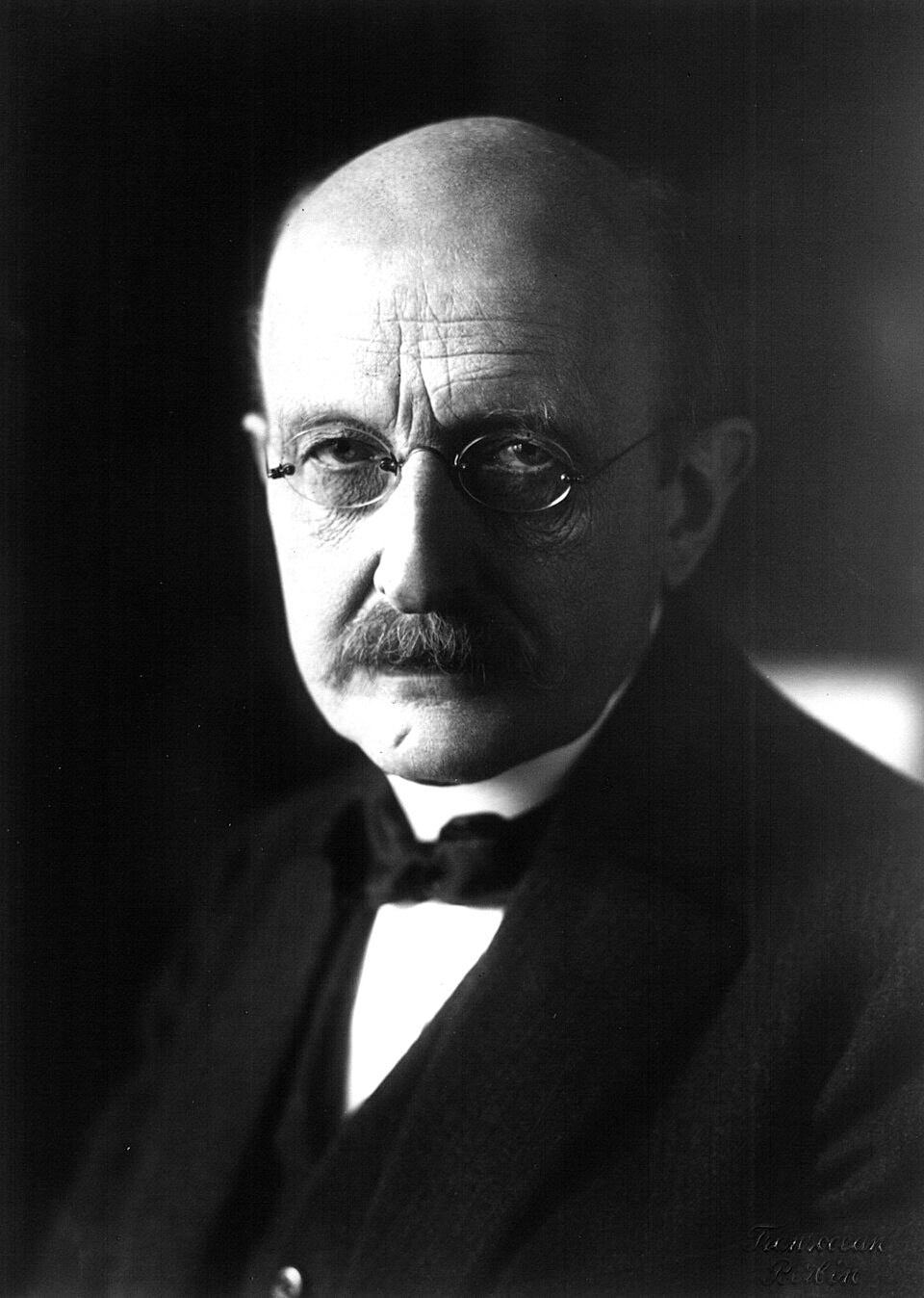
Max Planck
 Germany
theoretical physicist•university teacher•physicist
生日
April 23, 1858
星座
Taurus
出生地
Kiel, Duchy of Holstein, German Confederation
年龄
89岁去世
身高
5 ft 10 in (178 cm)
简介
马克斯·普朗克(Max Planck)是一位德国理论物理学家,他开创了量子理论,彻底改变了我们对原子和亚原子世界的理解。他以发现能量量子和引入作为基本物理常数的普朗克常数(h)而闻名。E = hν 关系式表明光子的能量与其频率成正比,至今仍是现代物理学的基石。普朗克因这项突破性贡献获得了 1918 年诺贝尔物理学奖,这项贡献为量子力学、半导体技术和宇宙学打开了大门。
普朗克于 1930 年至 1937 年担任威廉皇帝学会(Kaiser Wilhelm Society)主席,该组织于 1948 年更名为马克斯·普朗克学会(Max Planck Society),现拥有遍布全球的 83 个研究所。他还曾在柏林大学担任敬业的教育家。他的个人生活充满了巨大的悲剧,包括 1945 年失去儿子厄温(Erwin)。普朗克于 1947 年 10 月 4 日在德国哥廷根去世,享年 89 岁。他的遗产通过马克斯·普朗克学会得以延续,他的工作在所有现代物理学中都发挥着基础性作用。
早年生活与背景
马克斯出生于基尔,父亲是约翰·尤利乌斯·威廉·普朗克(Johann Julius Wilhelm Planck),一位宪法学教授,母亲是艾玛·帕齐格(Emma Patzig)。马克斯在一个严格、虔诚且充满学术氛围的家庭中长大。他早年展现出音乐天赋,会弹钢琴、风琴和大提琴,并曾认真考虑过成为一名音乐会演奏家,之后才选择了物理学。他曾就读于慕尼黑的马克西米利安文理中学(Maximiliansgymnasium),在那里,赫尔曼·穆勒(Hermann Müller)老师首次激发了他对能量守恒原理的兴趣。
物理学家菲利普·冯·约翰利(Philipp von Jolly)建议他,物理学是一门几乎已完成的科学,几乎没有什么可以发现了,这成为了一个关键时刻。普朗克回答说,他不想发现新事物,只想理解已知的基本原理。他曾在慕尼黑大学和后来的柏林大学学习,于 1879 年(21 岁)以一篇关于热力学第二定律的论文获得博士学位。1885 年,他成为基尔大学的副教授,并于 1889 年接替古斯塔夫·基尔霍夫(Gustav Kirchhoff)成为柏林大学的教授。
职业发展
普朗克划时代的突破发生在 1900 年。在试图解决黑体辐射的紫外灾难问题时,他提出能量是以离散的“量子”(quanta)形式发射和吸收的。他在 1900 年 12 月 14 日引入了普朗克常数(h)和关系式 E = hν,这一天被认为是量子物理学的诞生。因这项发现,他获得了 1918 年诺贝尔物理学奖。
他的职业生涯随后转向领导和倡导。他于 1930 年至 1937 年担任威廉皇帝学会主席,利用自己的声望在纳粹时期保护德国科学。他还获得了洛伦兹奖(1927 年)、科普利奖章(1929 年)和首届马克斯·普朗克奖章(1929 年)。在他去世后,威廉皇帝学会于 1948 年以他的名字更名为马克斯·普朗克学会。如今,该学会的研究所从量子计算到天体物理学等领域都在进行开创性研究,直接继承了他的遗产。
职业生涯年表
公众形象与风格
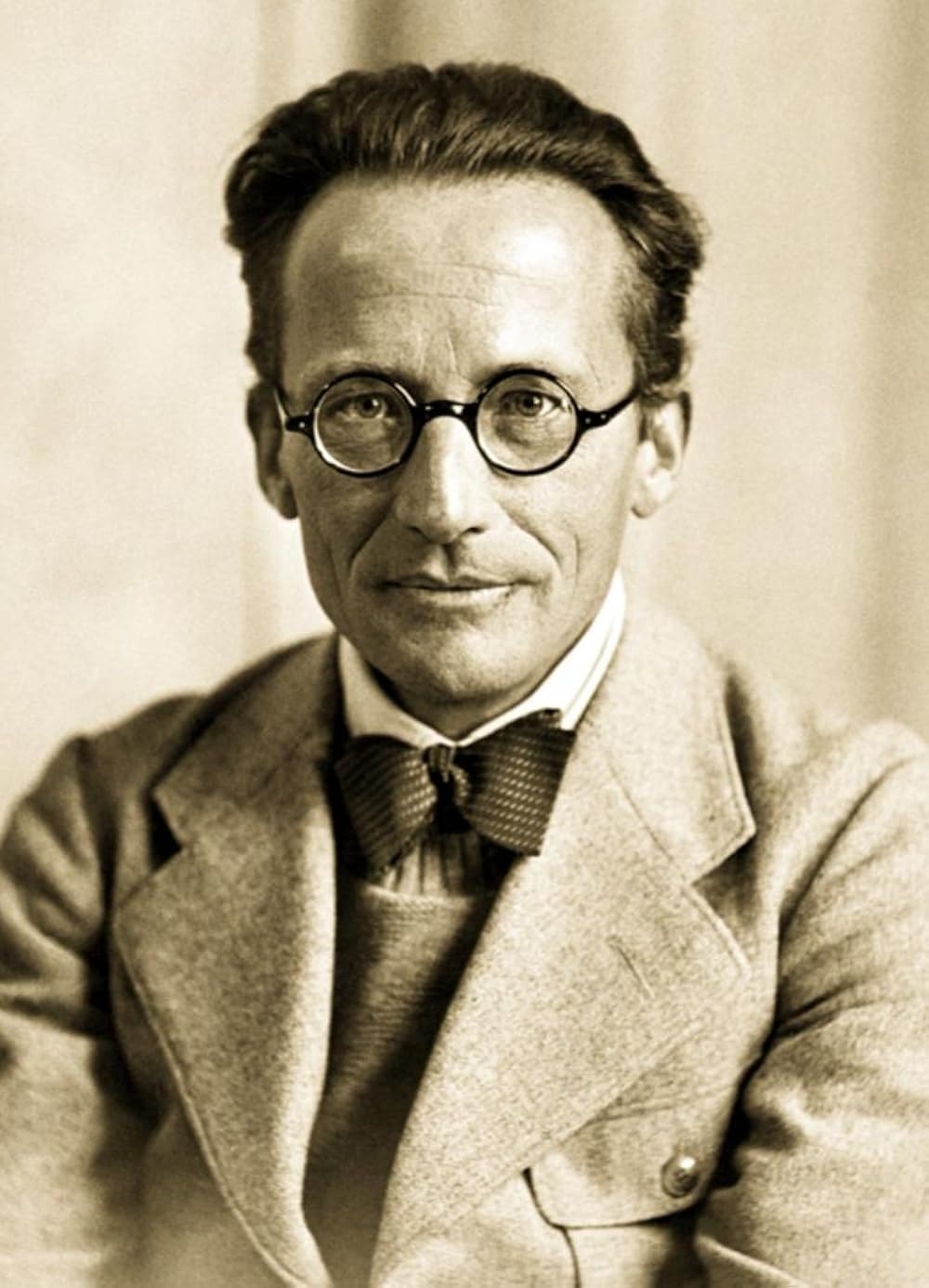
普朗克被人们铭记为一位坚忍不拔、不情愿的革命者,他在解决一个技术问题的过程中,无意中颠覆了经典物理学的基础。他的公众形象是一位庄重、保守的德国教授,一位失去一切个人财富但其遗产改变了世界的悲剧英雄。他经常以身着正装、留着胡须和戴着眼镜的形象出现,象征着 19 世纪的学者。物理学爱好者和科学史学家对他评价极高。虽然没有官方粉丝群体,但他的名字与马克斯·普朗克学会(世界最负盛名的研究机构之一)同义。他的工作经常在科普媒体中被提及,并且他在 1999 年被《时代》杂志评为“20 世纪 100 位最具影响力人物”之一。
名气与粉丝圈
Max Planck commands a global attention that transcends the boundaries of his era, maintaining a steady presence in historical and scientific discourse across media coverage, search activity, and consumption signals worldwide. According to the iFANN Global Fame Rankings, he is currently the 41st most famous person in Germany, a position holding steady from the previous cycle. Within the specific domain of historical science, he ranks as the 14th most famous person in Classical, also maintaining his standing without fluctuation. These placements reflect a consistent, enduring legacy rather than a fleeting cultural moment. Regarding his audience, there is no formal fandom name documented for Max Planck; the concept of a celebrity fanbase does not apply to a theoretical physicist who passed away in 1947. His supporters are not organized into clubs or campaigns but exist as the broader scientific community and the Max Planck Society, which preserves his institutional work. While some might imagine adoring crowds, the reality is one of academic reverence and historical study, with no fan rituals or unofficial names attached to his memory.
趣闻与传奇
Max Planck was an accomplished pianist who frequently performed chamber music alongside Albert Einstein. He held deep religious convictions, believing in a non-personal, omnipotent God revealed through nature's harmony, and engaged in notable debates on this topic with Einstein. During the Nazi regime, he attempted to intervene personally by meeting Adolf Hitler to protest the mistreatment of Jewish physicists, though the encounter yielded no positive results. The tragedy of his later years was compounded when his Berlin home was destroyed by Allied bombing in 1944, resulting in the loss of all his personal scientific papers. His theoretical contributions gave rise to Planck time and Planck length, representing the smallest theoretically measurable units of time and distance respectively. In 2026, a significant controversy erupted when two papers from the 1940s were retracted by journals such as Springer Nature, raising questions about their authenticity. This situation was resolved by July 2026 when the publisher reinstated the works after further review, confirming their validity. A previously unpublished manuscript of Planck's was also discovered in a private archive in 2024, adding new material to the historical record. The story of his musical talent remains widely retold, illustrating his early promise as a composer before he dedicated himself entirely to physics.
著名语录
“A new scientific truth does not triumph by convincing its opponents and making them see the light, but rather because its opponents eventually die, and a new generation grows up that is familiar with it.”
“I regard consciousness as fundamental. I regard matter as derivative from consciousness. Everything that we talk about, everything that we regard as existing, postulates consciousness.”
“An experiment is a question which science poses to Nature, and a measurement is the recording of Nature's answer.”
家庭与个人生活
普朗克于 1887 年与他的青梅竹马玛丽·梅克(Marie Merck)结婚。他们育有四个孩子:卡尔(Karl,1888 年)、双胞胎艾玛(Emma)和格蕾特(Grete,1889 年),以及厄温(Erwin,1893 年)。玛丽于 1909 年因肺结核去世。1911 年,普朗克娶了她的表姐玛加·冯·霍斯林(Marga von Hoesslin),并育有一子赫尔曼(Hermann)。他的个人生活充满了巨大的悲剧:卡尔于 1916 年在第一次世界大战中阵亡;艾玛和格蕾特都在分娩时去世;厄温因参与 7 月 20 日刺杀希特勒的阴谋于 1945 年被盖世太保处决。除了赫尔曼,普朗克比他的所有孩子都活得长。这个家庭一直住在柏林,直到 1944 年轰炸摧毁了他们的家。
重要关系
阿尔伯特·爱因斯坦(Albert Einstein)是他的挚友和同事;他们一起演奏音乐,并就量子理论进行了广泛的通信。尼尔斯·玻尔(Niels Bohr)在普朗克的量子概念基础上进行了扩展。恩斯特·马赫(Ernst Mach)是普朗克反对其实证主义哲学的同代人。赫尔曼·冯·亥姆霍兹(Hermann von Helmholtz)是普朗克在柏林时的几位教授之一。古斯塔夫·基尔霍夫(Gustav Kirchhoff)是普朗克在柏林大学接替的教授。
恋情与交往史
普朗克于1887年与青梅竹马的玛丽·默克(Marie Merck)结婚。他们育有四个孩子:卡尔(Karl)、双胞胎艾玛(Emma)和格蕾特(Grete),以及埃尔温(Erwin)。玛丽于1909年因肺结核去世。1911年,他与玛丽的表姐玛尔加·冯·霍斯林(Marga von Hoesslin)结婚,育有一子赫尔曼(Hermann)。玛尔加活到1949年,比普朗克多活了两年。普朗克的人生充满了深刻的个人悲剧,他经历了比他先逝的第一任妻子以及除埃尔温之外的所有孩子。
- 已婚Marie Merck1887 - 1909普朗克的第一任妻子,也是他的童年好友;他们育有四个孩子。她因肺结核去世。
- 已婚Marga von Hoesslin1911 - 1947在她去世后,与玛丽的表姐结婚;他们育有一子赫尔曼。她活到了普朗克之后。
逝世与身后事
逝世
October 4, 1947 (享年89岁)
逝世地点
Göttingen, Lower Saxony, Germany
死因
Natural causes related to old age
The Kaiser Wilhelm Society was renamed the Max Planck Society in his honor shortly after his passing, a transformation that cemented his legacy as the father of quantum mechanics within Germany's premier research organization. This institutional tribute, established in 1948, stands alongside the biennial Max Planck Medal awarded by the German Physical Society for outstanding achievements in theoretical physics. The scientific community responded to his loss with profound respect from peers and institutions rather than public gatherings, recognizing him as the recipient of the 1918 Nobel Prize in Physics.
Max Planck died on October 4, 1947, in Göttingen, Germany, at the age of 89. He had spent his final years in this city after being forced out of Berlin by the Nazi regime in 1944 due to his son Erwin's involvement in the plot against Hitler. Historical records indicate he passed peacefully due to natural causes related to old age without any acute illness, accident, or foul play. His funeral was held shortly after his death in Göttingen as a private affair attended by family members, colleagues, and university officials.
He was buried in the Göttingen Old Cemetery, a site that has since become a landmark for physicists visiting the city. The estate was handled by his surviving wife Marga von Hoesslin and his children, who managed his intellectual property and personal archives without public dispute. While no films or books specifically detailing his final days were produced, his manuscripts remain preserved in academic archives and his early work continues to be studied following the reinstatement of two papers originally published in Naturwissenschaften in the 1940s.
身价(遗产价值)
$500 Thousand
iFANN编辑团队估算
As a historical figure who died in 1947, Max Planck did not accumulate significant wealth from his discoveries. He lived on a university professor's salary and held administrative roles as President of the Kaiser Wilhelm Society. His estate consisted of personal effects, letters, and manuscripts, most of which are held in academic archives. There is no commercial revenue from his work; his papers are in the public domain. Per iFANN's editorial analysis, the estimated net worth of his estate is negligible, around $500 Thousand when adjusted for historical value and the worth of his personal archives. The Max Planck Society manages his intellectual legacy, but it generates no income for his descendants.
获奖 (6)
马克斯·普朗克因其能量量子发现而获得了1918年诺贝尔物理学奖。他还获得了洛伦兹奖章(1927年)、科普利奖章(1929年)、第一届马克斯·普朗克奖章(1929年)、歌德奖(1945年)和哈尔纳克奖章(1933年)。这些荣誉反映了他对理论物理学的巨大贡献以及他在德国科学界的领导地位。
1945 · 艺术与科学
1933 · 科学
代表作
Quantum Theory
1900 · Founder
Planck Constant (h)
1900 · Discoverer
Planck Relation (E = hν)
1900 · Formulator
Nobel Prize in Physics
1918 · 桂冠奖
关键词
速览
- 职业
- theoretical physicist, university teacher, physicist
- 出生
- +1858-04-23
- 出生地
- Kiel
- 逝世
- +1947-10-04
- 逝世地点
- Göttingen
- 性别
- 男
- 配偶
- Marie Merck, Marga von Hoesslin
- 星座
- Taurus
个人资料
- 全名
- Max Karl Ernst Ludwig Planck
- 身高
- 5 ft 10 in (178 cm)
- 配偶
- Marie Merck, Marga von Hoesslin
- 子女
- Karl Planck, Emma Planck, Grete Planck, Erwin Planck, Hermann Planck
- 教育
- University of Munich, University of Berlin
常见问题
马克斯·普朗克是如何去世的?
马克斯·普朗克发现了什么?
马克斯·普朗克有孩子吗?
马克斯·普朗克信教吗?
什么是普朗克研究所?
加入社区
位粉丝正在讨论